
Oliver Heaviside: Self-taught pioneer in electromagnetism and applied mathematics
Overview of Oliver Heaviside (1850–1925), the self‑taught English engineer and mathematician whose operational calculus, vector methods and transmission‑line theory advanced modern electromagnetism.
Overview
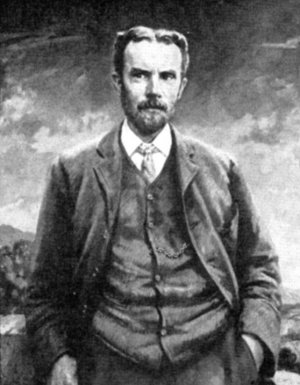
Oliver Heaviside was a largely self-educated English scientist who reshaped practical and theoretical approaches to electricity and magnetism. Born in Camden, in London, he combined hands-on work for telegraph companies with deep theoretical insight. His career bridged applied engineering and abstract mathematics, producing tools that are still used by electrical engineers and physicists.
Image gallery
5 Images


Main contributions and methods
Heaviside made several enduring contributions: he reformulated and simplified elements of electromagnetic theory, developed an operational calculus that allowed engineers to manipulate differential operators with algebraic methods, and introduced concise notation and techniques that clarified vector relations in physics. His work applied complex numbers and impedance concepts to the analysis of electrical circuits, and his operational approach anticipated later formal methods based on integral transforms.
Technical advances and ideas
Heaviside tackled practical problems such as signal distortion and attenuation on long telegraph and telephone lines. To do so he derived equations governing transmission lines and analyzed propagation effects that today appear in textbooks as the telegrapher's equations and characteristic impedance. He also extended and recast parts of Maxwell's field equations into a form more useful for engineers, and he promoted a systematic vector analysis that made electromagnetic expressions more compact. His interest in the mathematical side of physics led him to work with methods for solving differential equations that were otherwise difficult to handle by available techniques.
Career, recognition and context
Although Heaviside did not follow a conventional academic path, he was respected by many contemporaries for solving problems that affected telecommunications and radio. He spent much of his working life responding to engineering challenges, and later years in relative seclusion in Torquay, Devon. During his lifetime his ideas earned attention within the scientific world, but full appreciation of their breadth grew over subsequent decades.
Practical importance and legacy
Heaviside's methods are central to how modern electrical engineers model circuits, transient responses and wave propagation. Some concepts named for him — the Heaviside step function and the operational calculus sometimes called Heaviside's methods — remain widespread in control theory and signal analysis. Part of the Earth's ionosphere, which affects long-distance radio waves, is commonly known as the Kennelly–Heaviside layer, reflecting his role in anticipating ionospheric reflection of radio signals.
Notable ideas and further reading
- Electrical engineering applications: transmission-line theory, signal distortion and line compensation.
- Mathematical tools: operational calculus, step and impulse functions used in transient analysis.
- Physical insights: formulation and practical simplification of electromagnetic relations.
- Selected writings: Heaviside's multi-volume Electromagnetic Theory and numerous papers that influenced both theory and practice.
While often described as eccentric in personal habits, Heaviside's intellectual legacy is straightforward: he helped convert Maxwell's field ideas into the calculational language of engineers and provided problem-solving tools that continue to shape electrical science.
Questions and answers
Q: Who was Oliver Heaviside?
A: Oliver Heaviside was an English electrical engineer, mathematician, and physicist who lived from 18 May 1850 to 3 February 1925.
Q: What did he do in the scientific world?
A: He used complex numbers to study electrical circuits and did a lot of work on electromagnetic wave theory which made it necessary to find new ways of working with differential equations. He also worked on Maxwell's field equations and vector analysis, and is credited as the inventor of Vector Calculus.
Q: How has his work been recognized?
A: His work has been recognized after his death; people have realized how much he changed the study of mathematics and physics. Part of the ionosphere is co-named after him - the Kennelly-Heaviside layer - as a tribute to his achievements.
Q: What kind of person was Oliver Heaviside?
A: Oliver Heaviside had an eccentric personality, often fitting what many people think of as a mad scientist stereotype.
Q: What did he contribute to mathematics and physics?
A: Oliver Heaviside contributed significantly to both mathematics and physics by using complex numbers to study electrical circuits, doing a lot of work on electromagnetic wave theory, working on Maxwell's field equations and vector analysis, and inventing Vector Calculus.
Related articles
Author
AlegsaOnline.com Oliver Heaviside: Self-taught pioneer in electromagnetism and applied mathematics Leandro Alegsa
URL: https://en.alegsaonline.com/art/72401