
Olivier Strebelle (1927–2017): Belgian sculptor of monumental public forms
Olivier Strebelle, Belgian sculptor (1927–2017), noted for large-scale bronze public sculptures and evolving abstract-to-sinuous forms found in squares and parks across Europe, Asia and the Americas.
Overview
Olivier Strebelle (20 January 1927 – 29 July 2017) was a Belgian sculptor whose career spanned more than six decades. Born and based for much of his life in Brussels, he became best known for monumental works intended for public sites — plazas, parks, building forecourts and international exhibitions. Strebelle worked primarily in durable media suited to outdoor display, most often bronze, and his commissions can be seen in civic collections and public settings around the world.
Image gallery
5 Images


Early life and training
Details of Strebelle's early artistic education and training show a conventional route for a mid‑twentieth‑century European sculptor: study, workshop practice and early public commissions that established his reputation. Over time his technique and choice of scale developed in response to civic projects and opportunities to produce site‑specific works that engage viewers in an urban context.
Style and technique
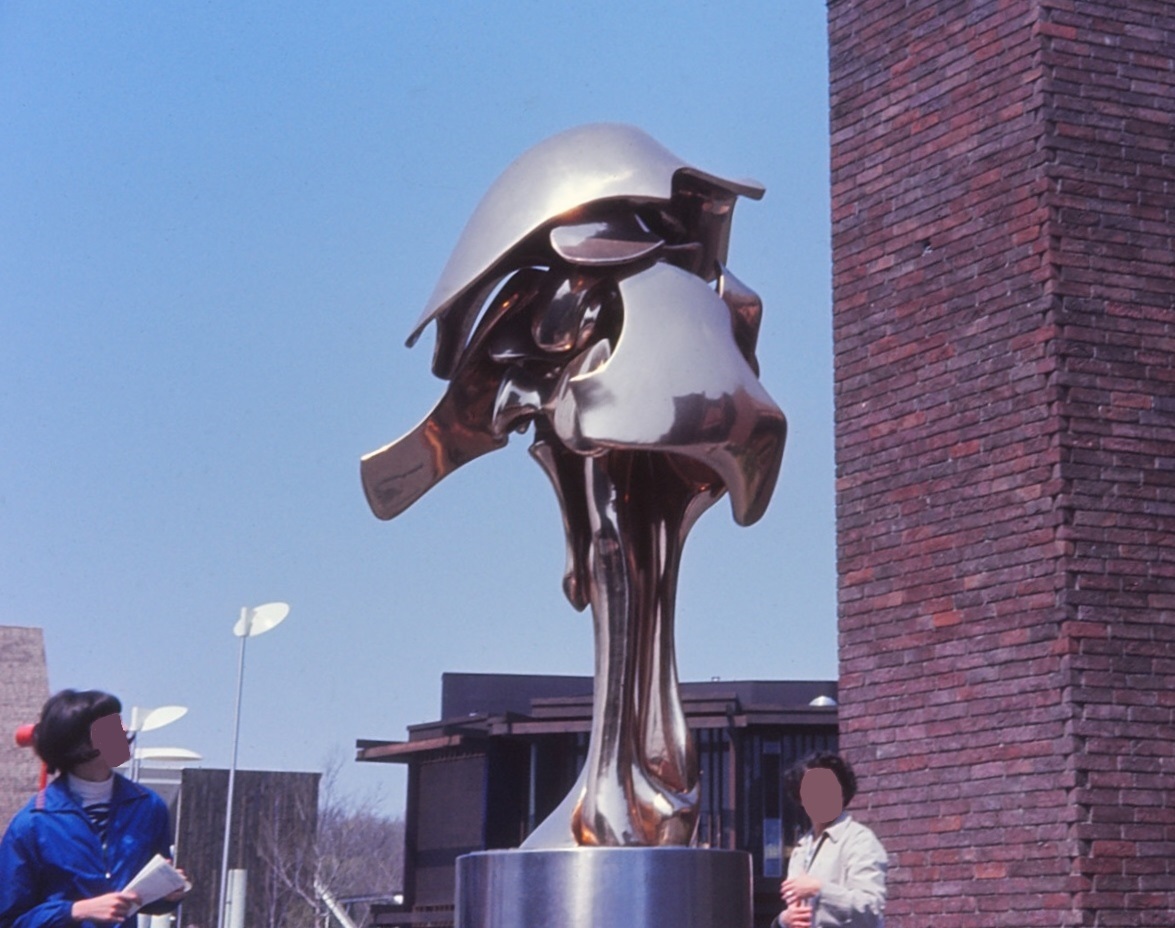
Strebelle's stylistic evolution is a central feature of his career. His early work is often described as robust and organic, with emphasis on mass and tactile volume. In later decades he explored more elongated, sinuous lines and a sense of movement that can read as rhythmic or kinetic in relation to surrounding architecture. He mastered the technical challenges of large‑scale casting and patination for outdoor use, producing works that balance abstraction with occasional figurative suggestion.
Major works and distribution
Strebelle's public installations appear widely: examples include commissions and acquisitions in Germany, Israel, Italy, Russia, Singapore, Switzerland and the United States. A later phase of his output produced a series of slender, flowing figures for a corridor known as Athletes' Alley at the site of the Beijing Olympic Games, where his interest in line and repetition complements the procession of visitors and athletes.
The Abduction of Europa
One of Strebelle's best‑known figurative works is "The Abduction of Europa" (French: L'Enlèvement d'Europe). This sculpture has been prominently displayed in a public square in Moscow since the early 2000s and has attracted attention as an instance of contemporary European sculpture sited in an international, civic context. The work demonstrates Strebelle's ability to reinterpret a classical subject in a modern, monumental idiom.
Commissions and public engagement
Throughout his career Strebelle received commissions from municipal authorities and cultural institutions seeking durable, site‑responsive art. His projects were conceived to withstand weather and to function as focal points or wayfinding elements within urban design. Critics and curators have noted how his pieces can animate public space without dominating it, inviting both viewership and physical movement around the forms.
Reception and legacy
Responses to Strebelle's work have varied by context and by viewer; nonetheless, he is widely regarded as a skilled practitioner of monumental sculpture whose work contributed to the shaping of postwar public space. His practice illustrates how large‑scale sculpture continued to evolve in the late twentieth and early twenty‑first centuries, moving between mass and line while addressing the demands of civic display and technical production. After his death in Brussels on 29 July 2017, his works have continued to be discussed in surveys of European public art and in studies of sculpture for urban environments.
Selected characteristics and contributions
- Long professional life with a sustained focus on public sculpture and outdoor durability.
- Predominant use of bronze and large‑scale casting techniques suitable for civic commissions.
- Stylistic range from organic masses to elongated, linear compositions that emphasize movement.
- Works sited internationally, reflecting a career that engaged municipal patrons and global exhibitions.
Related articles
Author
AlegsaOnline.com Olivier Strebelle (1927–2017): Belgian sculptor of monumental public forms Leandro Alegsa
URL: https://en.alegsaonline.com/art/72410