
Aucasaurus — a Cretaceous abelisaurid from Argentina
Aucasaurus is a medium-sized abelisaurid theropod from Late Cretaceous Argentina. Known from a relatively complete skeleton, it had very short forelimbs, a stout skull, and adds to understanding of southern predators.
Aucasaurus is a genus of extinct carnivorous dinosaur belonging to the abelisaurid family of theropod reptiles. It lived in what is now Argentina during the Late (Upper) Cretaceous and is represented by the type species Aucasaurus garridoi. Known from one of the more complete skeletons among abelisaurids, the animal is smaller than some close relatives such as Carnotaurus and displays the short, deep skull and reduced forelimbs typical of the group. It is widely discussed in studies of southern hemisphere theropod evolution and ecology.
Image gallery
10 Images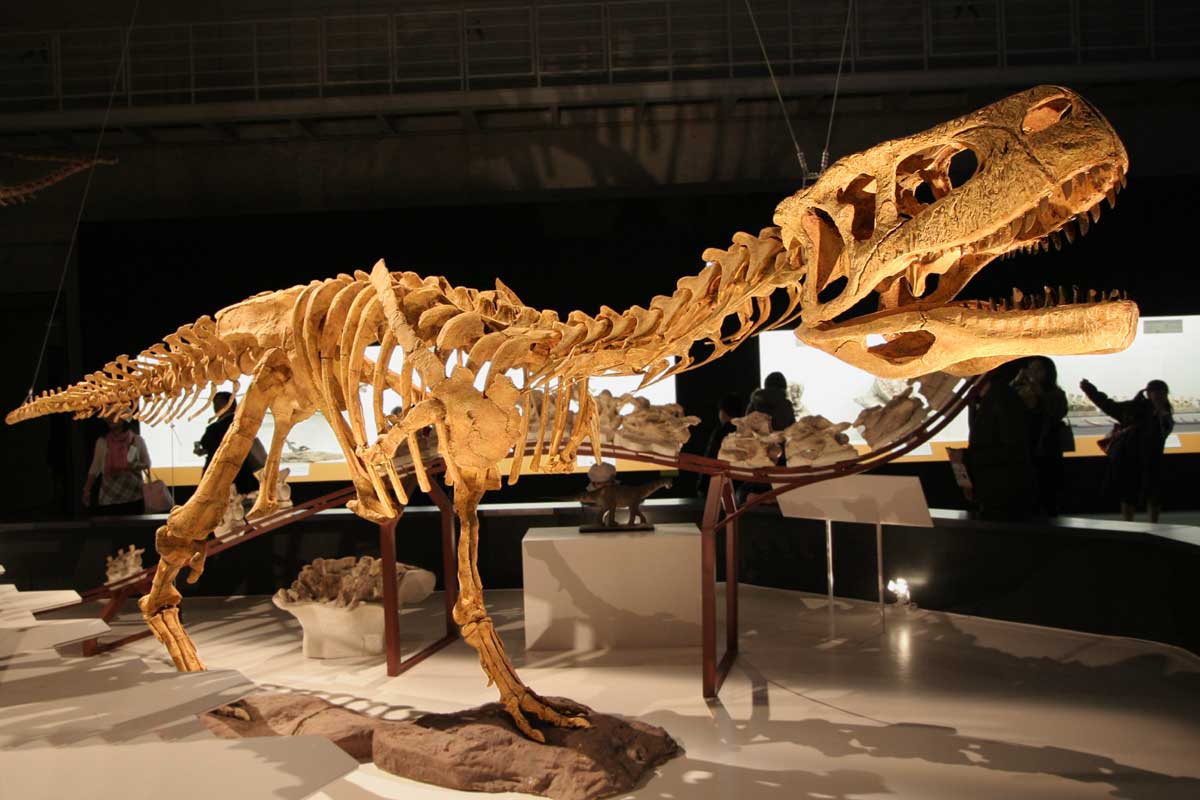


Physical characteristics
- Body plan: robust, bipedal carnivore with muscular hind limbs adapted for terrestrial locomotion.
- Skull and teeth: a tall, deep skull with stout teeth and bony ornamentation; the known skull material is damaged, which has led to debate about injuries sustained before death.
- Forelimbs: extremely short and reduced compared with the hind limbs, with limited grasping function — a hallmark of abelisaurids.
- Skeleton completeness: the articulated specimen preserves much of the vertebral column, pelvis and hindlimbs, making it important for anatomical comparisons within Abelisauridae.
Discovery and scientific context
The holotype specimen was recovered from Cretaceous deposits in Patagonia; because it preserves many elements in association, Aucasaurus has helped paleontologists reconstruct the anatomy and proportions of abelisaurids. The partially damaged skull has been interpreted by some researchers as evidence that the animal suffered trauma shortly before death, though taphonomic processes during burial can also explain breakage. The genus name reflects local geographic and cultural references and the specific name honors a contributor to the discovery or research.
Paleoecology and behavior
As a medium-sized predator in southern ecosystems, Aucasaurus likely fed on a range of vertebrate prey available in its environment, possibly including smaller ornithischians and young or weakened sauropods. Its stout build and strong hindlimbs suggest it relied on powerful bites and forward lunges rather than grasping with its forelimbs. Like other abelisaurids, it may have been an ambush predator or opportunistic feeder within a landscape populated by diverse herbivorous dinosaurs.
Significance and comparisons
Aucasaurus is significant because relatively complete abelisaurid material is uncommon; its skeleton provides crucial data for comparing skull shape, limb proportions and vertebral anatomy across the clade. Compared with the larger and more heavily ornamented Carnotaurus, Aucasaurus is more lightly built but shares key features that confirm its placement within the southern Gondwanan radiation of theropods. Continued study of this genus contributes to understanding how abelisaurids diversified and occupied predatory niches in Late Cretaceous South America.
For further general context on theropods and Late Cretaceous faunas see links on anatomy and regional geology: dinosaur overview, additional resources on theropod evolution and regional summaries at Argentine fossil sites and Upper Cretaceous formations. Comparative material and notes on related genera are summarized in sources discussing Carnotaurus and other abelisaurids.
Related articles
Author
AlegsaOnline.com Aucasaurus — a Cretaceous abelisaurid from Argentina Leandro Alegsa
URL: https://en.alegsaonline.com/art/7200