
Australosphenida
Australosphenida: a proposed clade of mainly Mesozoic southern mammals that includes the living monotremes (platypus and echidnas) and several extinct Gondwanan genera; important for dental and biogeographic studies.
Overview
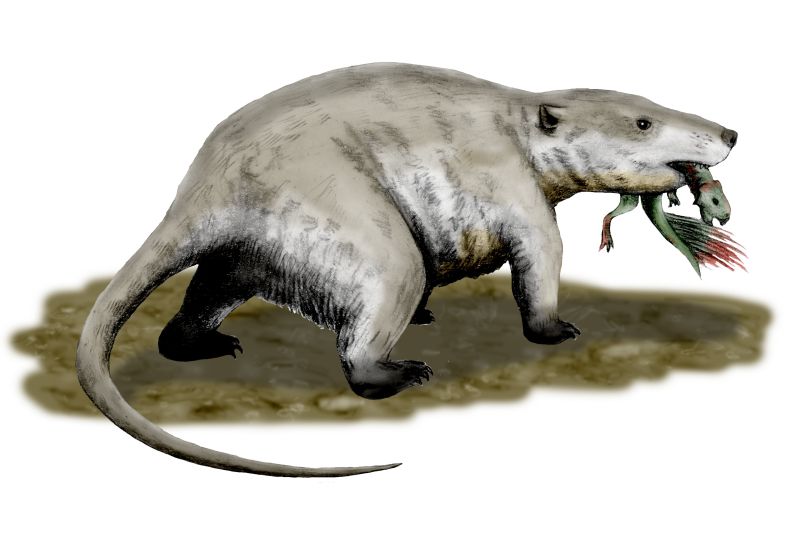
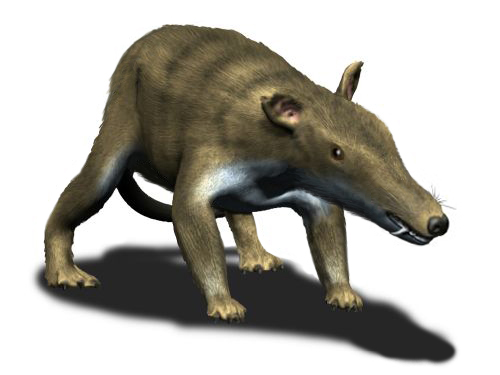
Australosphenida is a term used by paleontologists for a group of mammals known chiefly from the southern continents (Gondwana) and for which the living monotremes — the platypus and echidnas — are commonly regarded as the only surviving representatives. The concept highlights a pattern of dental and skeletal characters that appear in several Jurassic and Cretaceous fossils from the southern hemisphere and in extant monotremes. For general context see reviews of mammal evolution.
Image gallery
9 Images



Distinctive characteristics
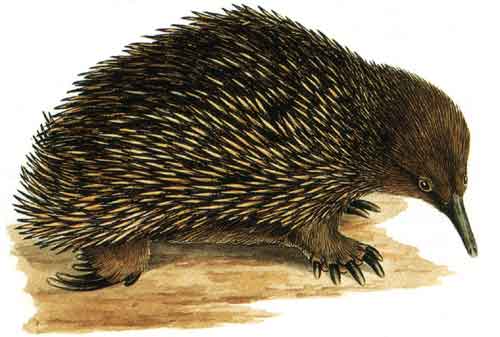
Members attributed to Australosphenida are best recognized by their molar teeth. These teeth show a combination of shearing and crushing surfaces similar to the tribosphenic molar of therian mammals but assembled in a different way, which has led to debates about whether the feature evolved more than once. Living monotremes retain a number of distinctive traits: oviparity (egg-laying), production of milk without true nipples, and a mix of primitive and specialized skeletal features. The platypus also exhibits electroreception and venomous crural spurs, while echidnas are adapted for digging and insectivory.
Fossil record and geographic range
Fossils assigned to this grouping come from several Gondwanan regions and span the Jurassic and Cretaceous. Important fossil taxa include genera described from Madagascar, Australia and South America, and discoveries continue to inform debates about early mammal distribution. Some representative finds come from Madagascar (e.g., Ambondro and related fossils) and from Argentina and Patagonia (isolated molars and jaw fragments). Australian Mesozoic fossils similarly contribute to the picture of a once more widespread southern clade.
Living members and modern distribution
Only monotremes survive today. The platypus persists in eastern Australia and Tasmania and is often cited in natural history accounts (platypus information). Echidnas — a group of spiny, egg-laying mammals — occur across Australia and New Guinea: the short-beaked echidna ranges widely in Australia (Australian distribution) while several long-beaked species are native to New Guinea (New Guinea populations), together making up the handful of extant australosphenidan species.
Significance and classification debates
Australosphenida is important because it frames questions about convergent evolution, tooth-function evolution, and how early mammals dispersed across Gondwana. Some researchers treat monotremes as definite australosphenidans; others argue that similarities in tooth design represent independent evolutionary experiments. Ongoing fossil discoveries and analyses of anatomy and molecules continue to refine where these animals fit in the mammal family tree.
Examples and further reading
- Key fossil genera from Gondwana: Ambondro, Ausktribosphenos, Asfaltomylos and Henosferus.
- Extant representatives: platypus and several species of echidna (echidna overview).
Because Australosphenida combines living oddities and fragmentary fossil taxa, it remains a lively subject in vertebrate paleontology and comparative anatomy, with implications for how major mammal traits evolved in different parts of the world.
Questions and answers
Q: What is Australosphenida?
A: Australosphenida is a clade of mammals that are almost extinct and only a few species survive in Australia and New Guinea.
Q: Which animals belong to the Australosphenida group?
A: The Australosphenida group includes the platypus and echidnas.
Q: Where are the remaining living specimens of Australosphenida found?
A: The remaining living specimens of Australosphenida are only found in Australia and New Guinea.
Q: How many species of Australosphenida are currently surviving?
A: There are only five surviving species of Australosphenida.
Q: Have Australosphenida fossils been found outside of Australia and New Guinea?
A: Yes, Australosphenida fossils have been found in Madagascar and Argentina.
Q: What has happened to the majority of Australosphenida species?
A: The majority of Australosphenida species have nearly entirely died out.
Q: What is the significance of Australosphenida for the field of biology?
A: Australosphenida is important in the field of biology as they are one of the few examples of monotremes, which are mammals that lay eggs instead of giving live birth.
Related articles
Author
AlegsaOnline.com Australosphenida Leandro Alegsa
URL: https://en.alegsaonline.com/art/7529