
Odo, Earl of Kent and Bishop of Bayeux
Anglo-Norman nobleman and cleric, half-brother of William the Conqueror; a powerful landholder, military leader and patron traditionally linked with the Bayeux Tapestry and a controversial figure in post-Conquest England.
Overview
Odo (c.1030–1097) was a prominent Anglo-Norman magnate who combined high ecclesiastical office with secular authority. He served as Bishop of Bayeux before the Norman invasion of England and was created Earl of Kent after 1066. As the half-brother of William the Conqueror he held unusual influence at the Norman court and in the new Anglo-Norman state; he is often described as William’s second-most powerful supporter in the years after the Conquest. See his family connection: half-brother.
Image gallery
5 Images



Roles and responsibilities
Odo occupied several overlapping roles. As bishop he was a senior churchman; as an earl and royal official he commanded troops, administered lands and built castles. He became one of the principal landholders in England, especially in Kent, and acted at times as William’s deputy when the king was in Normandy. His career exemplifies how Norman rulers placed trusted relatives in both ecclesiastical and secular positions to secure control.
Cultural patronage and the Bayeux Tapestry
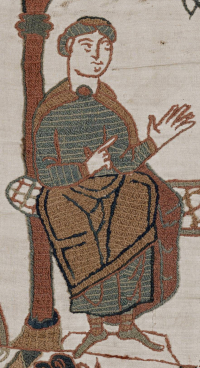
Odo is traditionally associated with the commissioning and display of the Bayeux Tapestry, the embroidered narrative of the Norman Conquest that hung in Bayeux Cathedral. While modern scholars debate the exact patron, Odo’s close connection to Bayeux and his prominent presence in the tapestry make him a central figure in its history. The tapestry remains a major visual source for the events of 1066 and early Norman rule.
Conflict, imprisonment and later years
Despite his early power, Odo’s career was turbulent. He was accused of using his ecclesiastical office for secular ends and of plotting military ventures without royal approval. William I imprisoned him in the early 1080s for a period; after the king’s death Odo returned to political life but later joined resistance to William II and spent his final years away from court. He died in 1097, leaving a contested legacy as both a builder of Norman authority and a figure of controversy.
Notable facts
- Combined the offices of bishop and earl, mixing clerical duties with military command.
- Associated with the Bayeux Tapestry as patron or promoter of its display.
- Held vast lands in England after the Conquest and was instrumental in castle construction.
- Imprisonment and later rebellion illustrate tensions between dynastic relatives and royal power in the early Norman kingdom.
Related articles
Author
AlegsaOnline.com Odo, Earl of Kent and Bishop of Bayeux Leandro Alegsa
URL: https://en.alegsaonline.com/art/71974
Sources
- news.bbc.co.uk : "Odo Bishop of Bayeaux was the tyrannical Earl of Kent"
- ↑
- google.com.au : p. 653
- bestofsicily.com : "Odo of Bayeux"