
Ögedei Khan: Second Great Khan of the Mongol Empire
Ögedei (1186–1241), third son of Genghis Khan, succeeded his father as Great Khan. He oversaw major conquests, set up administrative institutions and made Karakorum the imperial capital.
Ögedei (1186–1241) was the third son of Genghis Khan and served as the second Great Khan of the Mongol Empire. Chosen by the leading nobles at the kurultai after his father's death, Ögedei presided over a period of rapid territorial expansion and state-building. Under his leadership the Mongol state consolidated control over China and advanced into Eastern Europe, leaving a lasting imprint on Eurasian history.
Image gallery
8 Images


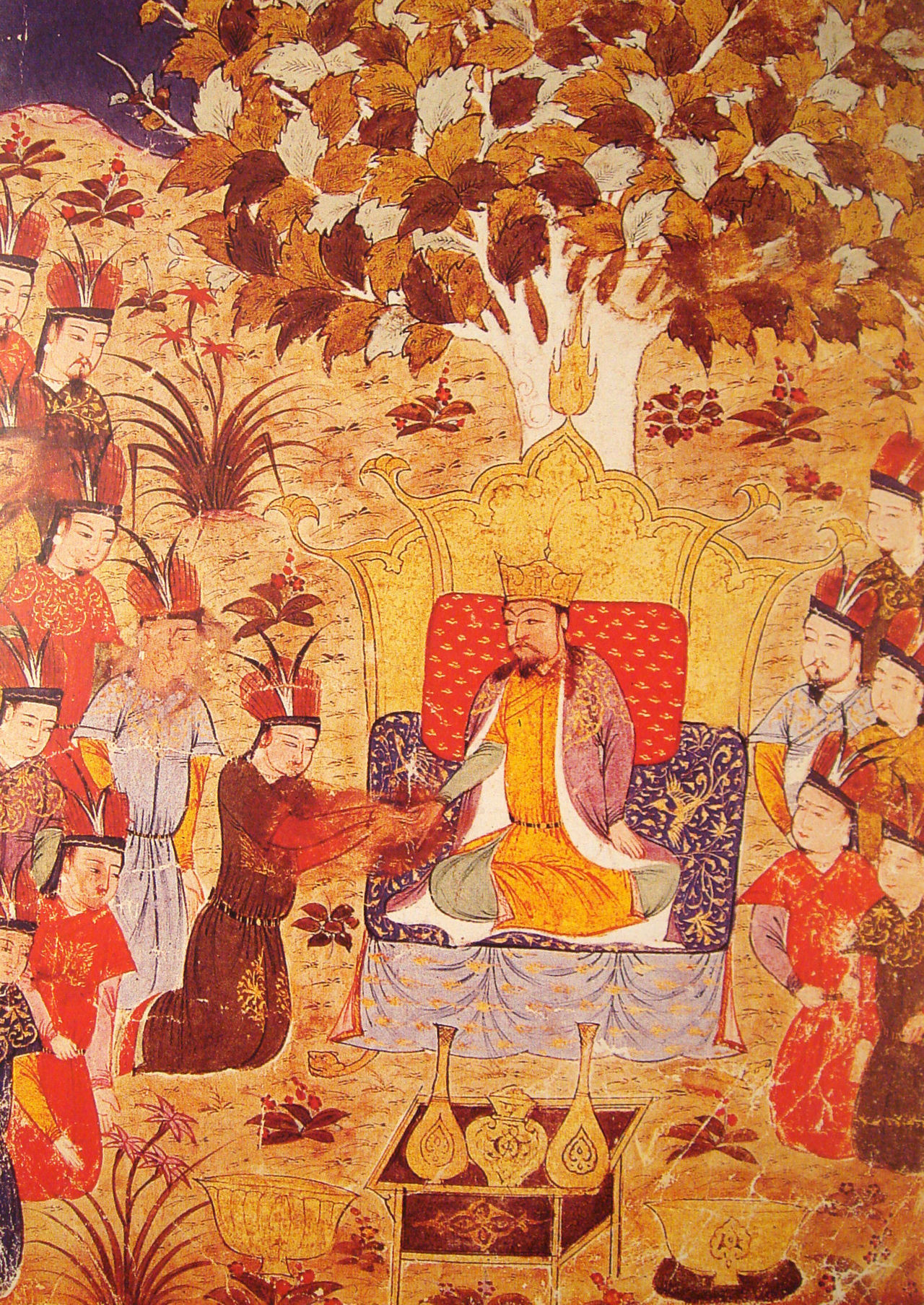


Personal qualities and court
Contemporaries describe Ögedei as a forceful and pragmatic figure. He was reputedly a childhood favorite of his father and possessed a direct manner that made him an effective arbiter among rivals. While he lacked the battlefield renown of some of his generals, he was respected for steady judgement. Sources also note his fondness for drink and a relaxed approach to scholarship compared with Genghis.
Administration and institutions
As Great Khan Ögedei developed administrative systems to manage a rapidly growing empire. He established Karakorum as a political center and expanded services that linked the realms—messenger routes, taxation practices, and support for merchants and craftsmen. These measures helped regularize revenue and communications across long distances and fostered trade along routes the Mongols controlled.
Military campaigns and expansion
Ögedei continued campaigns begun by his father and launched new expeditions beyond the steppe. His reign saw the final reduction of Jin power in northern China and sustained operations in areas of western China and Central Asia. Under generals such as Subutai and commanders like Batu Khan, Mongol forces struck into Russia, Poland and Hungary, testing European defenses and extending the empire’s frontiers.
Legacy and succession
- Consolidation: Ögedei turned conquest into governance, strengthening institutions that held the empire together.
- Pause in expansion: His death in 1241 prompted a withdrawal of forces and a period of political maneuvering over succession.
- Regency and factionalism: After his death, his widow Töregene acted as regent, and rival branches of the family later vied for supremacy.
Modern historians view Ögedei as a pivotal figure who transformed a conquering confederation into a more structured imperial polity. His reign expanded Mongol reach and organized its administration, but it also sowed the seeds of later divisions as regional rulers gained autonomy. For further reading see specialized studies and primary chronicles that discuss his reign and the broader context of Mongol governance.
Genghis Khan | Mongol Empire | Western China campaigns | Central Asian operations
Questions and answers
Q: Who was Ögedei Khan?
A: Ögedei Khan was the third son of Genghis Khan and the second Great Khan of the Mongol Empire.
Q: What did Ögedei do to his father's empire?
A: Ögedei continued to make his father's empire bigger.
Q: What role did Ögedei play in the conquest of Western China and Central Asia?
A: Like all of Genghis' sons, Ögedei helped to conquer Western China and Central Asia.
Q: Why was Ögedei thought to be Genghis Khan's favorite son?
A: Ögedei was thought to be his father's favorite son, ever since his childhood.
Q: What was Ögedei's personality like when he was an adult?
A: As an adult, Ögedei was known to be persuasive in debates he was involved because he had a strong personality.
Q: How did Ögedei compare to his father in terms of education?
A: Ögedei was less schooled than his father.
Q: What was Ögedei's intelligence and character like despite his drinking habits?
A: Despite his drinking habits, Ögedei was intelligent and steady in character.
Related articles
Author
AlegsaOnline.com Ögedei Khan: Second Great Khan of the Mongol Empire Leandro Alegsa
URL: https://en.alegsaonline.com/art/72083