
Contactless smart card
A plastic card with an embedded chip and antenna that exchanges data with a reader by short-range radio; used for payments, transit, ID, access control and secure data storage.
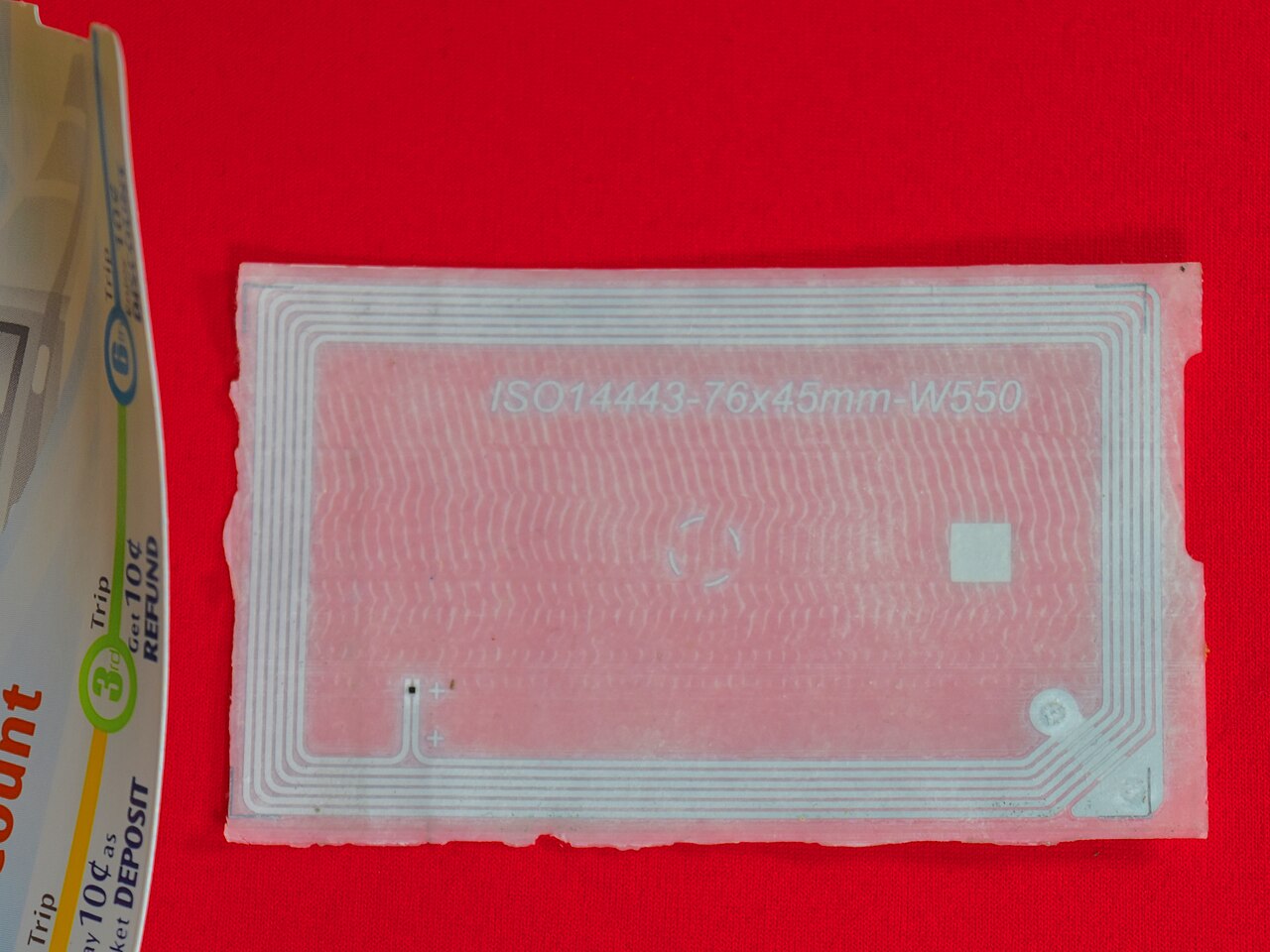
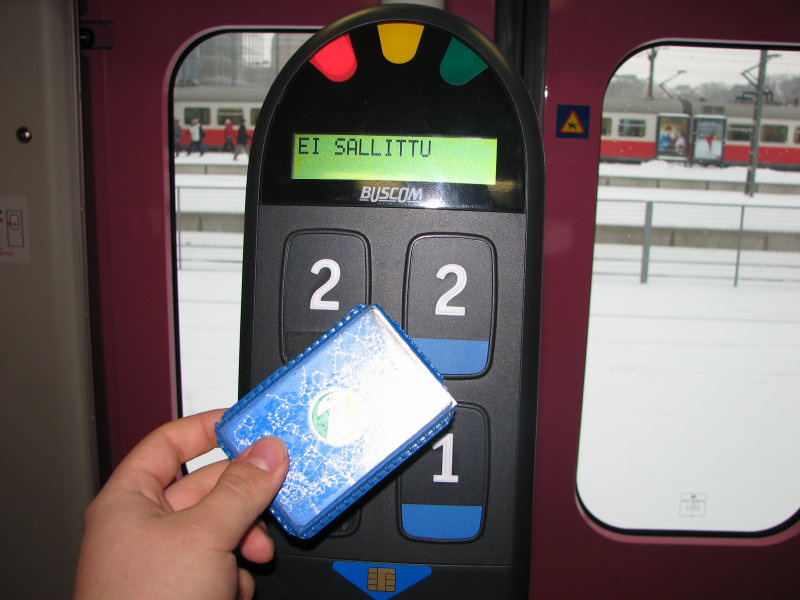
A contactless smart card is a plastic card that contains an integrated circuit and a built-in antenna so it can exchange information with a compatible reader without physical contact. The embedded chip typically includes nonvolatile memory and, on many cards, a microprocessor that can perform cryptographic operations and manage data securely. Communication between card and reader takes place over a short-range radio interface using inductive coupling.
Image gallery
6 Images



How it works and common characteristics
The card is powered and interrogated by the reader's electromagnetic field; most contactless cards are passive (they draw power from the reader), though some designs include batteries. Widely used standards include ISO/IEC 14443 and related specifications that operate at radio frequencies near 13.56 MHz and enable short-range, secure exchanges. Typical physical dimensions are the same as a credit card; see credit card size descriptions for form factor details.
- Types: simple memory cards for basic stored data and microprocessor cards that support authentication and cryptography.
- Interfaces: contactless-only, contact-only, and dual-interface cards that support both modes.
- Range: short—usually a few centimetres—so proximity is required for the connection.
History and standards
Contactless smart cards evolved from two parallel technologies: chip-based smart cards and radio-frequency identification (RFID). During the late 20th century, industry standards and commercially successful systems (such as transport and closed-loop payment schemes) popularized the contactless approach. Developments in Near Field Communication (NFC) enabled greater interoperability between cards and mobile devices.
Uses and examples
Contactless smart cards are used in many everyday systems. Common applications include:
- Contactless payments and bank cards for tap-to-pay transactions;
- Public transport fare media that allow quick boarding;
- Employee and building access control badges;
- National ID and electronic passport chips that store identity data securely;
- Loyalty, ticketing and secure authentication tokens for online services.
Security, privacy and practical distinctions
Compared with simple RFID tags, contactless smart cards contain re-writable microchips and can implement cryptographic protections such as mutual authentication and encrypted messaging. Nevertheless, risks such as skimming or relay attacks exist; mitigations include short communication ranges, transaction limits, PINs or biometric checks, and shielded wallets. The radio nature of the link is sometimes described simply as radio communication, but the protocol and security layers make smart cards functionally closer to secure microcomputer devices than to passive RFID tags.
In practice, contactless smart cards balance user convenience with security requirements and are continually adapted—through stronger cryptography, biometric bindings, and mobile-device integration—to meet new use cases in payments, identity and access management.
Related articles
Author
AlegsaOnline.com Contactless smart card Leandro Alegsa
URL: https://en.alegsaonline.com/art/22724