
Obi: the Japanese sash—types, history, tying methods and cultural role
An overview of the obi, the traditional Japanese sash worn with kimono and keikogi: materials, major types, tying styles, history, martial-arts belts, and its cultural importance and care.
Overview
The word obi (Japanese term) literally means "belt" or "band" and most commonly refers to the broad, decorative sash worn with traditional Japanese garments. An obi secures and shapes clothing such as the kimono and can be simple or highly elaborate. It is an essential component of formal and informal dress, with distinct varieties for men, women and for use in practice garments like the martial arts uniform.
Image gallery
10 Images


Characteristics and construction
Obi vary widely in width, length, stiffness and ornamentation. Women’s obi tend to be much wider and longer than men’s, and are often made from richly woven silk brocades, satin or metallic yarns. Men’s obi are narrower and shorter and typically use sturdier but plainer fabrics. Casual obi may be soft and single-layered; formal ones are often heavily prepared and stiffened with multiple layers or backing.
Common types
- Nagoya obi: a commonly worn women’s obi that is tapered for easier dressing and popular for semi-formal wear.
- Fukuro obi: a long, elaborately patterned type used for more formal occasions and often richly decorated on one or both sides.
- Maru obi: a full-width, double-sided formal obi historically reserved for ceremonies.
- Hanhaba obi: a half-width casual obi often used with summer wear such as the yukata.
- Kaku obi: the men's stiff, flat obi seen with informal or formal attire.
- Heko obi: a soft, informal sash sometimes worn by men or layered under other obi for comfort.
Tying styles and accessories
The decorative effect of an obi depends as much on its knot—called a musubi—as on the fabric. Common knots for women include the taiko musubi (drum knot), bunko musubi (ribbon-like knot) and more complex decorative knots used for formal ceremonies. Men’s obi are tied in simpler knots that lie flat at the back. Small accessories finish the ensemble: an obiage (silk cloth) helps position the knot, an obijime (decorative cord) secures the obi, and an obidome (ornamental clasp) may be added.
History and development
Obi evolved from narrow cords and sashes worn in earlier periods into wider, more decorative bands by the Edo period (17th–19th centuries), when fashion and textile weaving advanced in urban centers. As kimono styles changed, so did obi, increasing in width and becoming a prominent surface for patterning and craftsmanship. Skilled textile artists developed specialized weaving, embroidery and dyeing techniques to produce luxurious obi; some master artisans have received national honors such as the designation of Living National Treasure.
Martial-arts belts
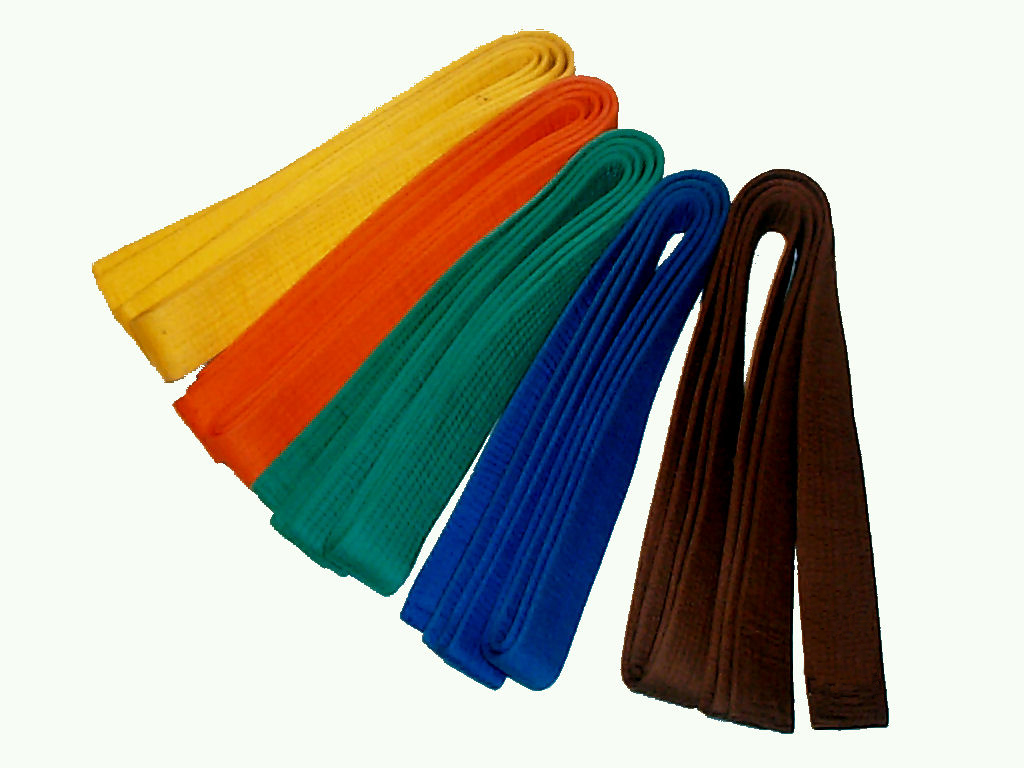
The obi worn with training uniforms (keikogi) is much narrower and shorter than kimono obi and is generally plain and functional. In many systems its color denotes rank or experience: beginners wear white and advanced practitioners wear darker or colored belts. These belts are utilitarian rather than decorative and are worn by both men and women in the same sizes.
Cultural value, care and modern use
Obi are often the most expensive component of a kimono outfit and are treated as works of art; antique and contemporary examples are collected and studied. They are given as gifts, worn at weddings and festivals, and adapted into modern fashion and interior accessories. Proper care includes careful rolling or flat storage to avoid creasing, protection from moths and occasional professional cleaning for delicate fabrics. Whether utilitarian or highly ornamental, the obi remains a central expressive element of Japanese dress and textile craft.
sash | origin of the term | kimono | yukata | design and dyeing | martial arts
Related articles
Author
AlegsaOnline.com Obi: the Japanese sash—types, history, tying methods and cultural role Leandro Alegsa
URL: https://en.alegsaonline.com/art/71770