
Paisley (design)
Paisley is a teardrop-shaped ornamental motif with intricate curved patterns, rooted in Persian and South Asian textile traditions and widely used in fashion, home decor and graphic design.
Overview
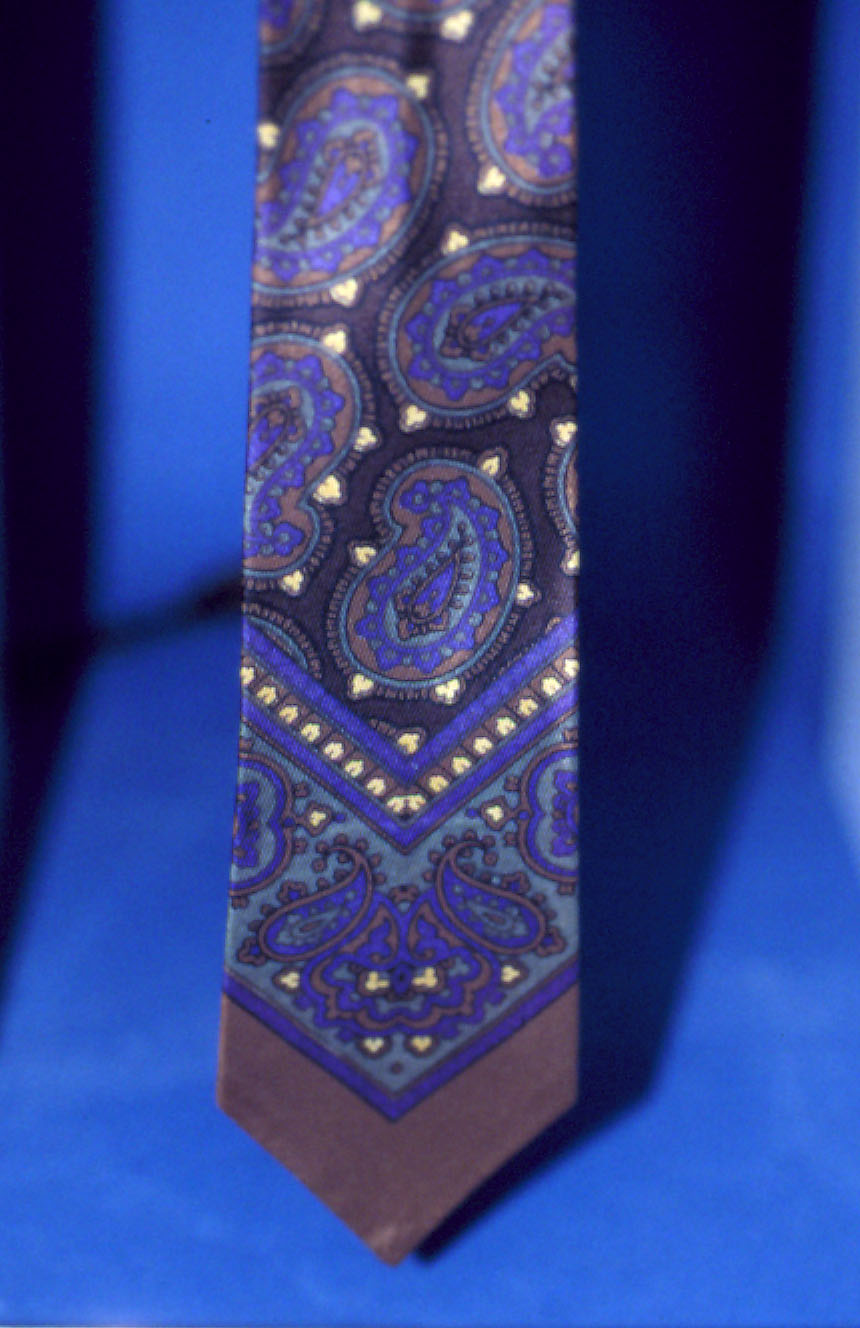
Paisley is a decorative motif notable for its curved, droplet- or teardrop-shaped outline filled with detailed, feather-like ornament. Often highly stylized and repeated across a surface, the design is most commonly seen on textiles such as shawls, ties and upholstery. Its complex, flowing forms make it a versatile element in both traditional and contemporary design.
Image gallery
6 Images


Characteristics
The motif typically features a rounded, comma- or almond-shaped body with one end tapering to a point, and an interior decorated with floral, vine or geometric elements. Variations in scale, color and density produce very different visual effects, from delicate all-over patterns to bold, large-scale statements. Paisley can be woven, printed, embroidered or appliquéd.
History and origin
The motif traces back to ancient Near Eastern and South Asian decorative traditions, where a form called the boteh (a stylized pine or cypress leaf) appeared on textiles and metalwork. It became closely associated with Kashmiri shawls and other Indian garments; European manufacturers later adapted the pattern. The English town of Paisley gave the Western name to the design after local weavers produced popular patterned shawls in the 19th century. For background on the textile context see Kashmir shawls and the broader boteh tradition.
Uses and cultural significance
Paisley has been a staple in fashion—particularly neckwear, scarves and dresses—and in home textiles such as curtains and cushions. It enjoyed revivals at different times, notably in 19th-century European fashion and again during 1960s and 1970s popular culture. Designers often use paisley to suggest exoticism, heritage, or bohemian style.
Distinctions and notable facts
- Terminology: The term "paisley" refers to the Westernized name; related motifs may be called boteh, but the forms overlap.
- Techniques: Traditional paisley shawls were handwoven and hand-embroidered; industrial printing and jacquard weaving later made mass production possible.
- Contemporary use: Paisley appears in graphic design, tattoos and small-scale accessories as well as in large textile installations, demonstrating its enduring appeal.
Related articles
Author
AlegsaOnline.com Paisley (design) Leandro Alegsa
URL: https://en.alegsaonline.com/art/74042