
Nursery (early childhood care and education)
A nursery provides daytime care and early education for children from infancy to about five, combining supervised play, social development and basic learning to prepare for primary school.
Overview
A nursery is an early childhood setting that offers daytime care and early education for young children, typically from infancy up to the start of full-time primary schooling. In many education systems a nursery is part of the wider preschool or education framework and its role is to support development through play, social interaction and introductory learning activities. Nurseries balance supervision and safety with opportunities for exploration, creativity and the development of basic routines.
Image gallery
10 Images



Age ranges and terminology
Terminology varies by country and by service model. Some settings accept infants and are commonly called day nurseries or daycares; others focus on toddlers and children approaching school age. In the UK, many children begin nursery at two or three years old and move on to primary school in the academic year in which they turn five. Some centres admit very young babies, while others specialise in provision for older preschool children or operate as community children's centres.
Key characteristics
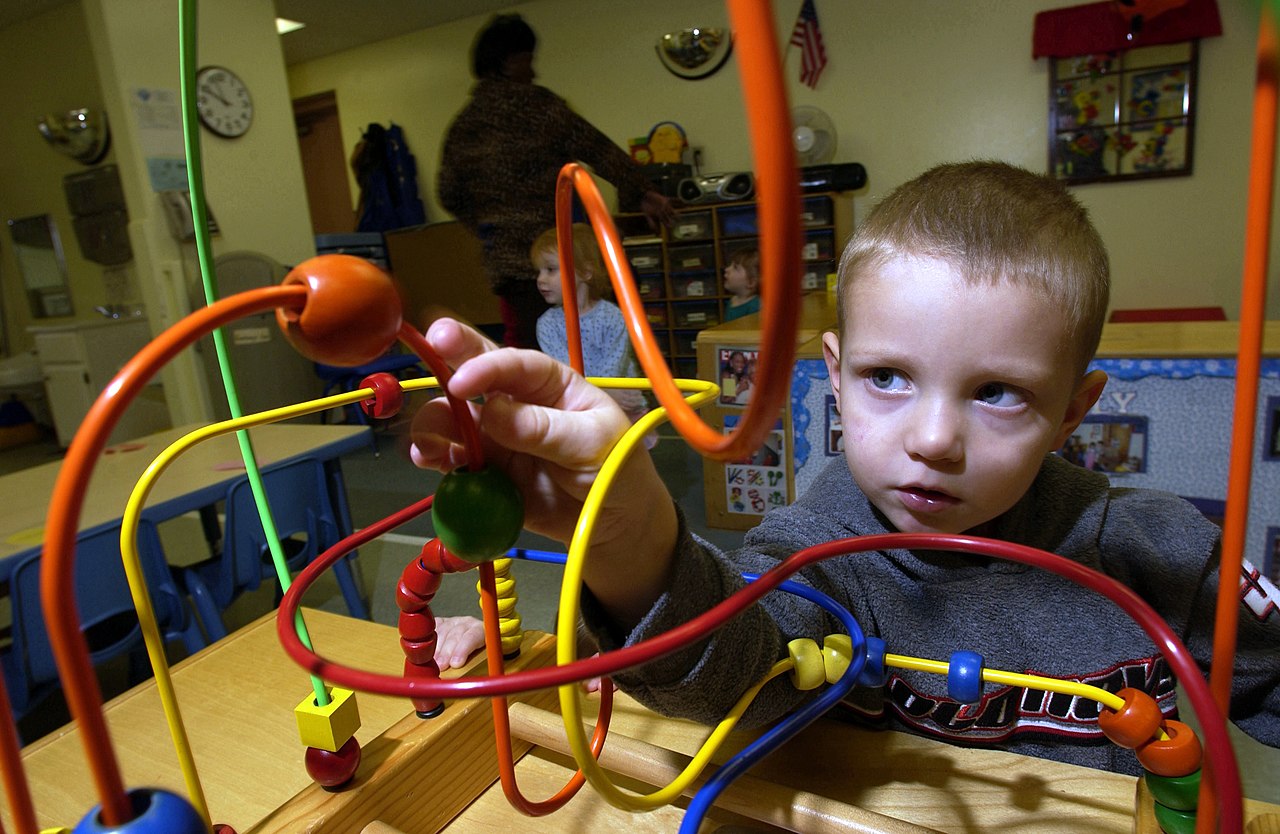
Typical nurseries provide a secure environment, age-appropriate toys and furnishings, outdoor play areas and routines that support eating, rest and active play. Staff plan activities that combine free play with guided small-group tasks such as stories, songs, sensory play and simple arts and crafts. Many nurseries divide children into rooms or groups by developmental stage to match activities and resources to needs.
Staffing and professional practice
Nursery staff commonly include trained early years practitioners, nursery nurses or childcare workers with qualifications or in-service training in early childhood development. Good practice emphasises observation and record-keeping so that staff can track progress, identify needs and communicate with families. Professional development and adherence to local regulatory standards are important for maintaining quality and child safety.
Curriculum and learning approaches
Learning in nurseries is usually play-based and child-centred. Settings may use recognised early years frameworks to structure activities and learning goals while allowing flexibility for child-led exploration. Key areas of focus typically include language and communication, social skills, early numeracy and creative expression. Outdoor play and physical development are also central elements of most programmes.
Health, safety and wellbeing
Health and safety are core responsibilities: nurseries implement routines for hygiene, nappy changing, medication and safe sleep for infants. Staff promote healthy eating and rest periods appropriate to age. Many settings develop policies on illness, safeguarding and emergency procedures and work with parents to meet a child’s medical or developmental needs.
Access, funding and regulation
Access to nursery provision, its cost and the form of public support vary widely between jurisdictions. Some countries provide subsidised hours or free places for certain age groups; others rely more on private provision. Local or national regulations set minimum standards for staffing, premises and child protection. Parents often consider licensing, inspection reports and accreditation when choosing a nursery.
Choosing a nursery
When selecting a nursery families typically visit potential settings to observe interactions, ask about staff qualifications and ratios, check safety measures and review daily routines. Good communication between staff and families and a welcoming atmosphere are commonly cited as important factors. Practical considerations such as opening hours, location and eligibility for funded places also influence choices.
Outcomes and benefits
High-quality nursery experiences help children develop social skills, language and early learning dispositions, and they offer families reliable childcare during working hours. Nurseries can ease the transition into formal schooling by familiarising children with group routines and teacher-led activities. The degree of long-term benefit depends on programme quality, consistency of attendance and family engagement.
Criticisms and challenges
Challenges include ensuring consistent quality across providers, meeting diverse needs (including children with additional learning or health needs), and making places affordable and accessible. Critics also note that low-quality provision can be simply custodial and offer limited educational value. Ongoing staff training, adequate funding and effective regulation are commonly proposed remedies.
Regional and cultural variations
Nursery models reflect cultural expectations and social policy. For example, practices and naming conventions in England can differ from those in other countries: some settings use the label FS1 for the first year of the foundation stage, while other countries integrate preschool provision differently with family support services. Internationally, programmes vary in emphasis, from child-centred play to more structured early learning.
Transition to school
Effective nurseries support transitions by sharing records with schools, preparing children for new routines and encouraging independence in dressing, eating and following simple instructions. Collaboration between nursery staff, primary schools and families helps children adapt socially and academically to the primary environment.
Further reading and related topics
For additional information see resources about preschool programmes, national education guidance, local rules on primary school entry, care for babies in group settings, resources for children and families, guidance on caring for toddlers, and regional policy summaries such as those for England.
Related articles
Author
AlegsaOnline.com Nursery (early childhood care and education) Leandro Alegsa
URL: https://en.alegsaonline.com/art/71490
Sources
- encarta.msn.com : Encarta definition of nursery school