
Nozomi — Japan’s early Mars probe (PLANET-B)
Nozomi (のぞみ), also known as PLANET-B, was Japan’s first dedicated spacecraft mission to Mars. Launched in 1998 by ISAS, it failed to achieve Mars orbit but provided experience and data for later programs.
Overview
Nozomi (のぞみ), also called PLANET-B, was a spacecraft developed by Japan to study Mars. The name Nozomi means “hope” in Japanese and reflected the project’s aim to explore the Martian environment from orbit. The probe represented an early effort by Japan to send a scientific mission beyond Earth orbit and to obtain direct measurements of Mars’ atmosphere, ionosphere and surrounding plasma environment.
Image gallery
9 Images




Development and launch
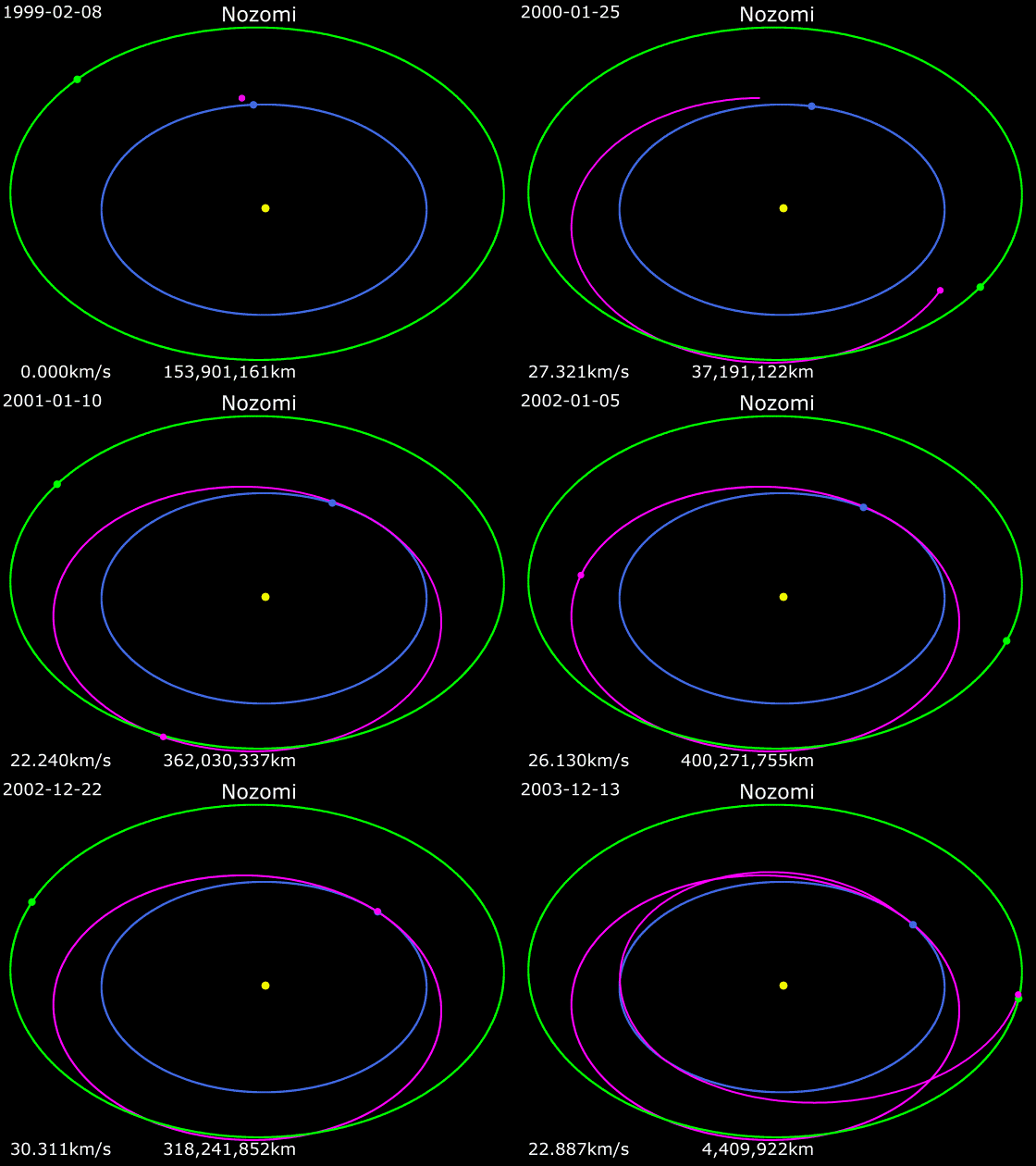
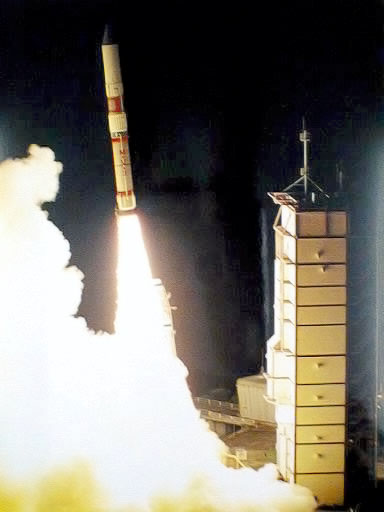
Nozomi was designed and managed by the Institute of Space and Astronautical Science (ISAS) of the University of Tokyo. The spacecraft was launched on July 3, 1998. Its cruise trajectory used gravity assists and long transfer phases planned to place the probe into an orbiting trajectory around Mars several years after launch.
Objectives and components
The mission’s scientific goals focused on understanding processes in the Martian upper atmosphere and near-space environment. Instruments were planned to measure magnetic fields, charged particles and atmospheric composition, and to obtain remote-sensing observations. Key objectives included:
- Characterizing the structure and dynamics of Mars’ upper atmosphere and ionosphere.
- Measuring solar wind interactions and plasma processes near Mars.
- Collecting data to improve models of atmospheric escape and climate evolution.
Mission timeline and outcome
After launch in 1998, Nozomi executed its interplanetary cruise and planned flybys, but during the voyage it experienced serious technical problems. Electrical and propulsion difficulties prevented the spacecraft from performing the burns needed for Mars orbit insertion. Because the probe could not be placed into its intended orbit, the scientific mission could not be completed as designed, and operations were formally ended on December 31, 2003.
Legacy and significance
Although Nozomi did not achieve its operational objectives at Mars, the project provided valuable engineering lessons for Japan’s space community and helped to build experience in deep-space mission design, operations and instrumentation. Nozomi remains notable as Japan’s first major attempt to send a dedicated scientific spacecraft to Mars and informed the planning of subsequent planetary missions.
For further reading on the mission and technical summaries, see resources by the responsible institutions and project summaries: ISAS mission pages, historical overviews from the University of Tokyo and general spacecraft listings at Japanese space program repositories. Other general references on Mars missions and orbital science may be found via broader agency or academic collections: spacecraft archives, mission catalogs at Mars research portals and educational materials on orbital mission design.
Related articles
Author
AlegsaOnline.com Nozomi — Japan’s early Mars probe (PLANET-B) Leandro Alegsa
URL: https://en.alegsaonline.com/art/71314
Sources
- isas.ac.jp : "Catalogue of ISAS Missions"
- solarsystem.nasa.gov : "Nozomi"
- books.google.com : Emerging Space Powers: The New Space Programs of Asia, the Middle East and South-America, p. 54
- asc-csa.gc.ca : "Nozomi's mission to Mars"