
Occultation (astronomy and general): definition, types, and significance
An occultation occurs when one object passes in front of another from an observer's viewpoint. This article explains types, geometry, scientific uses, observing methods, and notable historical examples.
Overview
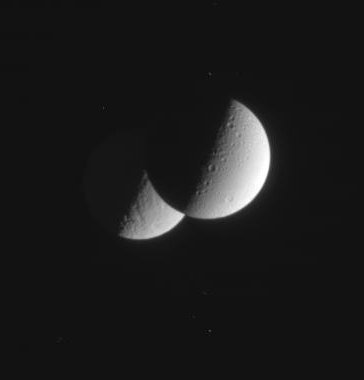
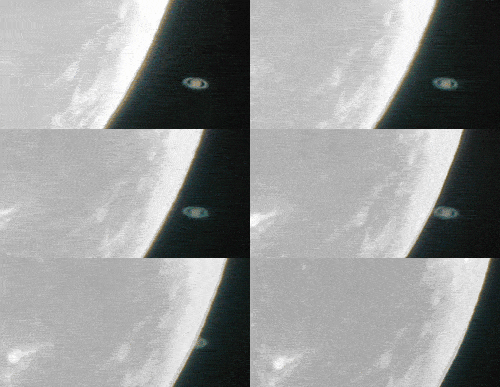
An occultation is an event in which one object is hidden from an observer by a nearer object passing between the observer and the more distant source. In astronomy this frequently describes cases where a planet or small body moves across the line of sight to a star, temporarily blocking its light. Some forms of occultation are commonly called eclipses, and the concept is central to observational astronomy. Outside astronomy, the term can simply mean any instance of a foreground object covering background structure.
Image gallery
8 Images





Geometry and observable characteristics
Whether an event is described as an occultation depends on relative angular sizes and alignment. If the nearer object entirely covers the background source as seen from the observer, the event is a full occultation; if partial, it is a grazing occultation or a transit when the foreground appears smaller. Observers record contact times (ingress and egress), light curves, and apparent shifts. Atmospheric refraction around the occulting body can cause gradual dimming rather than a sharp disappearance.
Types and distinctions
- Solar and lunar occultations — classic cases where the Moon or another body covers the Sun or a star.
- Planetary occultations and stellar occultations — used to probe atmospheres and rings.
- Asteroidal occultations — brief events valuable for sizing and shape measurements.
- Radio occultations — radio signals pass through an atmosphere and are analyzed for refractive effects.
Scientific and practical uses
Occultations are a powerful investigative tool. Timing and photometric data give precise positions that improve orbital models. When a star fades and reappears through an atmosphere, the manner of its dimming reveals temperature and pressure profiles. Occultations have led to discoveries such as planetary rings and tenuous atmospheres around distant bodies, and they provide high-resolution size and shape information for small solar system objects that are otherwise too faint for direct imaging.
Observation techniques and contributions
Both professional observatories and skilled amateurs contribute to occultation science. Multiple observers spread across a region can record different chords across an occulting object's silhouette; combining these chords reconstructs cross-sections and reveals irregular shapes. Precision timing with photometers, fast cameras, and radio receivers is typical. Predictive ephemerides and global coordination improve the success rate of targeted observations.
History and notable examples
Historically, occultations have played key roles in planetary and stellar research. Occultation measurements refined planetary positions before radar and space missions, and more recently they revealed faint rings and atmospheres around distant objects. The technique remains a cost-effective way to extract detailed physical information about small and distant bodies from Earth-based observations.
Context and broader meaning
In everyday language, occultation can refer to any foreground object obscuring a background feature. In scientific contexts it carries precise geometric and observational meaning and is distinguished from related phenomena such as transits and eclipses by angular size and the nature of coverage. Accurate predictions and observations of occultations continue to be important for navigation, research, and public outreach.
Related articles
Author
AlegsaOnline.com Occultation (astronomy and general): definition, types, and significance Leandro Alegsa
URL: https://en.alegsaonline.com/art/71827