
Nintendogs — Virtual pet simulation for the Nintendo DS
Nintendogs is a virtual pet simulation for the Nintendo DS. Players raise, train and compete with puppies using touchscreen and microphone controls. Several retail versions emphasize different breeds; a 3DS sequel added cats.
Nintendogs (Japanese: ニンテンドッグス, Hepburn: Nintendoggusu) is a virtual pet simulation video game developed for the Nintendo DS. Designed to showcase the DS's touchscreen and microphone, the title places the player in the role of a dog owner who selects, names and cares for a puppy. Interaction includes stroking, tapping and speaking voice commands; the software tracks training progress, affection and activity to influence a dog's behaviour over time.
Image gallery
1 Image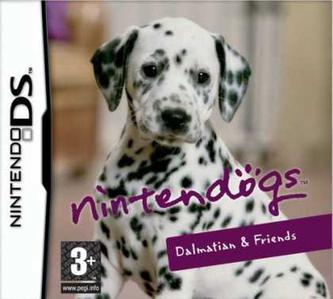
Overview
Nintendogs emphasizes casual, ongoing play instead of levels or combat. The player begins by choosing a breed and name, and then attends to basic needs, trains the animal, and enters competitions. Regular interaction builds trainer points, unlocks items and new breeds, while neglect can reduce a dog's loyalty and may lead to it running away. This design encourages daily check-ins and creates a lightweight emotional bond between player and pet.
Gameplay and mechanics
The core activities include care, training and competitive events. Care tasks are simple and tactile; players feed and hydrate their dogs by selecting items from menus, with in-game references to food and drinks. Grooming uses the touchscreen for actions such as being washed or brushed. Training relies on repetition and voice input through the DS microphone, teaching tricks that range from basic sits to more complex routines. Successful training and play increase trainer points, which unlock additional content.
- Competitions: three primary contest types are available — agility trials, disc competitions and obedience trials — each testing different skills.
- Social features: the game supports local wireless play so owners can meet other players, exchange friend codes and enter multiplayer activities.
- Management: players can keep a limited number of dogs at home and store extras at a Dog Hotel; trainer points and in-game achievements expand available options.
Versions and breeds
Nintendogs was released in several retail editions that emphasized particular breed groups. Examples include Dalmatian and Friends, Chihuahua and Friends, Labrador and Friends and Dachshund and Friends. Each version offered a different starting roster, although most breeds could be unlocked across editions by earning trainer points or meeting in-game conditions. This encouraged trading and interaction among players who owned different versions.
Development and release
Launched early in the DS life cycle, Nintendogs was conceived to demonstrate the handheld's novel input methods and appeal to a broad, nontraditional gaming audience. Its simple controls, charming audiovisual presentation and family-friendly focus helped it reach players unfamiliar with video games and contributed to the DS's wide market success.
Reception and impact
Critically, Nintendogs was praised for its intuitive use of touch and voice controls, its accessible design and its ability to create emotional engagement through minimal mechanics. Commercially it performed strongly, becoming a high-selling title on the DS and often cited as an example of how platform-specific features can shape game design. The title influenced later casual and pet-care simulations by demonstrating that short, repeatable play sessions could form the basis of a compelling experience.
Legacy and sequel
The series continued with a follow-up that expanded the concept and targeted a later Nintendo handheld. Nintendogs + Cats was released for the Nintendo 3DS and added feline companions while using the new system's features to extend gameplay. The original Nintendogs remains an often-cited example of approachable simulation design and the effective use of novel input methods to create personality in virtual pets.
Criticism and considerations
While widely liked, the game received some criticism for limited long-term depth and repetitive tasks. The possibility that a neglected dog could run away was also discussed by players and commentators as a strong incentive to keep playing, which some viewed as clever design and others as potentially manipulative. Nevertheless, its overall accessibility and charm preserved its reputation as a successful family title.
Practical tips for players
- Interact daily: short sessions maintain a dog's happiness and prevent running away.
- Use voice commands consistently: the microphone recognises repeated phrases better than one-off attempts.
- Enter contests to gain trainer points and unlock additional breeds and items.
- Explore local wireless features to trade, meet other players and expand available content.
Nintendogs combined simple care mechanics, recognizable pet behaviour and hardware-specific controls to craft a memorable handheld experience. Its success demonstrated how lowering barriers to interaction—through touch and voice—could broaden a platform's audience and inspire later titles in the casual and life-simulation genres.
Related articles
Author
AlegsaOnline.com Nintendogs — Virtual pet simulation for the Nintendo DS Leandro Alegsa
URL: https://en.alegsaonline.com/art/70314
Sources
- palgn.com.au : "Updated Australian Release List - 12/09/05"
- nintendo.com.au : "Introducing Pink Nintendo DS Lite and nintendogs Dalmatian and Friends"