
Achillea millefolium (yarrow)
Achillea millefolium, commonly called yarrow, is a widespread perennial herb in the daisy family, valued for its feathery leaves, flat flower clusters, traditional medicinal uses, and role in gardens and wildlands.
Overview
Achillea millefolium, commonly known as yarrow, is a herbaceous perennial in the family Asteraceae. It grows across temperate parts of the Northern Hemisphere and is notable for its flat-topped clusters of small composite flowers and finely divided, feathery leaves. The plant has been cultivated for ornament, used in folk medicine, and appears frequently in meadows, roadsides, and disturbed ground.
Image gallery
10 Images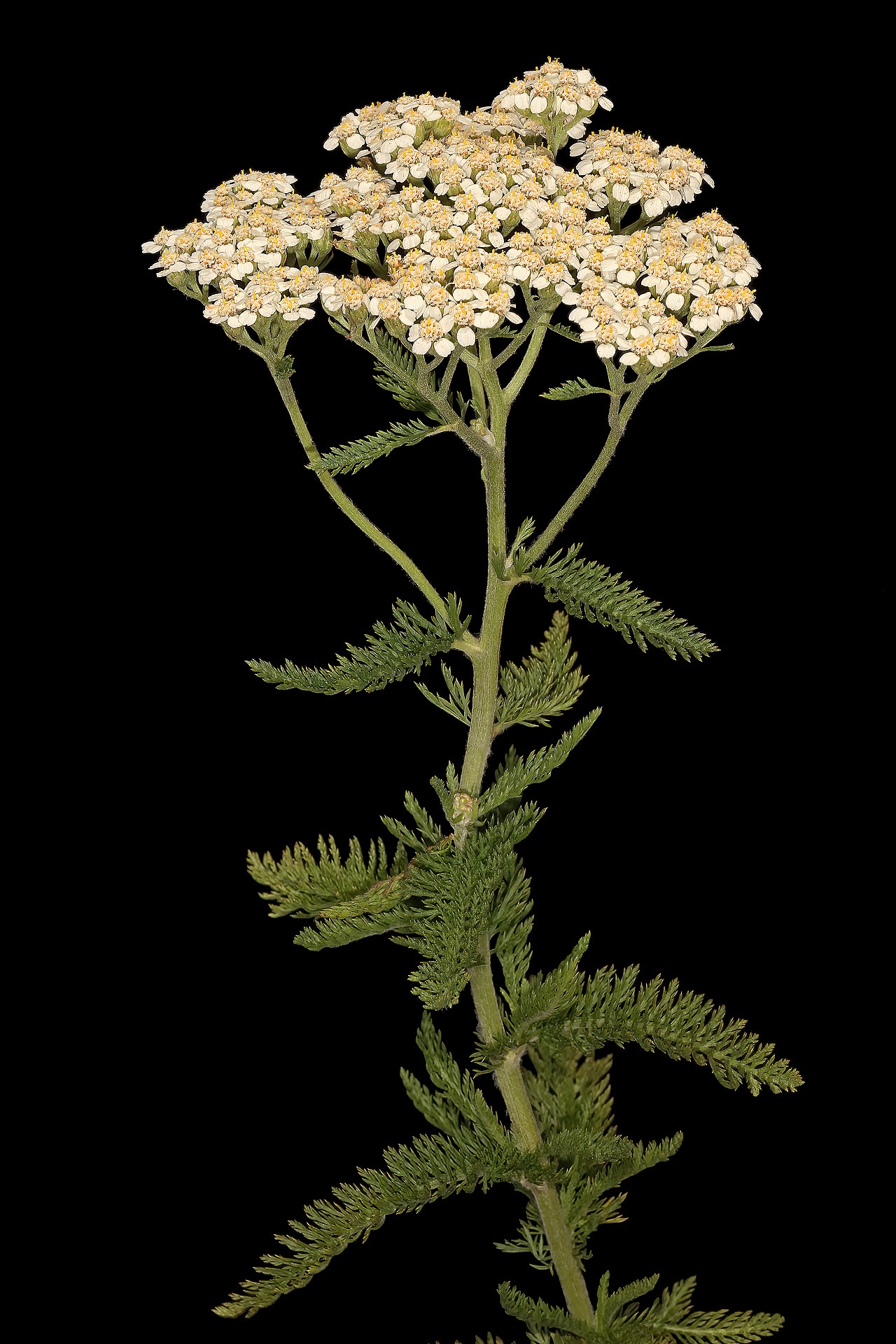


Characteristics
Yarrow typically forms low clumps with erect stems, bearing pinnate to bipinnate leaves that give the species its common name "millefolium" (thousand leaves). Flower heads are held in corymbs and may be white, cream, pink or pale red depending on variety. The flowers are composite florets typical of the daisy family and often emit a sweet, slightly aromatic scent.
- Growth habit: perennial, rhizomatous, spreads by seed and underground stems.
- Leaves: finely divided, green to gray-green, aromatic when crushed.
- Flowers: small disk and ray florets arranged in flat clusters; bloom from late spring into summer in many regions.
Habitat and distribution
Native to much of Europe, Asia, and parts of North America, yarrow prefers full sun and well-drained soils but tolerates a wide range of conditions, including dry and marginal sites. It commonly colonizes grasslands, open woods, and roadside verges. For regional details consult a local flora or plant database: distribution resources.
Uses and importance
Yarrow has a long history of uses in herbal medicine, traditional practices, and horticulture. Historically it was applied to stop minor bleeding and to treat wounds and skin irritations; this practical role is reflected in folk names like "nosebleed plant" and "soldier's woundwort." Herbalists use preparations such as infusions and topical poultices, and gardeners value certain cultivars for dried flower arrangements and pollinator-friendly borders. For general botanical information see plant reference.
Chemistry and safety
Plant constituents include a mixture of essential oils, flavonoids, and bitter compounds that are believed to contribute to its aromatic and topical effects. People allergic to other members of the Asteraceae family may experience contact dermatitis from yarrow. Because some constituents can affect blood clotting or interact with medications, caution is advised for pregnant women, nursing mothers, and people taking anticoagulant drugs; consult medical guidance before therapeutic use. For family-level information refer to Asteraceae overview.
History, names and notable facts
The botanical name recalls the legendary use of the plant by the Greek hero Achilles for treating soldiers' wounds, and this association persists in common names across languages. Yarrow also has roles in cultural traditions, from folklore to modern permaculture practices as a companion plant that can attract beneficial insects. For scent comparisons and horticultural notes see related horticulture resources.
Distinctions and similar species
Several related Achillea species and garden cultivars resemble A. millefolium but differ in flower color, height, or leaf form. Proper identification relies on a combination of floral arrangement, leaf morphology, and growth habit. When using or cultivating yarrow, select verified plant material and reliable references to distinguish it from lookalikes.
Related articles
Author
AlegsaOnline.com Achillea millefolium (yarrow) Leandro Alegsa
URL: https://en.alegsaonline.com/art/702
Sources
- species.wikimedia.org : Achillea millefolium