
Acorn: the nut-like fruit of oak trees — description, ecology and uses
Overview of the acorn: structure, development, ecological importance for wildlife, human uses and processing, tannins and safety, and its role in oak regeneration and culture.
Overview
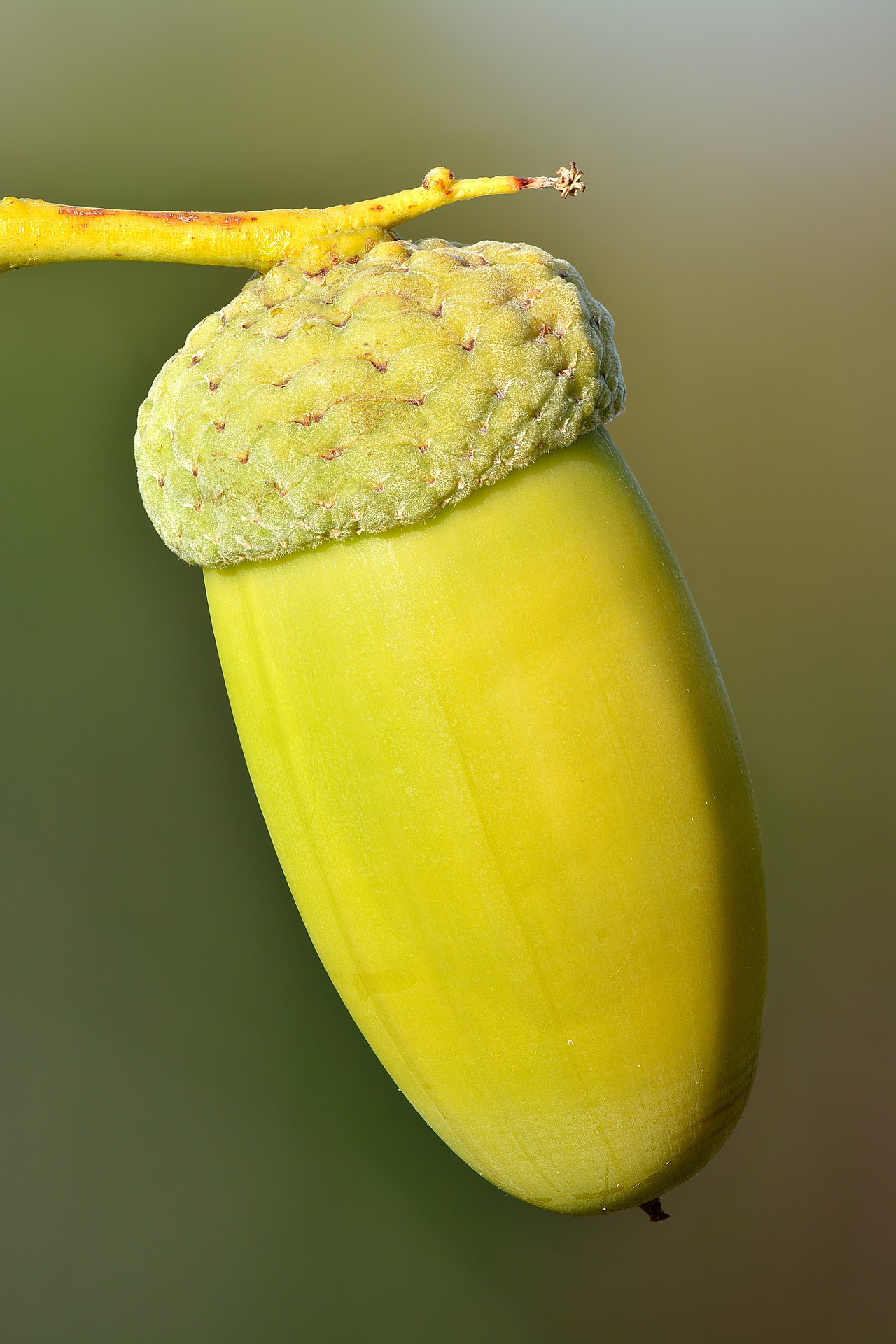
The fruit commonly called the acorn is produced by the oak. Botanically treated as a nut, the acorn usually contains a single seed (occasionally two) protected by a hard, often leathery shell. Individual acorns vary widely in size and shape among species, and their external cup or cap distinguishes many taxa. Acorns are an easily recognizable reproductive structure of oaks and an important seasonal resource in many temperate and Mediterranean ecosystems.
Image gallery
10 Images





Structure and development
Structurally an acorn consists of a cupule (the cup or cap of overlapping scales), the kernel or nut proper that contains stored food reserves, and the embryo. Acorn maturation may take one growing season, as in many white oaks, or two seasons, as in many red oaks; this difference is a basic botanical trait used in classification. During development the acorn accumulates starches and oils that nourish the embryo and, later, animals and people that eat them. Germination begins when moisture and temperature conditions permit the embryo to break dormancy, often the spring after the acorn falls.
Ecology, mast years and consumers
Acorns are a key food resource where oaks occur. Oaks frequently show masting behavior: many trees in a population produce large crops in the same year, then relatively few in others. These boom-and-bust cycles influence populations of animals that depend on acorns. Numerous birds, notably jays, and ground-feeding species such as pigeons and some ducks, as well as insectivores like certain woodpeckers, feed on acorns. Small vertebrates, including various small mammals, mice and squirrels, collect and often cache acorns, storing them for winter and inadvertently aiding dispersal. Broader groups of rodents participate in this network of use and movement. Larger mammals such as pigs, bears and deer can consume great quantities in autumn; in some systems acorns make up a substantial portion of seasonal diets.
Caching, dispersal and regeneration
Animals that cache acorns are among the most important dispersers of oaks. Species that forget or fail to retrieve stored acorns provide opportunities for seedlings to establish away from parent trees, reducing competition and spreading genetic diversity. However, many cached acorns are eaten before they can germinate. Acorn predation by insects, fungi and vertebrates can affect seed survival; environmental conditions such as soil moisture and predation pressure determine recruitment rates of young oaks.
Human uses and processing
People have used acorns for food, fodder and material uses in many regions. Because many acorns contain bitter and astringent compounds, traditional processing commonly involves leaching or boiling to remove tannins, then drying and grinding the kernels into meal or flour. The processed product can be used for porridges, breads or as a supplemental flour. In pastoral systems, acorns have long been used as seasonal feed for pigs in managed oak woodlands such as the Mediterranean dehesas. Acorns have also been used historically for tannin extraction, dyeing and occasional folk remedies.
Tannins, nutrition and safety
Acorns contain polyphenolic compounds commonly referred to as tannins, which vary in concentration among oak groups and individual trees. Acorns from the white oak group tend to be lower in tannins and milder in flavor than many from the red oak group. Tannins contribute to bitterness and can reduce digestibility; in large amounts they may be harmful to some animals. For example, uncooked or large quantities of acorns can cause problems in horses and other livestock. Proper processing and moderation reduce risks and make acorns a useful source of carbohydrates and fats in human diets.
Management, conservation and cultural aspects
Because acorn production influences wildlife populations and traditional agricultural practices, forest managers and conservationists consider mast dynamics when planning for game species, reforestation and agroforestry systems. Cultural uses and local knowledge about acorn collection, processing and seasonal management persist in many places and inform sustainable harvesting practices. Protecting oak habitats and maintaining a diversity of oak species supports resilient acorn production and the wide array of organisms that rely on it.
Notable points
- Acorns are a single-seeded fruit with a distinctive cupule and hard shell.
- Maturation timing (one- versus two-year acorns) is a key taxonomic trait among species.
- Caching animals such as squirrels and jays are important natural dispersers for oaks.
- Tannin content dictates palatability and processing needs; traditional methods remove tannins for safe consumption.
For further study consult regional floras, wildlife ecology texts and ethnobotanical sources that treat acorn use, processing and the role of oaks in landscape management.
Questions and answers
Q: What is an acorn?
A: An acorn is the fruit of the oak tree, which is a nut with a single seed enclosed in a tough, leathery shell.
Q: How big can acorns be?
A: Acorns can vary from 1 – 6 cm long and 0.8 – 4 cm broad.
Q: How long does it take for acorns to mature?
A: Acorns take between about 6 or 24 months (depending on the species) to mature.
Q: What kind of animals feed on acorns?
A: Birds such as jays, pigeons, some ducks, and several species of woodpeckers, small mammals like mice, squirrels, and several other rodents, and large mammals such as pigs, bears, and deer feed on acorns.
Q: Do horses eat acorns?
A: No, horses cannot eat acorns because they contain tannins which are toxic to them.
Q: Can tannins in acorns be removed?
A: Yes, the tannins in acorns can be removed by soaking them in water.
Q: In what areas are acorns an important wildlife food?
A: Acorns are an important wildlife food in areas where oaks grow.
Related articles
Author
AlegsaOnline.com Acorn: the nut-like fruit of oak trees — description, ecology and uses Leandro Alegsa
URL: https://en.alegsaonline.com/art/742