
Acorales — the sweet flag order of flowering plants
Acorales is a small order of flowering plants containing the single family Acoraceae and genus Acorus. It is the earliest-diverging lineage of monocots and includes aromatic, wetland plants known as sweet flags.
Overview
Acorales is a very small order of flowering plants commonly known as the sweet flags. It contains a single family, Acoraceae, and a single genus, Acorus, whose members are herbaceous, rhizomatous plants that often occur in wetlands. Modern molecular studies place Acorales as the most basal, or earliest-diverging, lineage within the monocotyledons; that relationship is summarized in many taxonomic treatments and databases taxonomic sources. Monocotyledons are seed plants typically distinguished by having one seed leaf, or cotyledon monocots and a number of characteristic features including parallel-veined leaves and floral parts often in threes. The term "cotyledon" is used for the single seed leaf in these plants seed leaf.
Image gallery
4 Images

Characteristics
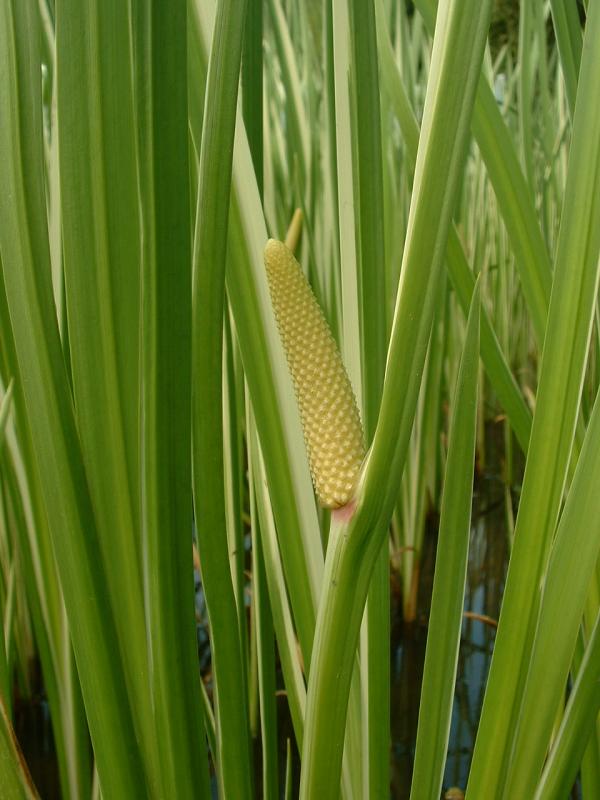
Plants in Acorales are perennial and grow from aromatic, creeping rhizomes. Leaves are usually arranged in two ranks, narrow and sword-like, superficially resembling those of irises. The flowers are small, lacking showy petals, and are borne on a spike-like inflorescence called a spadix that emerges from a bract. The reproductive structures and floral anatomy are simple compared with many other monocots, reflecting their early divergence in the monocot lineage.
Distribution and habitat
Acorus species are native to temperate and subtropical regions of the Northern Hemisphere. They favor wetlands, marsh edges, stream banks and damp meadows where soils are consistently moist. Because they spread by rhizomes, they can form dense colonies along water margins and are sometimes used in garden plantings for damp areas.
Uses and cultural importance
Several Acorus species have long been used by people for their fragrant rhizomes. Historically they have been used in traditional medicine, perfumery and as flavoring agents and incense. One common cultivated species, often called sweet flag, produces aromatic compounds that have been valued in herbal traditions. At the same time, some chemical constituents found in certain strains have led to regulatory restrictions on their use as a food additive in some countries, so caution and local guidance are advisable.
Taxonomy, evolution and notable facts
Acorales is unusual among plant orders for containing only one family and one recognized genus. Taxonomic treatments have varied over time, but contemporary classification systems recognize Acorales as distinct and isolated from other monocots. Its placement as sister to all other monocots makes it important for studies of the early evolution of the group because comparing Acorus anatomy and genetics with other monocots and with more primitive angiosperms can illuminate ancestral traits.
Identification and species considerations
- Key identifying features: aromatic rhizome, grass-like leaves, spadix inflorescence.
- Species concepts: the number of accepted Acorus species varies among botanists due to geographic variation and cultivation; commonly two to four names are cited in floras.
- Conservation and cultivation: some species are common and widely cultivated, while wild populations can be affected by habitat loss in wetlands.
Acorales thus represents a small but botanically significant group: modest in diversity yet important for understanding monocot origins, and notable for its cultural uses and characteristic wetland habit.
Related articles
Author
AlegsaOnline.com Acorales — the sweet flag order of flowering plants Leandro Alegsa
URL: https://en.alegsaonline.com/art/740