
ATLAS experiment (A Toroidal LHC ApparatuS)
ATLAS is a large general-purpose particle detector at CERN's Large Hadron Collider. It records proton collisions to study the Higgs boson, test the Standard Model and search for new physics.
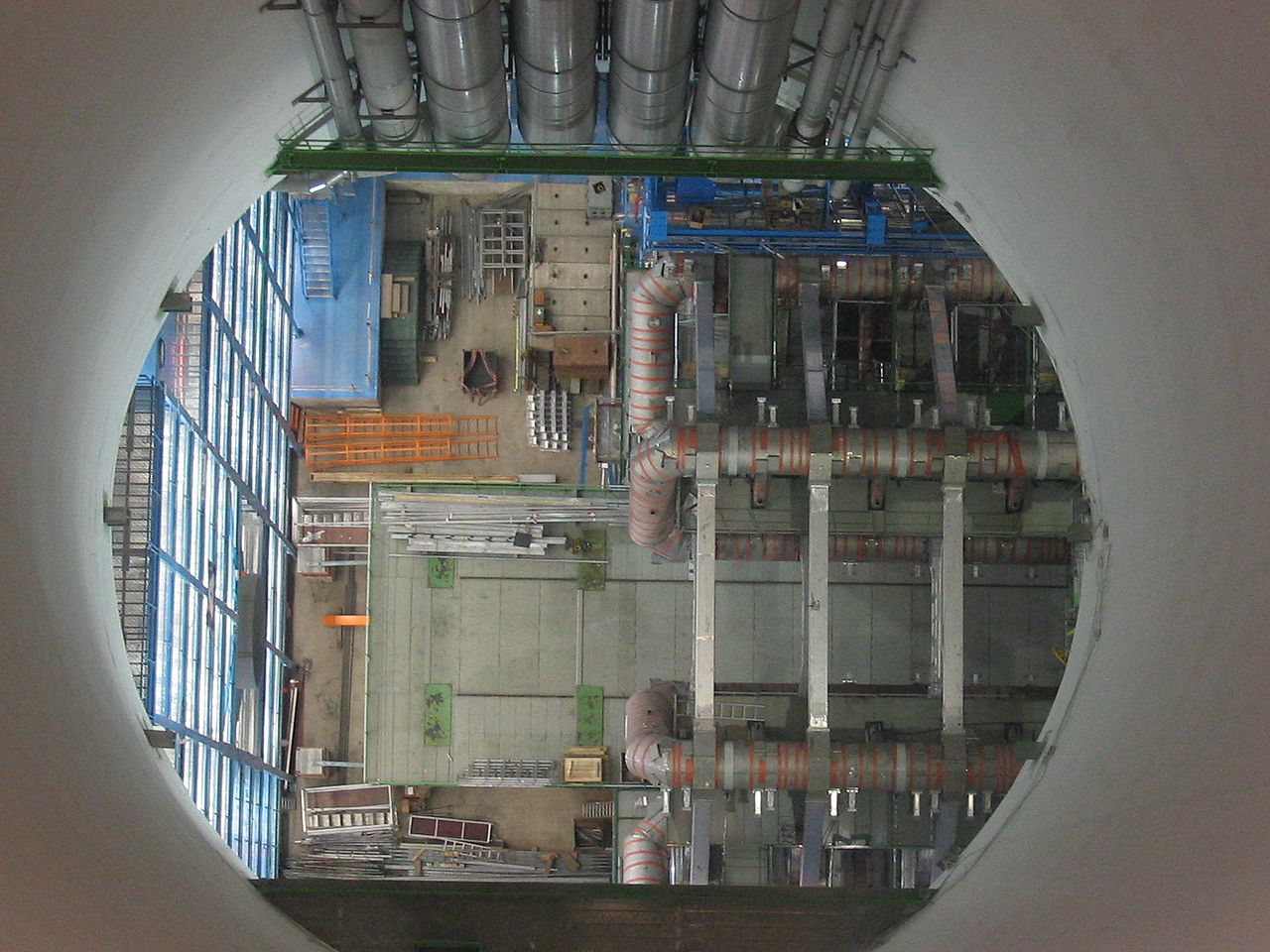
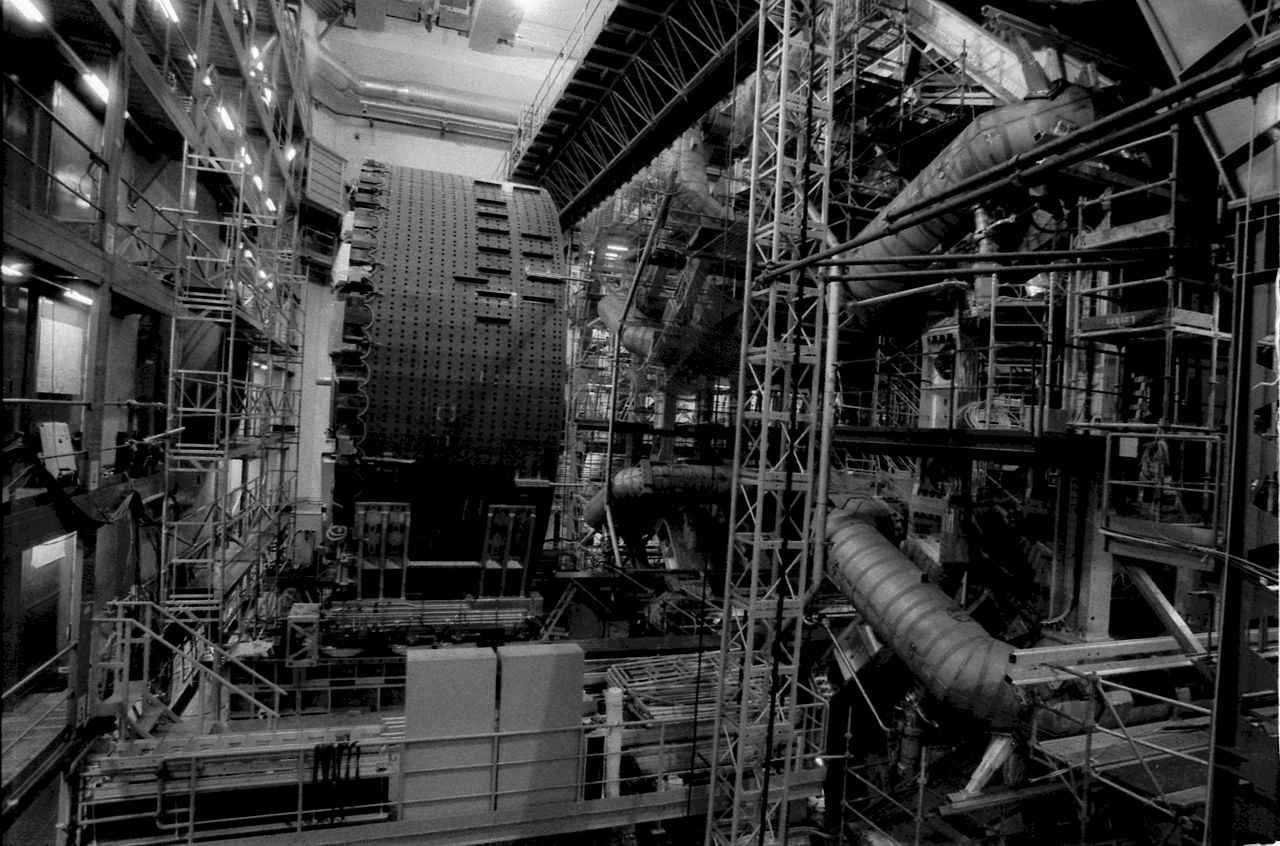
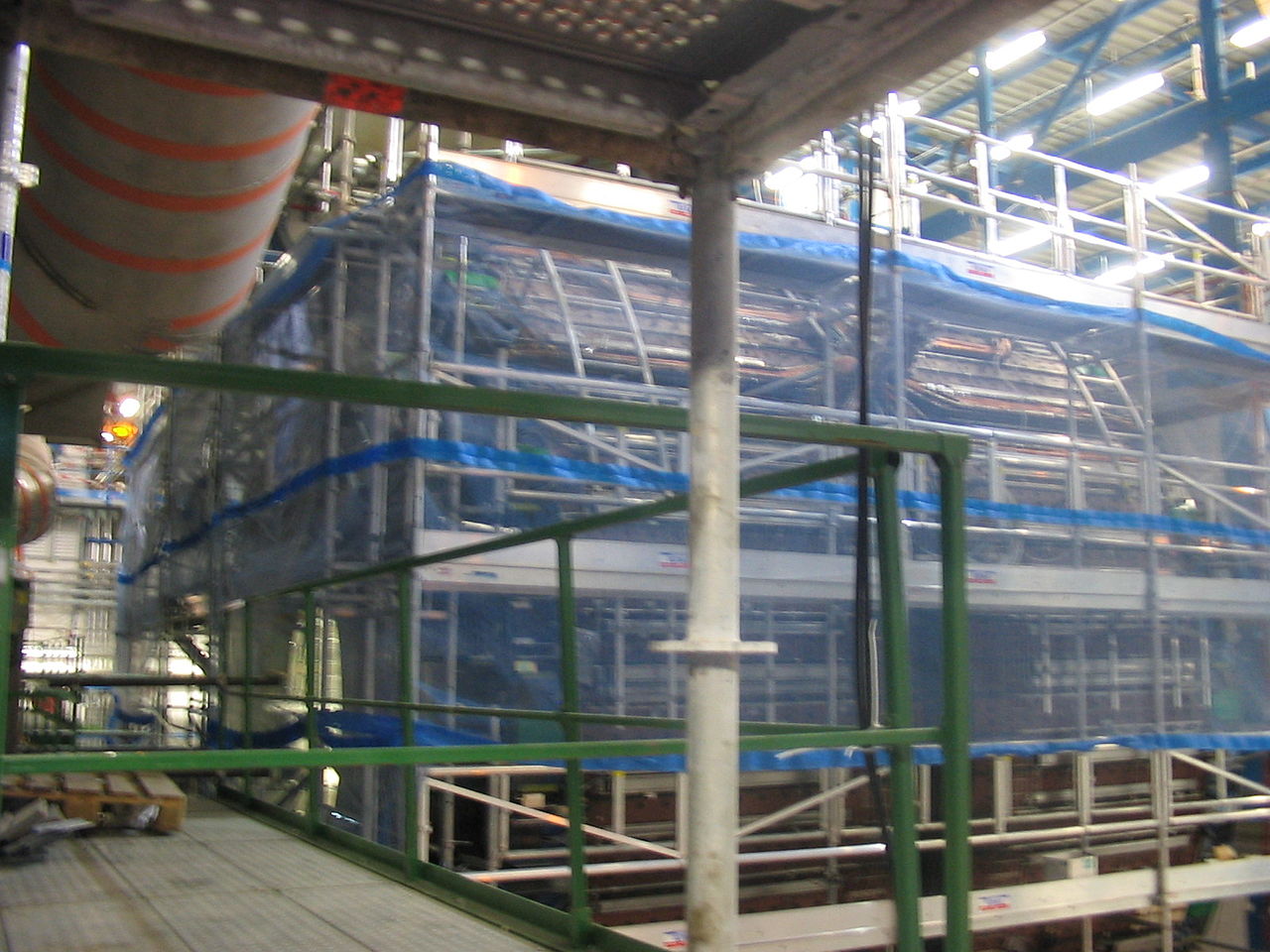
The ATLAS experiment is one of the principal detectors built to record and analyse collisions produced by the Large Hadron Collider. Located at the European laboratory CERN on the Franco–Swiss border, ATLAS is a general-purpose detector designed to measure a broad range of phenomena from common processes to rare events. The apparatus is enormous: roughly 46 metres in length and about 25 metres in diameter, with a mass of the order of 7,000 tonnes. Its primary role is to reconstruct the debris of high-energy proton collisions so physicists can study heavy particles, test theoretical models and search for signatures of phenomena beyond the established framework.
Image gallery
9 Images



Design and major components
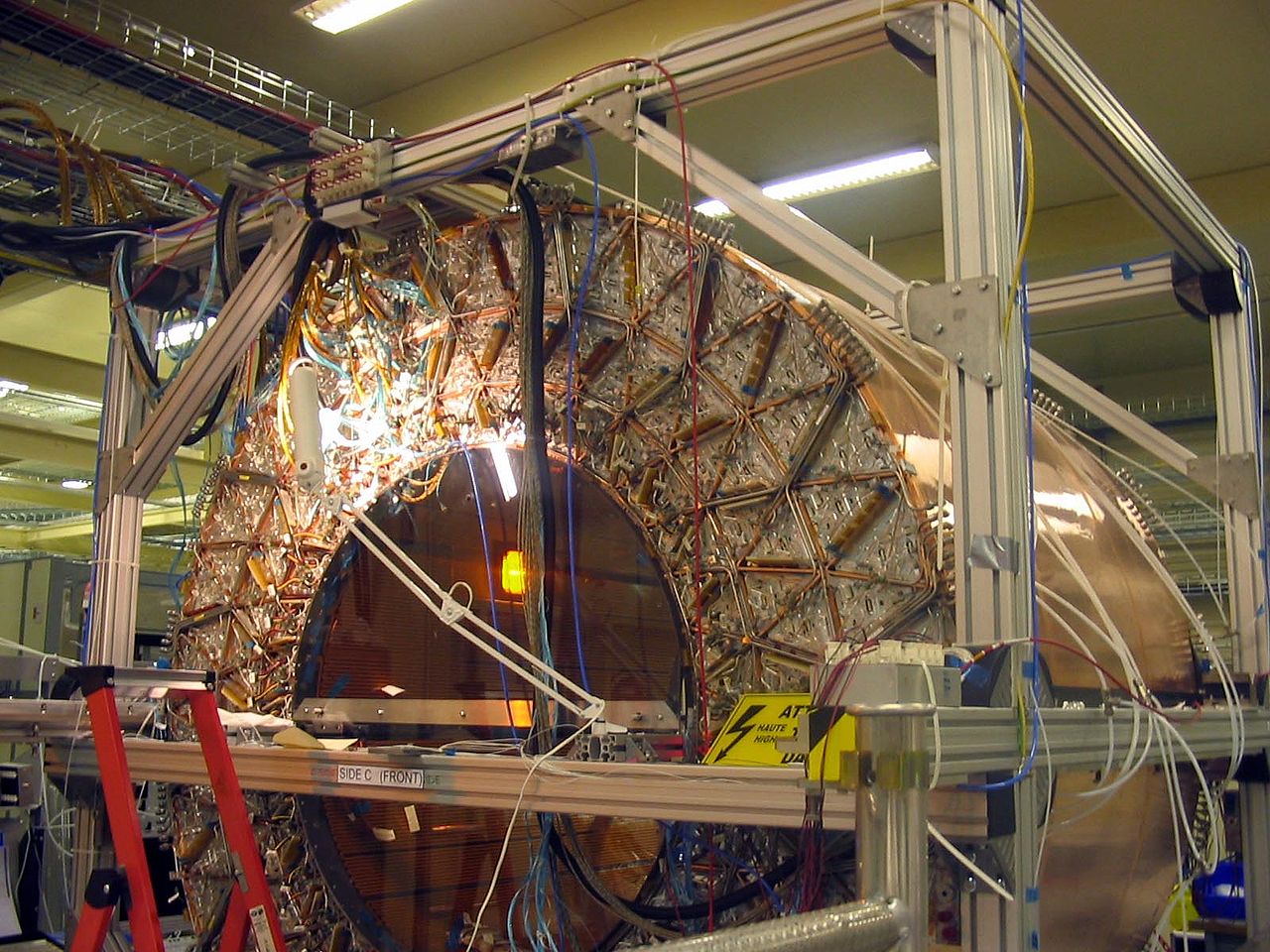
ATLAS is a layered particle detector built around the collision point. Each layer performs a specialised measurement so that the paths, energies and identities of particles can be determined. Key subsystems include:
- Inner detector / tracker: precision silicon and transition radiation devices that measure charged-particle trajectories close to the collision.
- Calorimeters: electromagnetic and hadronic calorimeters that absorb particles to measure their energy.
- Muon spectrometer: the outermost system dedicated to tracking muons, which penetrate the calorimeters.
- Magnet system: large toroidal magnets give charged particles curved paths for momentum measurement; the toroidal design inspired the experiment's name.
- Trigger and data acquisition: fast electronics and software select potentially interesting collisions out of the millions that occur per second.
Collaboration, computing and operations
ATLAS is an international collaboration involving roughly 2,000 scientists and many engineers across more than 160 institutions in dozens of countries. It operates with a distributed computing model: selected event data are processed and stored on a global grid of computers to allow teams worldwide to analyse the results. The experiment collects petabytes of data each year and relies on ongoing software and hardware upgrades to cope with increasing collision rates.
History and scientific achievements
Construction and assembly of ATLAS took place over many years before proton collisions began in the particle accelerator in 2008; the detector recorded its first beam events in September of that year. One of the most notable milestones was the joint observation, together with the CMS experiment, of a Higgs-like boson in 2012, a discovery that confirmed the mechanism responsible for particle masses within the Standard Model. Since then ATLAS has published precision measurements of known processes and searches for new signatures.
Scientific goals and ongoing research
ATLAS targets several broad scientific aims: precise tests of the Standard Model, detailed studies of the Higgs boson and its properties, and searches for phenomena that would point to new theories such as supersymmetry, extra dimensions or dark-matter candidates. Because it operates at far higher energy than many lower-energy accelerators, ATLAS can access rare and massive states that were previously unreachable.
Upgrades and future prospects
As the LHC increases its delivered luminosity, ATLAS undergoes staged upgrades to its detectors, electronics and computing to cope with higher event rates and radiation. These improvements aim to sharpen sensitivity to rare processes and extend the experiment's discovery potential during future running periods. For introductory resources, technical details and outreach materials, consult the experiment pages on the LHC site and affiliated institutions: mass and particle searches, collaboration lists and public information are widely available through official channels.
For more technical references and collaboration details see the project homepages and review articles for experimental particle physics. Additional information on the LHC complex, other experiments and accelerator technology can be found in linked resources and documentation provided by the laboratory and its partners.
Related articles
Author
AlegsaOnline.com ATLAS experiment (A Toroidal LHC ApparatuS) Leandro Alegsa
URL: https://en.alegsaonline.com/art/7012
Sources
- atlaseye-webpub.web.cern.ch : "UX15 Installation; WEB cameras"
- library.web.cern.ch : "ATLAS collaboration records"
- press.web.cern.ch : "World's largest superconducting magnet switches on"
- atlas.ch : "First beam and first events in ATLAS"