
CERN: Europe’s Laboratory for Particle Physics and the Large Hadron Collider
CERN is the European Organization for Nuclear Research, a major international laboratory near Geneva that operates the Large Hadron Collider and supports particle-physics experiments, education and technology transfer.
Overview
CERN is an international research organisation based near Geneva, Switzerland; its campus sits at coordinates 46°14′03″N 6°03′10″E close to the city of Geneva. The body’s formal name is the European Organization for Nuclear Research, though the historic acronym CERN derives from the earlier Conseil Européen pour la Recherche Nucléaire. It is one of the world’s leading centres for experimental particle physics, hosting large-scale accelerators, detectors and a large community of scientists and engineers.
Image gallery
10 Images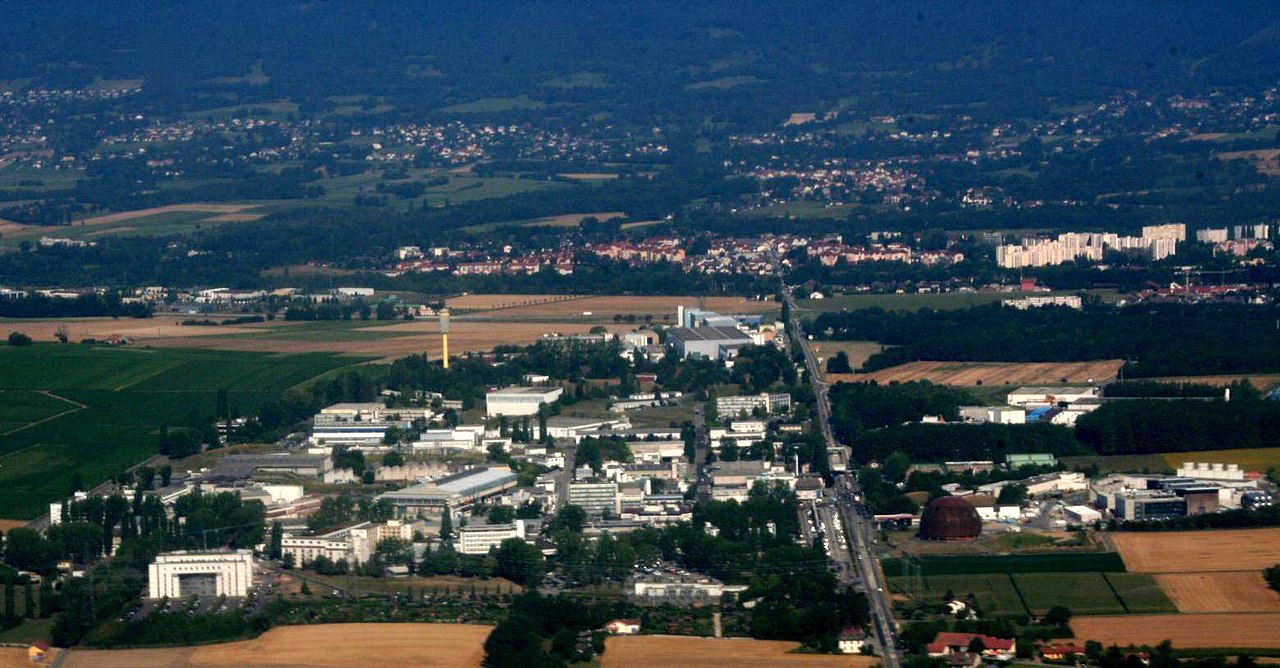


Organization and membership
CERN was founded in 1954 as a collaborative European effort to rebuild and coordinate fundamental physics research after the Second World War. Today it is governed by an assembly of member states and associated partners; information about the member states and cooperation agreements is maintained by the organisation. The laboratory operates under a multinational treaty and combines permanent staff, visiting researchers and students in long-term and short-term programs.
Facilities and major components
The site contains an array of installations that together enable high-energy physics experiments. These include underground accelerator rings, surface laboratories, computing centres and experimental caverns. CERN functions as a hub for the global particle-physics community and is often described as the world’s largest particle physics laboratory. Roughly 2,600 people work there as staff and thousands more—often cited as about 7,800 scientists from universities and research institutes—participate in experiments and analysis.
Large Hadron Collider and experiments
The laboratory is best known for the Large Hadron Collider (LHC), a superconducting ring built to collide protons and heavy ions at the highest energies achievable in a laboratory setting. The LHC is the most powerful particle accelerator in operation and supports multiple, large detector experiments—such as ATLAS, CMS, ALICE and LHCb—that investigate the fundamental constituents of matter and the forces between them. These experiments combine precision instrumentation, large-scale data acquisition and worldwide computing networks to record and analyse collision events.
History and development
CERN’s creation in the early 1950s reflected a multinational decision to pool resources for basic research. Over the following decades the organisation developed successive generations of accelerators, pioneered technologies now common in medicine and industry, and helped establish major international collaborations in science. The LHC project, completed in the early 21st century, represented a major expansion that enabled searches for predicted particles and phenomena at unprecedented energy scales.
Scientific impact, applications and outreach
CERN’s scientific goals focus on understanding matter, forces and the origins of the universe through experiments and theory. Its technical contributions extend beyond physics: technologies in accelerators, detectors, superconducting magnets, computing and data management have been transferred to medical imaging, cancer therapy, industrial inspection and information technology. CERN also runs education, training and public-engagement programs to communicate modern physics and support the next generation of researchers.
Notable facts and distinctions
- Founded in 1954 to foster European collaboration in nuclear and particle physics.
- Hosts the Large Hadron Collider, the largest accelerator complex in the world.
- Serves a worldwide community of scientists, engineers and students.
- Has a long track record of technological innovation with broad societal applications.
For further institutional details, governance documents and lists of experiments consult the organisation’s official resources and collaboration pages.
Related articles
Author
AlegsaOnline.com CERN: Europe’s Laboratory for Particle Physics and the Large Hadron Collider Leandro Alegsa
URL: https://en.alegsaonline.com/art/18201