
Nicomachus of Gerasa: Pythagorean Mathematician and Music Theorist
Overview of Nicomachus of Gerasa (c. 60–c. 120): life, major works (Introduction to Arithmetic, Manual of Harmonics), mathematical outlook, influence on later tradition and distinctions from rigorous Greek geometry.
Nicomachus of Gerasa was an influential mathematician and philosophical writer active around the late first and early second centuries CE. Born in Gerasa in what was then Roman Syria (today Jerash, Jordan), he is best known for two surviving works that shaped the way later generations approached number theory and musical theory. His writings present arithmetic as foundational for other mathematical and scientific disciplines and reflect a Pythagorean approach to number and proportion.
Image gallery
4 Images
Life and intellectual context
Details of Nicomachus's life are sparse and come mainly from references in later authors. He wrote in Greek and belonged to a school that valued the philosophical and symbolic aspects of numbers as well as their practical properties. He drew on earlier Greek traditions, including Platonic and Aristotelian thought; Nicomachus shows explicit debt to Aristotle in his method of discussing categories and properties. His tone is expository and didactic rather than axiomatic or formally deductive.
Major works
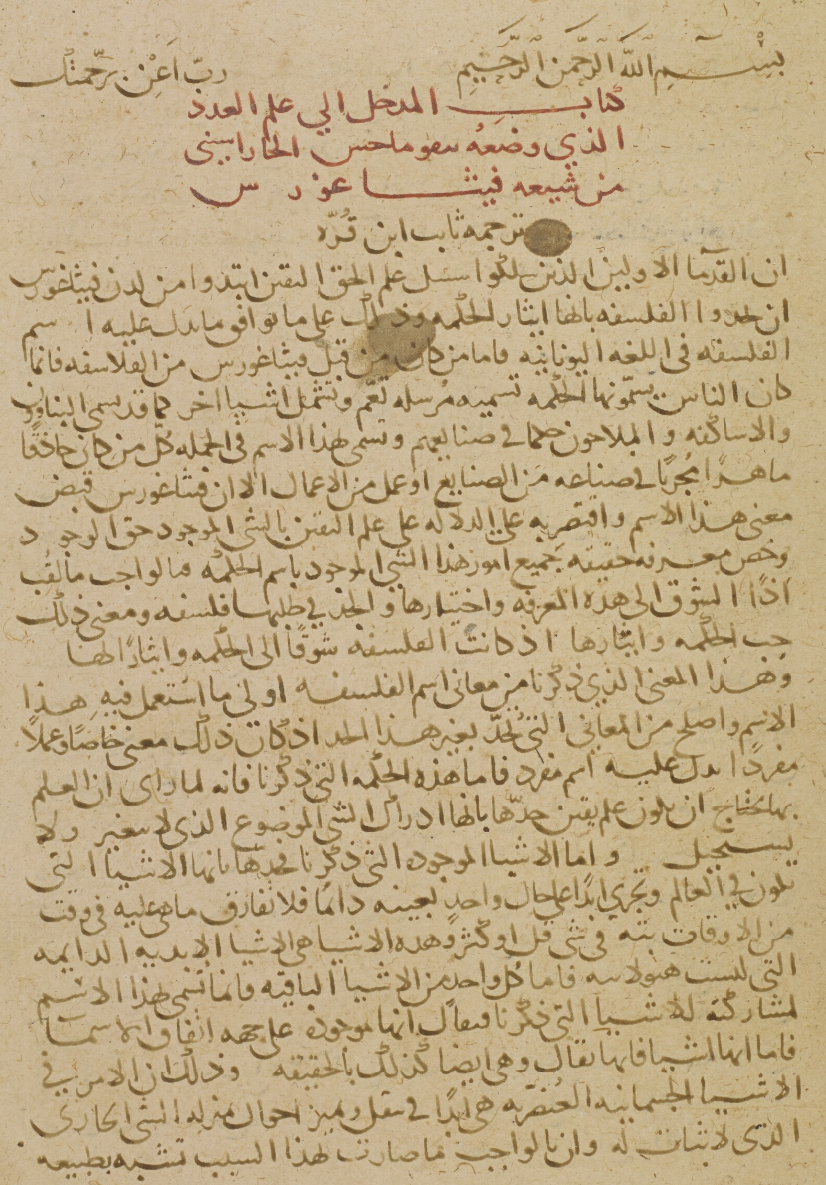
- Introduction to Arithmetic (Arithmetike eisagoge): a systematic introduction to the theory of numbers intended for learners and philosophers. It surveys classifications of numbers, special classes such as primes and perfect numbers, and many numerical properties that interested the Pythagorean tradition.
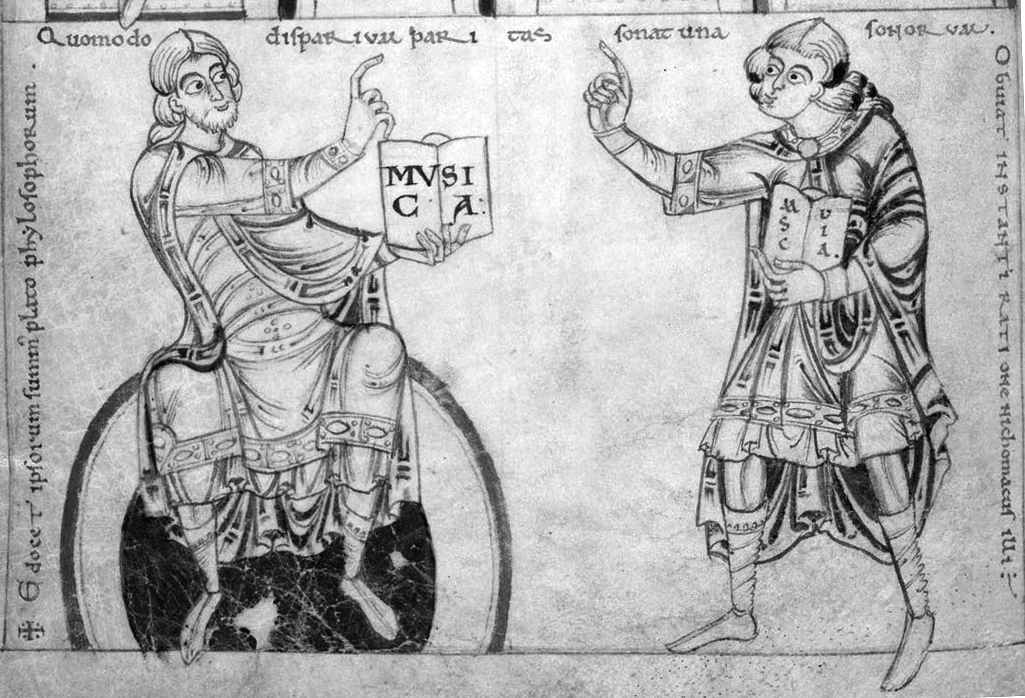
- The Manual of Harmonics: a treatise on musical intervals, tuning and the numerical ratios that underlie them, connecting arithmetic proportions with audible consonance.
Mathematical outlook and topics
Nicomachus emphasized arithmetic as the starting point for mathematical knowledge and treated it as enabling other sciences such as arithmetic-based disciplines and applied fields like geometry, music and astronomy. His treatment of number covers familiar classifications—odd and even, triangular and square numbers, primes and composite numbers—and discusses remarkable cases such as perfect numbers. Rather than offering formal proofs in the Euclidean sense, Nicomachus often gives examples, tabulations and philosophical remarks about numerical harmony and symbolism.
Style, strengths and limitations
Historians distinguish Nicomachus from more rigorously proof-oriented authors such as Euclid. His aim was pedagogical and philosophical; the Introduction is valuable as a systematic handbook that preserves and transmits many older Pythagorean ideas. At the same time, later mathematical critics pointed out its lack of deductive proofs and its occasional reliance on numerological interpretation. For readers seeking concrete computations and classifications, however, Nicomachus remains a rich source.
Influence and later reception
The Introduction became a standard elementary arithmetical manual in late antiquity and the Middle Ages. It was read, translated and adapted by later writers and served as a bridge between ancient Pythagorean number lore and medieval scholastic arithmetic. Its musical handbook influenced theorists who treated consonance and tuning in terms of simple numerical ratios. Modern scholars value Nicomachus for what he reveals about how numbers were taught and thought about in a philosophical as well as mathematical context.
Notable facts and distinctions
- Nicomachus is often cited when discussing the historical coexistence of technical calculation and symbolic or mystical interpretations of number.
- Although he draws on Greek sources and writes in Greek, his works had a broad cultural afterlife well beyond the Greek-speaking world.
- His approach illustrates the ancient view that arithmetic can serve as a foundation for a wider suite of mathematical sciences, including the observational aims of astronomy.
For readers seeking a concise historical introduction, Nicomachus represents an important link between Pythagorean numerological traditions and the practical arithmetic curricula of later periods. While not a founder of rigorous axiomatic mathematics, his expository handbooks transmitted ideas that shaped mathematical education and musical theory across centuries.
Related articles
Author
AlegsaOnline.com Nicomachus of Gerasa: Pythagorean Mathematician and Music Theorist Leandro Alegsa
URL: https://en.alegsaonline.com/art/70026