
New York metropolitan area
The New York metropolitan area is a vast urban and suburban region centered on New York City, encompassing parts of New York, New Jersey, Connecticut and Pennsylvania and home to roughly 20–23 million people.
Overview
The New York metropolitan area is the extensive urban region centered on New York City and its surrounding suburbs. It combines a dense core of city neighborhoods and high-rise business districts with sprawling residential suburbs, industrial zones and coastal communities. The area is commonly described as the city and suburbs around New York and is a primary economic and cultural hub for the eastern United States.
Image gallery
4 Images
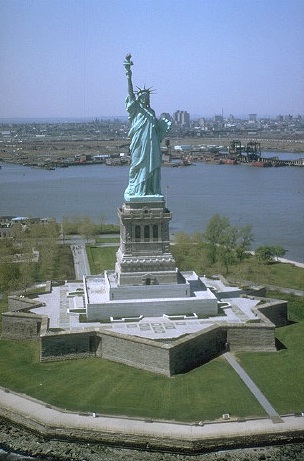


Geographic extent and components
Geographically the region includes the five boroughs of New York City and adjacent areas of the state of New York: most of Long Island and parts of the Mid- and Lower Hudson Valley. It also encompasses north and central New Jersey, several counties in western Connecticut, and a portion of northeastern Pennsylvania. Different official definitions—such as Metropolitan Statistical Areas (MSA) and Combined Statistical Areas (CSA)—draw boundaries for planning and statistical purposes, so the exact footprint varies by source.
History and development
The metropolitan area's growth began in the colonial era and accelerated with maritime trade, immigration and transport improvements. The port and harbor of New York established early commercial prominence; later 19th- and 20th-century developments—railroads, bridges, tunnels and roadways—linked outlying suburbs and fostered regional integration. Waves of immigrants and domestic migrants shaped the region's neighborhoods and labor force, making it one of the most diverse metropolitan regions in the world.
Economy, infrastructure and institutions
The region is a global center for finance, media, arts, higher education, healthcare, technology and international trade. Key infrastructure includes major airports (John F. Kennedy, LaGuardia and Newark), an extensive rail and subway network and busy port facilities. Major commuter services and railroads connect the core to suburbs: Long Island Rail Road, Metro-North and regional carriers link to the city, while cross-state services and rapid transit link centers across the metropolitan area.
Characteristics and culture
The New York metropolitan area combines extremely high-density neighborhoods and skyscraper-lined central business districts with lower-density suburbs and rural pockets at its edges. It is noted for cultural institutions, museums, theaters, universities and a wide range of neighborhoods defined by distinctive immigrant and ethnic communities. This mixture of density, diversity and infrastructure contributes to a high degree of economic dynamism and cultural influence.
Scale, population and notable facts
Population estimates depend on the chosen definition but typically place the area among the largest in the United States, with roughly twenty to twenty-three million residents under common metropolitan and combined-area definitions. It ranks as one of the most populous continuous urbanized or built-up regions in the world and is frequently cited as the largest metropolitan area in North America. The region spans multiple states and jurisdictions, which creates both opportunities and challenges for regional planning, transportation and environmental management.
- Major subregions: Long Island, Hudson Valley, north/central New Jersey
- Adjacent states included: Connecticut, Pennsylvania
- Planning and statistics: Definitions used by government and researchers guide resource allocation and transportation projects (city/suburb classifications).
For further regional descriptions and data, consult official metropolitan planning organizations and statistical agencies that use specific boundaries and measures to describe population, economy and land use (state-level sources and regional authorities often provide detailed reports).
Related articles
Author
AlegsaOnline.com New York metropolitan area Leandro Alegsa
URL: https://en.alegsaonline.com/art/69672
Sources
- factfinder.census.gov : "Annual Estimates of the Resident Population: April 1, 2010 to July 1, 2014 – Combined Statistical Area; and for Puerto Rico - 2014 Population Estimates"
- factfinder.census.gov : "Annual Estimates of the Resident Population: April 1, 2010 to July 1, 2014 – Metropolitan Statistical Area; and for Puerto Rico - 2014 Population Estimates"
- mongabay.com : "World's Largest Urban Areas [Ranked by Urban Area Population]"
- worldatlas.com : "Largest Cities of the World – (by metro population)"
- demographia.com : "Largest urban areas in the world: 2008 All Urban Areas 2,000,000 & Over"