
Athlete's foot (tinea pedis)
Common fungal infection of the feet causing itching, scaling and cracking; usually caused by dermatophytes and treated with topical antifungals and hygiene measures.
Overview
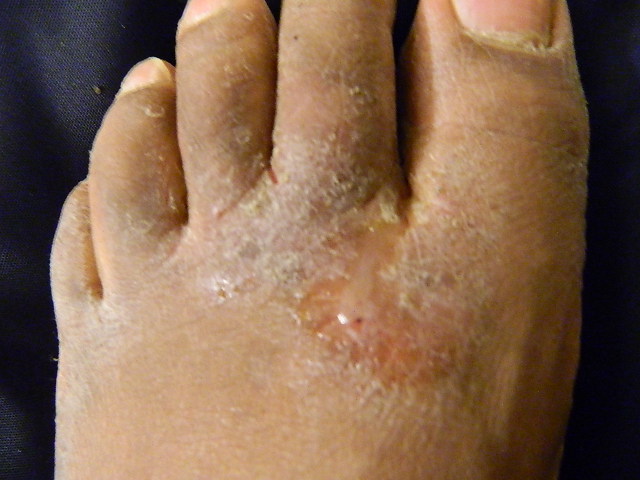
Athlete's foot, medically known as tinea pedis, is a superficial fungal infection that mainly affects the skin of the feet. It commonly produces itching, flaking and fissures of the skin and can range from mild irritation to painful inflammation. The condition earned its common name because it frequently appears in people who take part in sports or who wear occlusive footwear for long periods, but it can affect anyone.
Image gallery
4 Images


Causes and transmission
The infection is most often caused by dermatophyte fungi in the genus Trichophyton. These organisms thrive in warm, moist environments and spread by direct skin-to-skin contact or indirectly via contaminated surfaces such as locker room floors, communal showers, towels and shoes. Risk factors include sweaty feet, tight or non-breathable footwear, poor foot hygiene and walking barefoot in damp communal areas. It is possible for the infection to be transferred to other parts of the body; for example, it can spread to the groin or body surface if transferred by hand.
Typical symptoms and patterns
Presentation varies, but common signs include intense itching, visible scaling, peeling or cracking of the skin, and sometimes small blisters. There are several recognized clinical patterns such as interdigital (between toes), moccasin-type (affecting soles and sides), and vesicular (clustered blisters). Affected skin may be dry and cracked, and in some cases mildly or more clearly painful.
Diagnosis and treatment
Diagnosis is usually clinical, based on appearance and history, but can be confirmed by microscopy of skin scrapings or fungal culture when necessary. First-line treatment typically involves topical antifungal agents (for example creams, sprays or solutions containing allylamines or azoles). More persistent, extensive, or recurrent infections may require oral antifungal medication prescribed by a clinician. Symptomatic care includes keeping feet dry, changing socks frequently, and airing out shoes.
Prevention and practical advice
- Avoid walking barefoot in public wet areas; use sandals in showers and locker rooms.
- Choose breathable footwear and moisture-wicking socks; change socks if they become damp.
- Disinfect or let shoes dry thoroughly between wearings; rotate pairs when possible.
- Use antifungal powders or sprays as a preventive measure when appropriate.
Because athletes are often exposed to communal facilities, the condition historically appeared more frequently among people who play sports and use shared changing rooms and showers; the association with sport remains a common explanatory link in public health guidance and education about athletes.
Complications and important distinctions
If the skin is broken, a secondary bacterial infection can occur. Untreated fungal infection may persist and recur. Clinicians distinguish tinea pedis from other causes of foot dermatitis such as eczema or contact dermatitis, since management differs. The fungus can also be carried to other regions of the body by scratching; spread to areas such as the groin or trunk is recognized, and more rarely it can affect areas like the armpits or limbs when transferred by contact to other parts. Cases of spread to sites such as the knees or elbows have been described when there has been direct transfer of the fungus by hands or clothing (knees, elbows).
If symptoms are severe, persistent or recurrent despite over-the-counter measures, medical assessment is recommended to obtain an accurate diagnosis and appropriate therapy.
Related articles
Author
AlegsaOnline.com Athlete's foot (tinea pedis) Leandro Alegsa
URL: https://en.alegsaonline.com/art/6940
Sources
- pubmed.ncbi.nlm.nih.gov : 12895184
- doi.org : 10.1046/j.1365-4362.42.s1.1.x