
Neon Genesis Evangelion: overview, themes, production and legacy
Neon Genesis Evangelion is a landmark 1995–1996 Japanese anime by Hideaki Anno that blends mecha action with psychological, philosophical and religious imagery; it led to films, manga, soundtracks and the Rebuild series.
Neon Genesis Evangelion (Japanese: 新世紀エヴァンゲリオン, Hepburn: Shin Seiki Evangelion) is a Japanese animated television series first broadcast in 1995–1996. Created and directed by Hideaki Anno and produced by Gainax with Tatsunoko Production, the series reworked conventions of the mecha genre by combining large-scale combat with intensive character psychology. The basic premise follows adolescent pilots who operate towering biomechanical machines called Evangelions to confront mysterious beings labeled Angels. Beyond its action elements, the series is widely noted for its examination of personal trauma, identity, and existential questions.
Image gallery
8 Images




Setting and plot overview
The story is set in a world recovering from a global catastrophe. Much of the plot revolves around NERV, a covert organization tasked with defending humanity. Evangelions—often simply called Evas—are presented as living or semi-living entities rather than conventional robots, and their operation is closely tied to the emotional and psychological states of their pilots. The series alternates between episodic encounters with different Angels and deeper explorations of the pilots' backgrounds, relationships, and inner conflicts.
Major characters
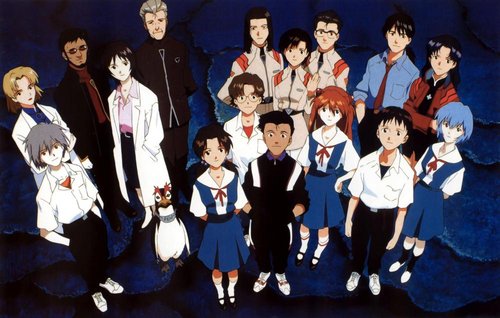
Central characters include Shinji Ikari, a reluctant young pilot grappling with loneliness and self-worth; Rei Ayanami, an enigmatic figure whose origins and personhood raise questions about identity; and Asuka Langley Soryu, an assertive pilot whose confidence conceals vulnerability. Supporting characters—scientists, military personnel, and other adolescents—contribute to an ensemble whose interpersonal tensions drive much of the dramatic weight. Emotional states and psychological trauma are integral to motivations and outcomes throughout the series.
Themes and imagery
Evangelion interweaves multiple thematic threads. Psychological realism and depictions of mental health concerns form a major strand, reflecting the director's interest in portraying inner life and emotional breakdowns (mental health). The series also engages with philosophy, using existential and phenomenological questions to probe consciousness and subjectivity (philosophy). Religious symbols and names drawn from Christian and Jewish traditions are prominent in visual motifs and terminology, though these elements are generally used for atmosphere and symbolic layering rather than straightforward theological commentary.
Production and narrative choices
Production constraints, shifts in creative intent, and the director's focus on introspective storytelling affected the latter part of the television run. The final episodes of the series adopt an experimental, highly subjective presentation that foregrounds character consciousness, memory, and interpretation rather than conventional plot resolution. This artistic choice provoked strong reactions among viewers at the time of broadcast.
Alternate endings and films
Following debate about the television ending, a feature film titled End of Evangelion (1997) was released as an alternate cinematic conclusion that revisits and expands on the series' climactic events. The franchise later continued with the Rebuild of Evangelion film tetralogy, a multi-part project that retells, revises, and reinterprets the original narrative for new audiences. These films and related releases have kept discussion about the story's meanings active for decades.
Music, art and adaptations
Music played a notable role in the series' tone; its soundtracks, which mix orchestral, choral, and contemporary elements, are widely recognized and have been published separately. The visual design blends traditional animation with striking symbolic imagery and carefully staged action sequences. The franchise has been adapted and expanded in many forms, including manga adaptations by artists such as Yoshiyuki Sadamoto (manga), stage productions, video game tie-ins, and an extensive range of licensed merchandise.
Reception and cultural impact
Critically, the series has been praised for its ambition, emotional depth, and willingness to challenge genre expectations. It is often cited as a turning point for 1990s animation, encouraging more introspective and auteur-driven works. The program inspired academic study and sustained fan engagement, and it continues to influence filmmakers, animators, and writers. Controversy around its religious imagery and its unconventional finale contributed to ongoing debate about narrative, interpretation, and authorial intent.
Further study and resources
- Primary source: the original television series and official release materials (anime series).
- Interviews and commentary from the director and production staff (Hideaki Anno).
- Analyses of psychological themes and the depiction of depression in creators' work (mental health).
- Discussions of symbolic and religious imagery, including references to Christian and Jewish motifs.
- Adaptations and expanded media such as official soundtracks, manga (manga), and the Rebuild films.
- General background on titles and names in Japanese and Romanization (original title, Hepburn).
Approached either as a reinvention of mecha storytelling or as a character study of adolescence, alienation and identity, Neon Genesis Evangelion remains a frequently cited and debated landmark in animated storytelling. Its combination of spectacle, symbolism, and inward-facing drama offers multiple entry points for viewers and scholars seeking to understand how popular media can address psychological and philosophical concerns.
Related articles
Author
AlegsaOnline.com Neon Genesis Evangelion: overview, themes, production and legacy Leandro Alegsa
URL: https://en.alegsaonline.com/art/69149