
New International Encyclopedia
A general-purpose American encyclopedia first published in 1902 and last revised in 1935, edited by Frank M. Colby and Talcott Williams and widely used in early 20th-century libraries and schools.
Overview
The New International Encyclopedia is an English-language general reference work produced in the United States and first issued in 1902. A multi-volume set, it aimed to provide concise, reliable articles for a broad audience: students, professionals, and general readers. Its editions were widely distributed in the early decades of the 20th century and reflected the scholarship and interests of that era.
Image gallery
1 Image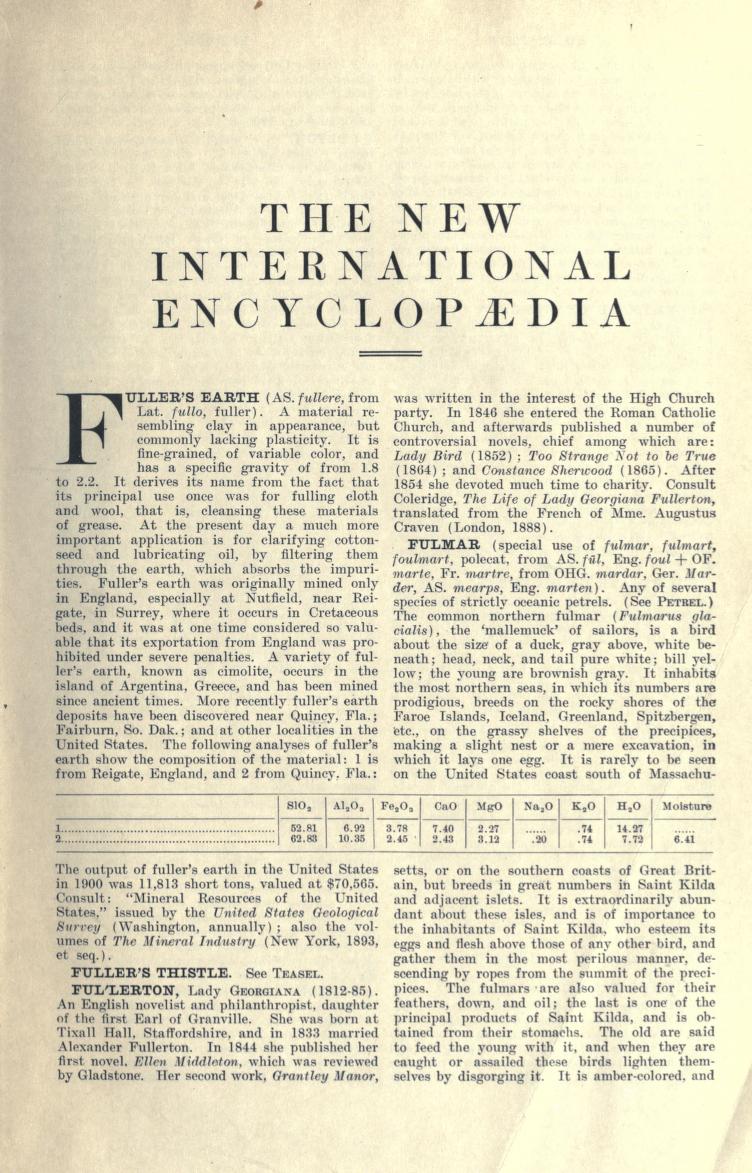
Characteristics and format
Typical features of the encyclopedia included alphabetically arranged entries of varying length, illustrations, and maps. Treatment ranged from short factual notices to longer analytical articles on important topics. Editorial practice emphasized clarity and practical information rather than exhaustive scholarly apparatus.
- Multi-volume general encyclopedia intended for general reference
- Combination of short definitions and longer, thematic articles
- Use of illustrations and maps to supplement text
History and development
Prepared at the turn of the 20th century, the work was associated with American publishers and editors who sought to update and consolidate earlier nineteenth-century cyclopedic traditions. The project produced several revised editions and reprints over the following decades; the last edition bearing the title was published in 1935. Throughout its run it reflected contemporary concerns, discoveries, and the educational expectations of its readership.
Uses, influence, and legacy
For many libraries, schools, and households in the early 1900s the New International served as a primary ready reference. It was used for homework, general research, and quick factual consultation. Over time it was supplanted by later encyclopedias and updated commercial series, but it remains a useful historical source for the language, priorities, and understanding of its period.
Notable facts and distinctions
Editors and contributors were often figures active in journalism and scholarship of the time, and the set was part of a broader American tradition of popular encyclopedias. Many editions published before mid-century are now in the public domain and appear in digitized collections, where they are consulted by historians, genealogists, and others researching early 20th-century perspectives.
Related articles
Author
AlegsaOnline.com New International Encyclopedia Leandro Alegsa
URL: https://en.alegsaonline.com/art/69536
Sources
- worldcat.org : 577541