
Atacama Large Millimeter/submillimeter Array (ALMA)
ALMA is a high‑altitude radio interferometer in northern Chile that images the cold universe at millimeter and submillimeter wavelengths, operated by an international partnership.
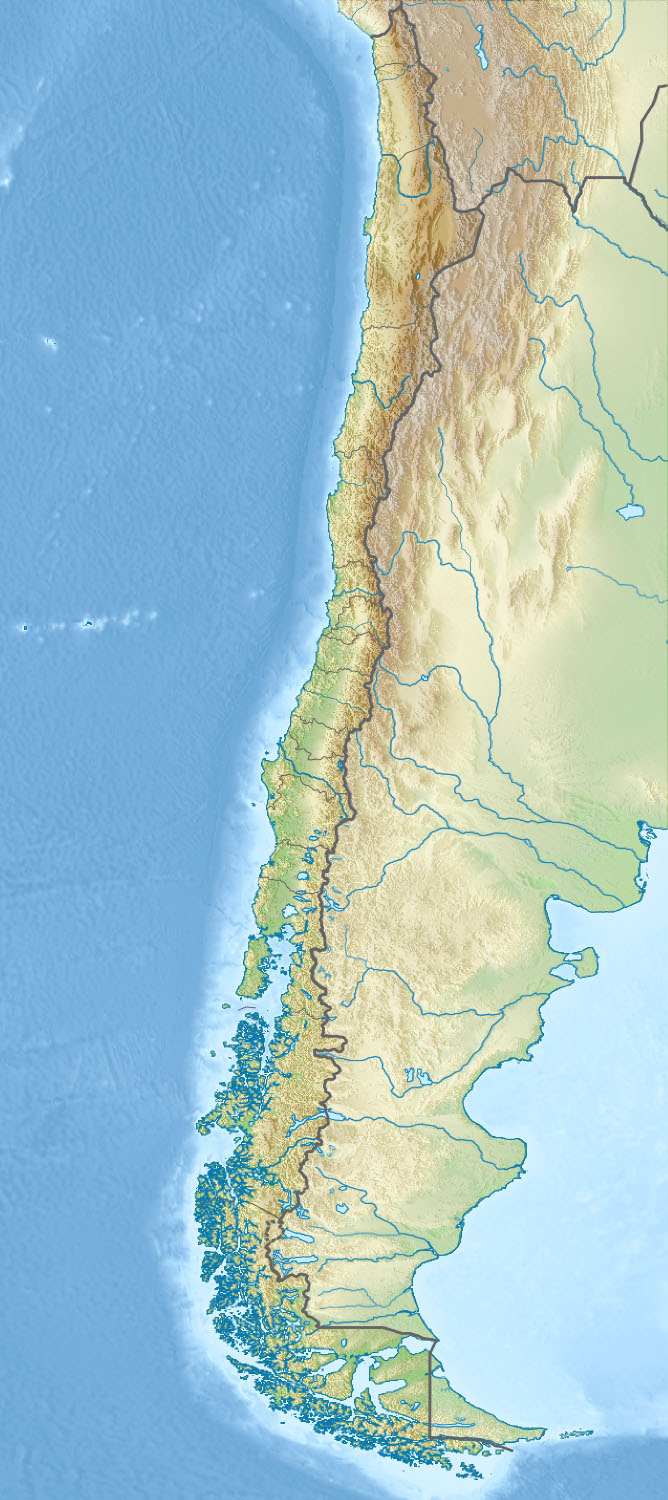
The Atacama Large Millimeter/submillimeter Array, commonly called ALMA, is a powerful radio interferometer located on the Chajnantor plateau in the Atacama Desert of northern Chile. The site sits at about 5,000 metres elevation; the extreme dryness and thin air at that altitude greatly reduce atmospheric absorption of millimeter wavelengths, improving sensitivity and stability. ALMA combines many separate dishes into a single instrument that can produce high‑resolution images of cold gas and dust across the cosmos. The project is an international partnership built and operated by organizations from Europe, North America, East Asia and Chile.
Image gallery
10 Images


Design and instrumentation
ALMA's collecting system is composed of 66 antennas working together as an interferometer. The full set includes fifty‑four 12‑metre antennas and twelve 7‑metre antennas that form the Atacama Compact Array (ACA), the latter providing short spacings and total power measurements for extended structures. Antennas are transportable: they can be moved into different configurations, changing the maximum separation between dishes (the baseline) and therefore the angular resolution; the array is capable of baselines that extend to many kilometres. A suite of sensitive receivers covers multiple frequency bands across the millimeter and submillimeter regime, enabling both continuum imaging and high‑resolution spectroscopy.
Construction and operations
Conceived and funded by a consortium of institutions across Europe, the United States, Canada, East Asia and Chile, ALMA represented one of the largest ground‑based astronomy projects of its time and required substantial engineering in a high‑altitude environment. The observatory began early scientific observations in 2011 and entered progressively expanded operations thereafter. Its construction and commissioning involved logistical challenges related to transportation of large antennas, site infrastructure at high elevation, and coordination among international partners. The array is managed through collaborative agreements that combine technical resources and scientific access.
Science goals and examples
ALMA was designed to study the cold universe: molecular gas, dust and the processes that lead to star and planet formation. It is particularly well suited to imaging protoplanetary disks, tracing complex organic molecules in interstellar clouds, and detecting cold dust and gas in distant galaxies, thereby informing models of galaxy evolution. ALMA's sensitivity and resolution transformed studies of nearby star‑forming regions and produced iconic images that reveal disk substructure and gaps associated with planet formation. Observations at millimeter and submillimeter wavelengths also permit detailed spectroscopic surveys of molecular lines that are inaccessible at shorter wavelengths.
- Key characteristics: high dry site on the Chajnantor plateau; array of 66 antennas; reconfigurable baselines; wide frequency coverage.
- Main uses: protoplanetary disk imaging, molecular spectroscopy, studies of star formation and high‑redshift galaxies.
- Operational partners: international consortium with significant contributions from institutions in Europe, North America and East Asia and with Chilean participation.
ALMA's role in contemporary astronomy stems from its combination of sensitivity, spatial resolution and spectral capability. By linking many dishes into a single instrument, ALMA delivers images and spectra that probe physical conditions, chemistry and dynamics in regions otherwise invisible to optical telescopes. The facility is sometimes described simply as an array of radio telescopes, but its engineering and scientific reach extend across many fields. ALMA's site in the Atacama Desert, its partners in Chile and abroad, and the individual telescopes and receiver systems together make it a unique tool for studying the cold and distant universe.
Researchers access ALMA through competitive proposal calls and use a data pipeline and archive to retrieve calibrated observations. The observatory's contributions continue to grow as instruments and software are upgraded and as longer baselines and additional observing modes are exploited for new discoveries.
Related articles
Author
AlegsaOnline.com Atacama Large Millimeter/submillimeter Array (ALMA) Leandro Alegsa
URL: https://en.alegsaonline.com/art/6879
Sources
- nytimes.com : "At the End of the Earth, Seeking Clues to the Universe"