
Australian Aboriginal astronomy: sky knowledge, traditions, and uses
An overview of the astronomical knowledge of Australian Aboriginal peoples: its features, cultural role, history, practical uses and key distinctions within diverse traditions.
Australian Aboriginal astronomy refers to the many ways Indigenous Australians observed, interpreted and integrated the Sun, Moon, planets, stars and other celestial phenomena into social life and cosmology. Far from a single unified system, it comprises a rich set of locally distinct traditions that connect stories, law and material practice with cycles visible in the sky. Scholars, community custodians and educators have described these ideas in ethnographies and community publications; for wider context see overview material and specialist summaries archived at respected collections about sky knowledge.
Image gallery
7 Images


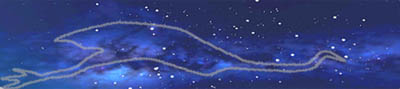


Key features and common themes
Across Australia many groups locate people, animals, ancestral beings and events of the Dreaming in particular stars, constellations and patterns in the Milky Way. The sky functions simultaneously as a mnemonic map, a calendar, a moral landscape and a site of ceremony. Important recurring themes include:
- Personification of celestial bodies: the Sun and Moon often appear in gendered or kinship roles (Sun, Moon).
- Identification of seasonal markers: the heliacal rising of a star or constellation signals food availability or the right time for ceremony (calendars).
- Integration with art and story: rock painting, songlines and ceremony encode sky knowledge (art, ceremony).
- Differentiated knowledge: some stories and practices are gender-restricted or secret, passed only to initiated people (initiation).
History and recording
Oral transmission is central: stories, songs and dances preserve observational detail and cultural meaning over generations. Early ethnographic records date from the 19th century and include accounts of groups such as the Boorong; however, the written record is fragmentary and must be read alongside contemporary Indigenous voices. The earliest published account recognized by many scholars was by Edward Stanbridge, who worked with a Victorian clan and recorded star names and stories; later work compiled many local traditions into comparative studies (Boorong accounts, oral tradition).
Practical uses and examples
Aboriginal astronomical knowledge often has practical applications. Observations of rising and setting times help mark seasonal change, guide hunting and gathering schedules, and indicate when to perform particular ceremonies. Examples include:
- Seasonal foraging: the appearance of particular stars signals the availability of plant foods or the migration of animals (stars).
- Navigation and place-making: songlines and sky paths help people move across large distances while preserving legal and cultural instruction (social knowledge).
- Cultural instruction: stories entwine moral rules, land tenure and cosmology so that celestial observation becomes education (cultural practice).
Variability, interpretation and modern significance
There is no single Aboriginal astronomy; each nation or language group interprets objects differently. For example, the same star cluster may represent a hunter in one tradition and an ancestral camp in another. Many contemporary Indigenous communities maintain these traditions as living practice, incorporate them into art and education, and assert their value for cultural revival and land management (planets, astronomical phenomena).
Researchers emphasize respectful collaboration because much knowledge is sacred or gender-restricted, and should not be recorded or displayed without community permission (religious context, scientific contrast). Comparative studies show shared motifs — for example, Milky Way narratives and interpretations of eclipses — but also highlight distinctive local cosmologies and practices (cosmology, Dreaming).
For further reading and resources see community-led projects, museum collections and peer-reviewed research that document names, songs and images with proper cultural consent. Accessible entry points include introductions to Indigenous sky knowledge and curated teaching materials (perception of the universe, legends, sky objects, Moon references, ceremonial practice, overview).
Because these traditions continue to evolve, contemporary work emphasizes Indigenous leadership in research and education so that astronomical knowledge remains both a scientific interest and a living cultural resource (study, initiation contexts, calendrical use).
Questions and answers
Q: What is the oldest interpretation of astronomy still alive today?
A: The oldest interpretation of astronomy still alive today is believed to be that of the Australian Aborigines.
Q: How did Aboriginal people use their knowledge of astronomy?
A: Aboriginal people used their knowledge of astronomy to find and explain the relationship between people, nature and the sky. They also used it to develop practical tools such as calendars, create legends, art forms, music and ceremonies, and form a basic perception of the universe (their cosmology).
Q: How was astronomical knowledge passed down in old Australian Aboriginal culture?
A: Astronomical knowledge was passed down through stories, song and dance in old Australian Aboriginal culture. It was also kept secret and only passed on to those who had been initiated into certain groups or societies.
Q: When was the earliest written account of Aboriginal astronomy published?
A: The earliest written account of Aboriginal astronomy was published in 1857 by Edward Stanbridge, an Englishman who became friends with the Boorong people of Victoria.
Q: What is the relation between Aboriginal astronomical beliefs and Western scientific theory?
A: There is little relation between Aboriginal astronomical beliefs and Western scientific theory. While both interpretations developed along similar lines, they can be very different in meaning due to cultural differences.
Q: Are traditional interpretations still part of modern life for Australian Aborigines?
A: Yes, traditional interpretations are still part of modern life for Australian Aborigines. Legends and beliefs from ancient cultures are still practiced today by many Indigenous Australians.
Related articles
Author
AlegsaOnline.com Australian Aboriginal astronomy: sky knowledge, traditions, and uses Leandro Alegsa
URL: https://en.alegsaonline.com/art/7466
Sources
- emudreaming.com : Extensive reading list on Aboriginal Astronomy
- arxiv.org : "Meteoritics and cosmology among the Aboriginal cultures of Central Australia"
- arxiv.org : "An Aboriginal Australian record of the Great Eruption of Eta Carinae"
- arxiv.org : "Eclipses in Australian Aboriginal Astronomy"
- arxiv.org : "Comets in Australian Aboriginal Astronomy"
- warawara.mq.edu.au : "Meteors in Australian Aboriginal Dreamings"
- arxiv.org : "Australian Aboriginal Geomythology: eyewitness accounts of cosmic impacts?"
- arxiv.org : "Astronomical symbolism in Australian Aboriginal rock art"
- emudreaming.com : "Emu Dreaming: An Introduction to Aboriginal Astronomy"