
National Gallery of Art
Major national art museum on the National Mall in Washington, D.C., founded with Andrew W. Mellon's gift; noted for European and American painting, sculpture, architecture, conservation and public programs.
Overview
The National Gallery of Art is a national art museum located on the National Mall in Washington, D.C.. It houses a broad public collection spanning centuries of Western visual culture, and it operates as a research, conservation and education center as well as an exhibition venue. The Gallery is open to the public without an admission charge and serves visitors, scholars and school programs from across the United States and around the world.
Image gallery
2 Images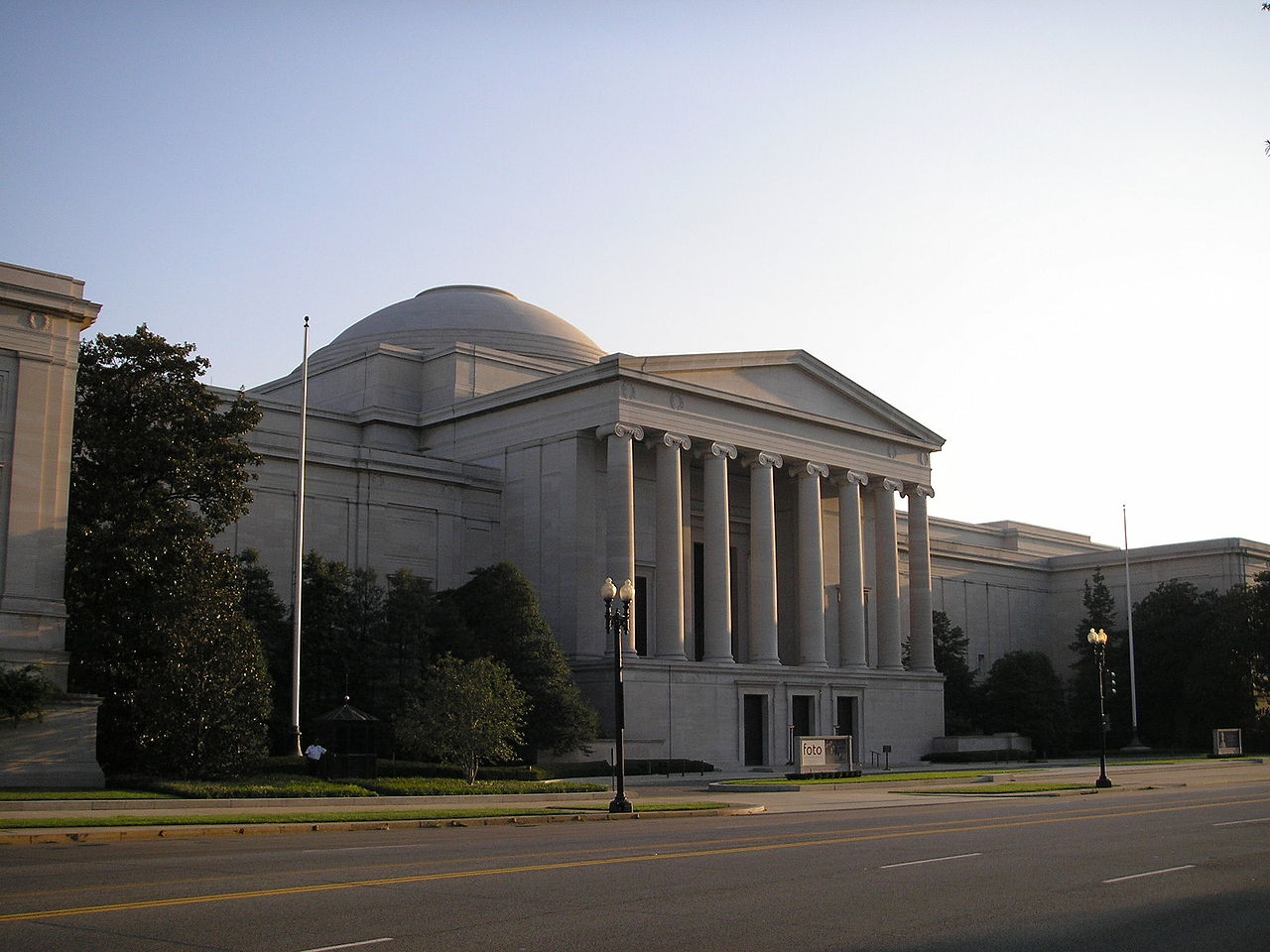

Founding and development
The institution was created by congressional legislation and an extraordinary private gift. Established in 1937 through action by the United States Congress, it received its founding collection and endowment from financier and collector Andrew W. Mellon. Subsequent gifts from major collectors and foundations expanded the holdings and allowed the museum to build new facilities and broaden public programs.
Buildings and campus
The Gallery’s complex combines historic and modern architecture to accommodate permanent collections, changing exhibitions and study facilities. Distinct wings and adjacent outdoor spaces are organized to present works in chronological and thematic groupings, and to support conservation laboratories, a specialized art library and classrooms. A landscaped sculpture garden and plazas provide outdoor settings for three-dimensional works and public events.
Collections and strengths
The institution is widely recognized for its holdings in Western art, especially historic painting and sculpture. Strengths include Renaissance and Baroque European masters, nineteenth-century painting, modern and contemporary works, and a growing representation of American art. The Gallery’s collections have been shaped by large, named donations from individual collectors and foundations as well as by targeted acquisitions.
- European Old Masters and drawings
- Nineteenth- and twentieth-century painting and sculpture
- American art and decorative arts
- Conservation and works on paper
Programs, research and public role
Beyond exhibitions, the Gallery maintains conservation laboratories, publishes scholarship, lends works globally and provides educational programming for families, students and teachers. Its library and archives support curatorial research and provenance study. As a federally chartered cultural institution that collaborates with private donors, it occupies a distinctive role on the Mall while remaining administratively separate from other museum systems.
Visiting and significance
The National Gallery of Art is valued for the quality and breadth of its collections, its conservation work and its public access mission. Its galleries offer chronological surveys, special thematic exhibitions and opportunities to study original objects. For visitors planning a trip, institutional resources provide practical information, guided tours and digital collections to preview highlights before arrival.
Related articles
Author
AlegsaOnline.com National Gallery of Art Leandro Alegsa
URL: https://en.alegsaonline.com/art/68603