
Astyanax (son of Hector)
Astyanax, the infant son of Hector and Andromache in Greek mythology, is remembered for his brief life in the Iliad and for later traditions that say he was killed after Troy's fall to prevent a future heir.
Astyanax is a figure from Greek mythology, best known as the young son of the Trojan hero Hector and his wife Andromache. His name, often understood as "lord of the city" or "protector of the town," underlines his symbolic role as the potential future of Troy. In the surviving Homeric text he appears briefly but poignantly as an infant, the child for whom Hector expresses hopes and anxieties during the siege.
Image gallery
3 Images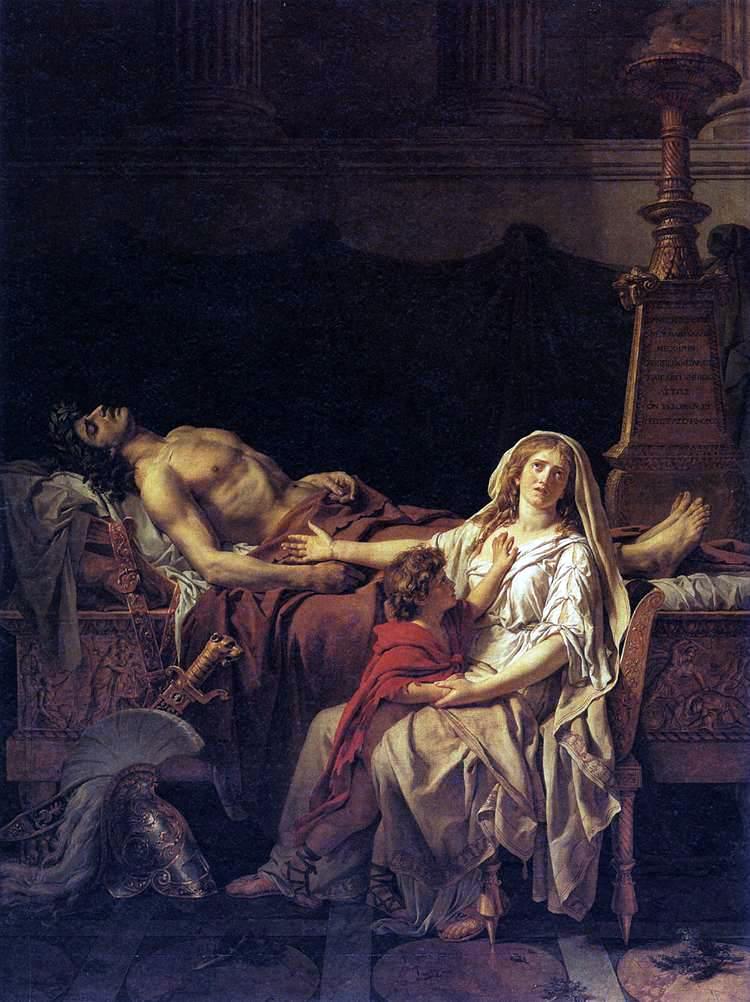


Role in the epic tradition
In the Iliad the most famous moment involving Astyanax is Hector's farewell scene, where the warrior embraces his boy and contemplates duty and family. The child himself does not take part in heroic deeds described by Homer; his presence functions primarily to humanize Hector and to emphasize the human cost of war. Some later accounts give the child an alternate name or draw out his story after the fall of Troy.
Death and later narratives
Post-Homeric epic and tragic tradition record a darker ending for Astyanax. Many later Greek and Roman sources state that after the sack of the city he was killed — in some versions by Neoptolemus or by other conquerors — in order to remove any claimant who might revive Trojan resistance. Other retellings describe his death as a judicial or pragmatic act by the victors, and details vary among authors.
Symbolism and cultural legacy
Astyanax became a recurring symbol for the suffering of innocents and for the finality of a fallen dynasty. His story appears in ancient drama and later art, often emphasizing the contrast between Hector's martial fame and his private losses. The name has also been reused in later literature and the arts as a reference to lost potential and tragic youth.
Key points
- Parentage: son of Hector and Andromache.
- Place: associated with Troy and the Trojan War.
- Fate: post-Homeric tradition records his killing, often attributed to Neoptolemus, to prevent future claims to the throne.
- Context: presence in the Iliad highlights personal costs of epic conflict.
For further reading, consult general introductions to Homeric epic and overviews of the fall of Troy, which discuss how later storytellers expanded brief Homeric references into fuller, often tragic narratives about figures like Astyanax. Additional scholarly treatments examine how his fate functions as a moral and emotional element in ancient storytelling.
Related entries and resources: Greek mythology overview, Hector, Troy, Andromache, Trojan War, Neoptolemus.
Related articles
Author
AlegsaOnline.com Astyanax (son of Hector) Leandro Alegsa
URL: https://en.alegsaonline.com/art/6849