
Naiad (Neptune III)
Naiad is the innermost known moon of Neptune, a small irregular satellite discovered in Voyager 2 images in 1989. It orbits close to Neptune's cloud tops and has proven difficult to observe from Earth.
Overview
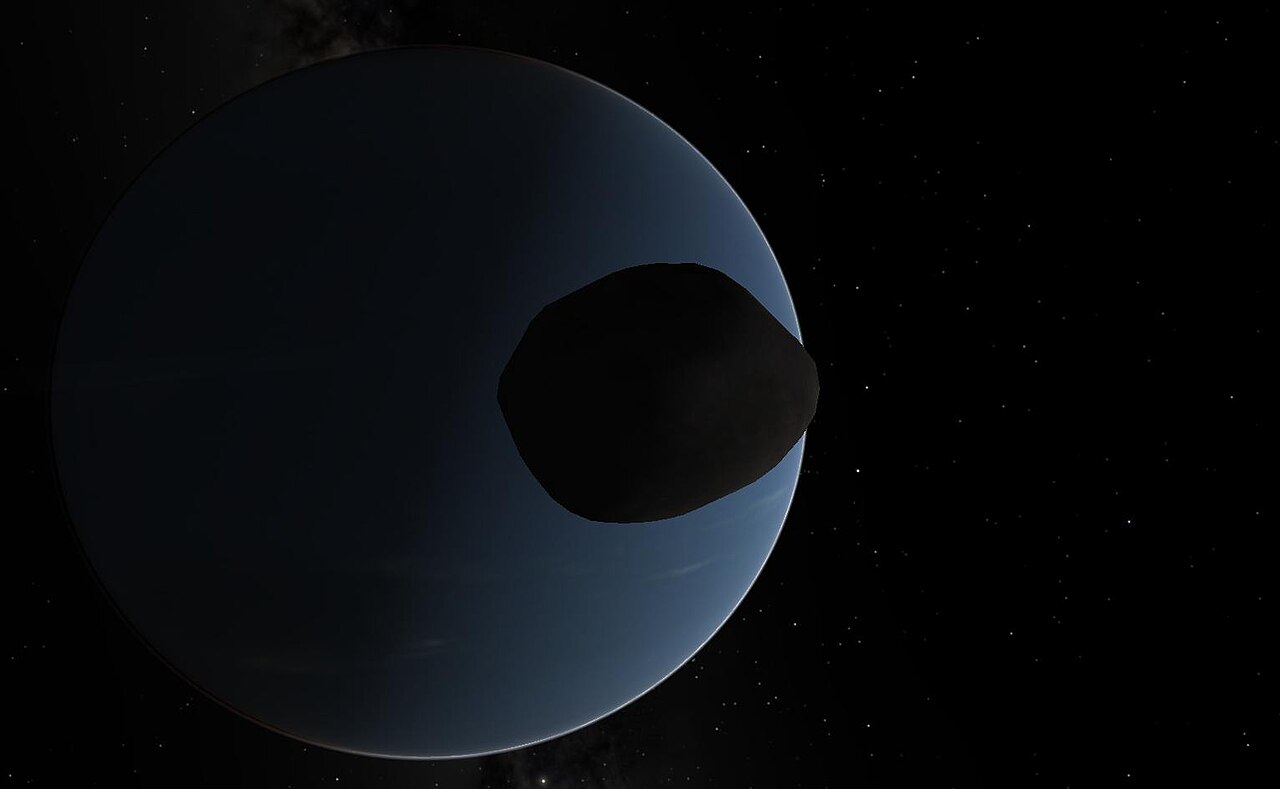
Naiad, officially designated Neptune III and originally catalogued as S/1989 N 6, is the innermost known natural satellite of Neptune. It was identified in images taken during the Voyager 2 flyby of the Neptunian system in 1989. Named after the Naiads of Greek myth—freshwater nymphs—this moon is tiny, irregularly shaped, and orbits only a short distance above Neptune's cloud tops.
Image gallery
8 Images


Physical characteristics
Naiad is much smaller than the major Neptunian moons and is not in hydrostatic equilibrium: it does not have a spherical shape. Its surface is presumed to be a mix of water ice and darker, rocky material like other small outer-system satellites. There is no evidence of internal geological activity; Naiad is thought to be heavily cratered and essentially unchanged since its formation. Because of its small size and low reflectivity, detailed surface properties are poorly constrained.
Orbit and dynamics
Naiad orbits very close to Neptune—roughly 23,500 kilometers above the visible cloud tops—and completes an orbit in on the order of hours rather than days. Its proximity places it well inside Neptune's synchronous orbit radius and among the system of inner moons and rings. Naiad shares a compact dynamical environment with nearby inner satellites; in particular it has close orbital interactions with the next moon out, Thalassa, that help maintain stable relative motions despite their tight spacing.
Discovery and observational history
The moon was discovered in images taken by the Voyager 2 spacecraft during its 1989 encounter with the Neptune system. The discovery was reported from analysis of the flyby frames taken by the probe; later catalogs used the provisional name S/1989 N 6 before assignment of the classical name. Subsequent study of Neptune's inner moons has relied on a combination of spacecraft data and Earth-based follow-up. Observations and imaging work have involved efforts using ground-based telescopes and advanced techniques, and instruments such as the Voyager 2 images and archival analyses referenced in early discovery notes.
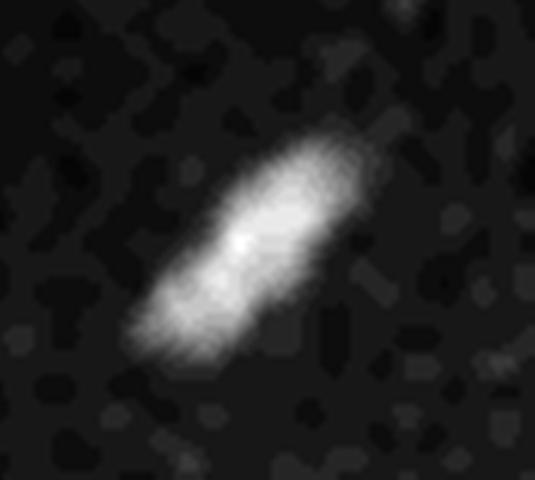
Because Naiad is faint and lies very close to the bright disc of Neptune, it has been challenging to detect with telescopes on Earth. Teams using large observatories and image-processing techniques have recovered several of Neptune's inner satellites in the years since Voyager, but Naiad often remained elusive. Studies have cited limited direct detections and relied on spacecraft-era imaging and modeling; readers can find technical discussions of its irregular form in technical summaries and shape reports such as those referenced at shape measurements. Ground-based monitoring and adaptive optics campaigns at major facilities have contributed to updates on the system—see work from ground-based observatories, the Hubble Space Telescope, and targeted efforts with Keck adaptive optics.
Importance and future study
Although Naiad is small and of limited individual scientific return compared with larger moons like Triton, it plays a useful role in understanding the architecture and evolution of Neptune's inner satellite and ring system. Its close orbit provides clues about tidal evolution, the collisional history of the Neptunian system, and the processes that preserve tight moon clusters. Future observations—either from advanced ground-based systems, space telescopes, or a dedicated mission to the ice giants—would help refine Naiad's size, shape, rotation, and exact orbital behavior, improving models of small-satellite dynamics around giant planets.
- Also see: historical Voyager 2 data and Neptunian system surveys.
- Notable facts: Innermost confirmed moon of Neptune; non-spherical and likely heavily cratered; difficult to detect from Earth-based telescopes.
Related articles
Author
AlegsaOnline.com Naiad (Neptune III) Leandro Alegsa
URL: https://en.alegsaonline.com/art/68128