
Shah Jahan — Mughal emperor and patron of monumental architecture
Shah Jahan (1592–1666), Mughal ruler from 1628 to 1658, famed for a flowering of courtly arts and the construction of iconic monuments such as the Taj Mahal; his reign combined military rule with lavish building patronage.
Overview
Shah Jahan was born Shahab-ud-din Muhammad Khurram in 1592 and ruled as a Mughal emperor in India from 1628 until 1658. His regnal name, often rendered in Persian as "King of the World", reflects the imperial ideology of the Mughal court. He is widely remembered for a sustained programme of monumental building, courtly patronage, and a refined aesthetic that came to define mid‑17th‑century Mughal art.
Image gallery
10 Images




Reign and administration
Shah Jahan consolidated central authority inherited from his predecessors and maintained the empire’s military and administrative structures. His rule combined campaigns on the frontiers with efforts to organize revenue and governance. The resources devoted to his building projects were substantial, and construction became a major focus of state activity, attracting artisans, craftsmen and materials from across the empire.
Architecture and major monuments
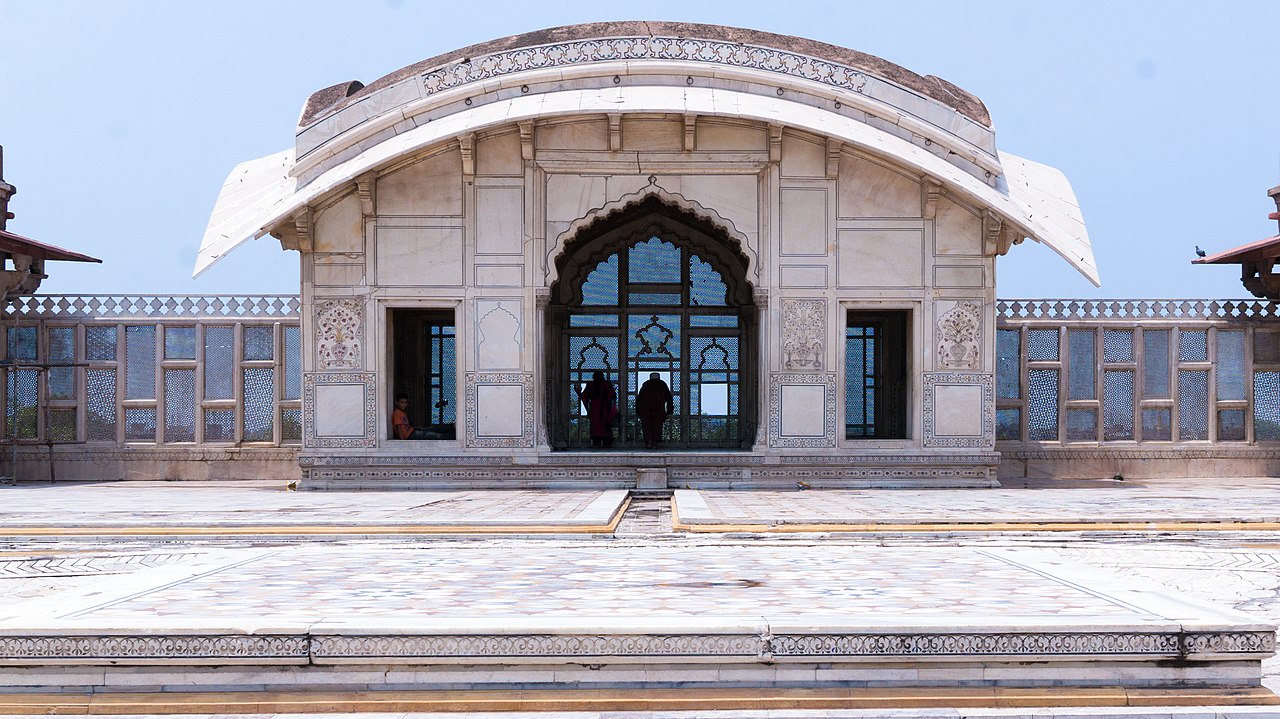
Shah Jahan’s patronage produced a distinctive architectural style characterized by large-scale planning, extensive use of white marble, symmetry and inlay decoration (pietra dura). Notable projects associated with his reign include:
- Taj Mahal — the mausoleum commissioned in memory of Mumtaz Mahal, begun around 1632 and completed in the mid‑17th century.
- Red Fort (Lal Qila) and the imperial city in Delhi, where Shah Jahan established a new capital often called Shahjahanabad.
- Agra Fort, whose later phases of embellishment under Shah Jahan display his preference for marble and ornamental inlay; the city of Agra remained a major centre of construction.
- Major mosques and gardens, such as the Jama Masjid in Delhi, which combined ceremonial, religious and urban functions.
Later life and legacy
In 1658 Shah Jahan was overthrown by his son Aurangzeb and spent his final years confined in Agra Fort. He died in 1666. Historically, his reign is regarded as a high point for Mughal architecture and courtly culture: many structures built under his patronage have become symbols of South Asian artistic achievement and continue to attract international attention.
Significance and distinctions
Shah Jahan’s era is often described as a golden age of Mughal art because of the quality and cohesion of court taste, especially in architecture, garden design and decorative arts. At the same time, his ambitious buildings shaped the empire’s finances and political legacy, leaving a cultural imprint visible in major monuments and in the broader visual language of later South Asian architecture.
Questions and answers
Q: Who was Shah Jahan?
A: Shah Jahan was a Mughal emperor in India from 1628 until 1658.
Q: How is Shah Jahan known in Persian?
A: Shah Jahan is known as "King of the World" in Persian.
Q: What is the period of Shah Jahan's reign considered as?
A: The period of Shah Jahan's reign is considered as the golden age of Mughal art and architecture.
Q: What is Shah Jahan best known for?
A: Shah Jahan is best known for erecting many splendid monuments, the most famous of which in all the world, is the Taj Mahal at Agra.
Q: When was the Taj Mahal built and for whom?
A: The Taj Mahal was built between 1632 and 1648 as a tomb for Shah Jahan's beloved wife, Mumtaz Mahal.
Q: What is the Taj Mahal?
A: The Taj Mahal is a famous monument in Agra, India that serves as a tomb for Mumtaz Mahal, the wife of Shah Jahan.
Q: What number ruler was Shah Jahan in the Mughal dynasty?
A: Shah Jahan was the fifth ruler of the Mughal dynasty.
Related articles
Author
AlegsaOnline.com Shah Jahan — Mughal emperor and patron of monumental architecture Leandro Alegsa
URL: https://en.alegsaonline.com/art/89361
Sources
- britannica.com : "Shah Jahan"