
Monty Python: British sketch comedy troupe and cultural influence
Monty Python is a British sketch-comedy group known for Monty Python's Flying Circus and landmark films blending surrealism, satire and musical comedy with lasting global influence.
Overview
Monty Python is a British comedy troupe formed in the late 1960s that reshaped sketch comedy and film with a distinct mix of surrealism, wordplay and social satire. The group first became widely known for their television series Monty Python's Flying Circus, which introduced rapid-fire sketches and unexpected transitions. Their work crossed television and cinema, producing a string of feature projects that remain influential in comedy and popular culture.
Image gallery
10 Images


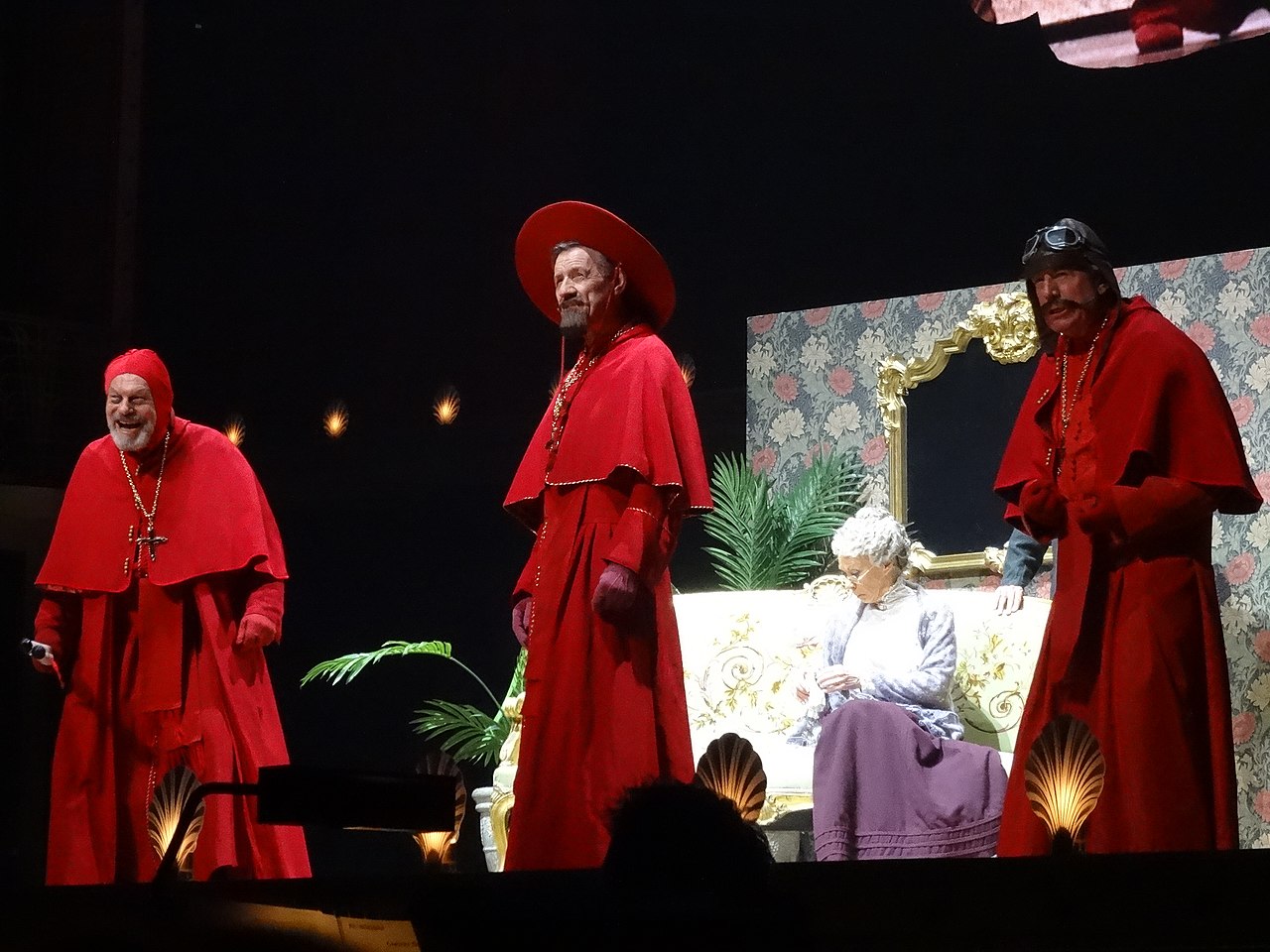

Members and regular collaborators
The core ensemble comprised six performers who shared writing and acting duties: John Cleese, Eric Idle, Graham Chapman, Terry Gilliam, Terry Jones, and Michael Palin. Several other artists frequently supported the group on screen and in recordings, notably Carol Cleveland and musical contributor Neil Innes. Together they combined theatrical training, television experience and film techniques to produce short, sharp pieces that often subverted expectations.
Notable works
Monty Python worked in both television and film. Their best-known TV work is Monty Python's Flying Circus. In cinema they created a series of movies that experimented with narrative form and comedic set pieces. Key titles include:
- And Now for Something Completely Different (an early film compiling television sketches)
- Monty Python and the Holy Grail (a low-budget, highly inventive take on Arthurian legend)
- Monty Python's Life of Brian (a satirical take on religious and historical epic conventions)
- Monty Python's The Meaning of Life (a series of thematic sketches exploring stages of life)
Style and themes
Monty Python blended absurd visuals, anti-authoritarian humour, intellectual references and musical interludes. Their sketches often avoided traditional punchlines, instead moving fluidly between scenes or collapsing the fourth wall. Animation—largely supplied by Terry Gilliam—played an important role in creating surreal transitions and visual jokes. They satirised institutions, class, religion and bureaucracy while keeping a playful and often anarchic tone.
Origins and development
The group formed from performers and writers who had worked separately in British radio and television. Their collaborative approach allowed them to share writing credit and experiment with form; episodes of their TV series ran from 1969 to 1974, after which they turned increasingly to feature films, stage shows and recordings. Different projects highlighted individual members’ strengths: some leaned on Cleese’s authoritative presence, others on Idle’s songwriting or Palin’s character work.
Legacy and influence
Monty Python influenced generations of comedians, writers and filmmakers around the world. Their approach to sketch structure, willingness to mix highbrow and lowbrow references, and memorable recurring bits entered popular language and inspired later comedy productions. Beyond comedy, their films and television series continue to be studied for their innovative editing, use of animation and cultural commentary. For further reading, see general overviews and biographies linked here: history, critical studies and collections of their works.
Although original productions were concentrated in a few decades, Monty Python’s influence persists across stage adaptations, tribute performances and academic discussion. Their mix of satire, surrealism and theatrical craft ensures they remain a reference point for modern comedy and cultural satire.
Related articles
Author
AlegsaOnline.com Monty Python: British sketch comedy troupe and cultural influence Leandro Alegsa
URL: https://en.alegsaonline.com/art/66513