
Miletus: Ancient Greek City of Western Anatolia
Miletus was a major ancient Greek city on the western coast of Anatolia, famed for its role in Ionian colonization, early philosophy, and distinctive urban planning. Its extensive ruins lie in modern Aydın Province, Turkey.
Overview: Miletus (Ancient Greek: Μίλητος) was an influential ancient Greek polis on the western coast of Anatolia. It stood near the mouth of the Maeander River; its general location is indicated by coordinates. In antiquity it formed a cultural and commercial bridge between the Greek world and Anatolian interiors, and its remains are located in what is today Aydın Province, Turkey, within the broader region of western Anatolia. Scholars and visitors often refer to it simply as one of the principal cities of Ionia and Caria.
Image gallery
10 Images




Characteristics and urban layout
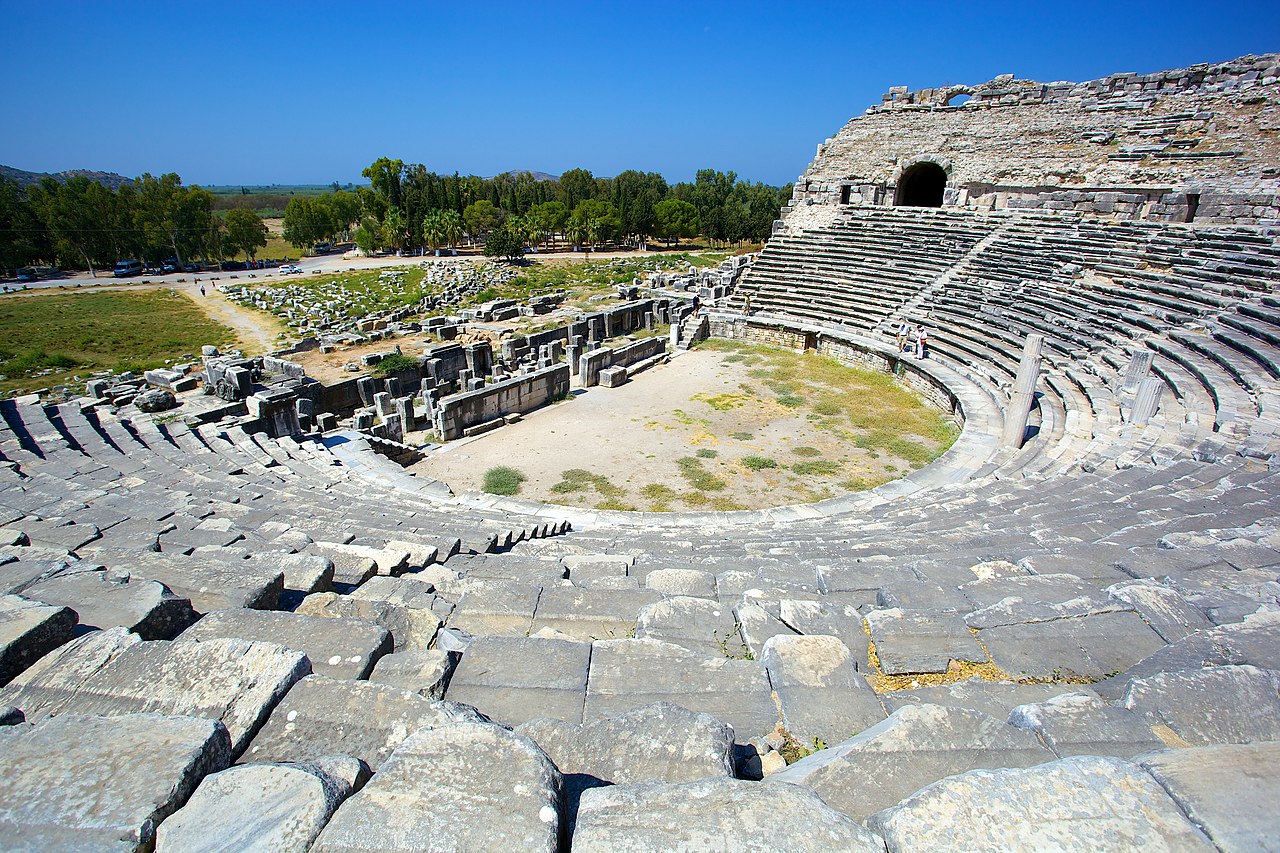
Miletus grew as a coastal port with a grid-like street plan traditionally associated with the planner Hippodamus of Miletus. The city included well-developed public spaces: a large agora, civic council buildings, baths, and a theatre. Its harbour and maritime orientation made trade and seafaring central to civic life. Over centuries the Maeander River’s silting gradually altered the coastline, transforming the former harbour landscape.
History and development
Miletus passed through multiple political phases: an early Greek trading settlement, a member of the Ionian city-states, and later subject to Lydian and Persian control. It played a prominent role in the Ionian Revolt at the end of the 6th century BCE, an uprising that involved leaders from the city such as Aristagoras. Alexander the Great’s campaigns and subsequent Hellenistic and Roman administrations also shaped the city’s fortunes before its gradual decline in late antiquity.
Colonization, culture and notable figures
Miletus is often cited among the most active Greek cities in establishing colonies around the Black Sea and the Aegean littoral, helping spread Greek language and institutions. It produced notable intellectuals: philosophers and early scientists such as Thales and Anaximander; Hecataeus, an early geographer and historian; and civic figures who influenced regional politics. These figures contributed to Miletus’s reputation as a center of early rational inquiry and civic innovation.
Archaeology and legacy
Archaeological excavations, beginning in the 19th century and continuing with major campaigns in the 20th century, have revealed extensive remains that testify to Miletus’s long occupation. Visitors can see the layout of streets, civic structures, and monumental ruins that illustrate urban life across Greek, Hellenistic, and Roman periods. The site is an important source for understanding Greek colonization, urban planning, and Greco-Anatolian interactions.
Why Miletus matters
- It serves as a primary example of ancient Greek coastal urbanism and planned street grids.
- Its colonies and maritime networks show how Greek culture spread across the Mediterranean and Black Sea.
- Its thinkers are central to the history of early philosophy and science.
For further overviews and maps consult general references and archaeological summaries available through major libraries and educational resources (general ancient-city overview).
Related articles
Author
AlegsaOnline.com Miletus: Ancient Greek City of Western Anatolia Leandro Alegsa
URL: https://en.alegsaonline.com/art/64945