
Asclepias incarnata (swamp milkweed): description, habitat and uses
Asclepias incarnata, commonly called swamp milkweed, is a North American wetland perennial with pink flower clusters. It supports pollinators and monarchs and thrives in moist, sunny to partly shaded sites.
Asclepias incarnata is a perennial flowering plant widely known as swamp milkweed, rose milkweed or pink milkweed. It is a member of the milkweed group and is valued for its showy clusters of pink flowers and role in wetland ecosystems. For formal nomenclature and taxonomic references see taxonomic entry.
Image gallery
8 Images


Taxonomy and identification
This species belongs to the subfamily Asclepiadoideae, a group of plants characterized by complex floral structures adapted to insect pollination. It is one of several species in the broader milkweed family; general information on the plant group is available at plant resources. Common names include swamp milkweed, rose milkweed, pink milkweed and historically white Indian hemp.
Description
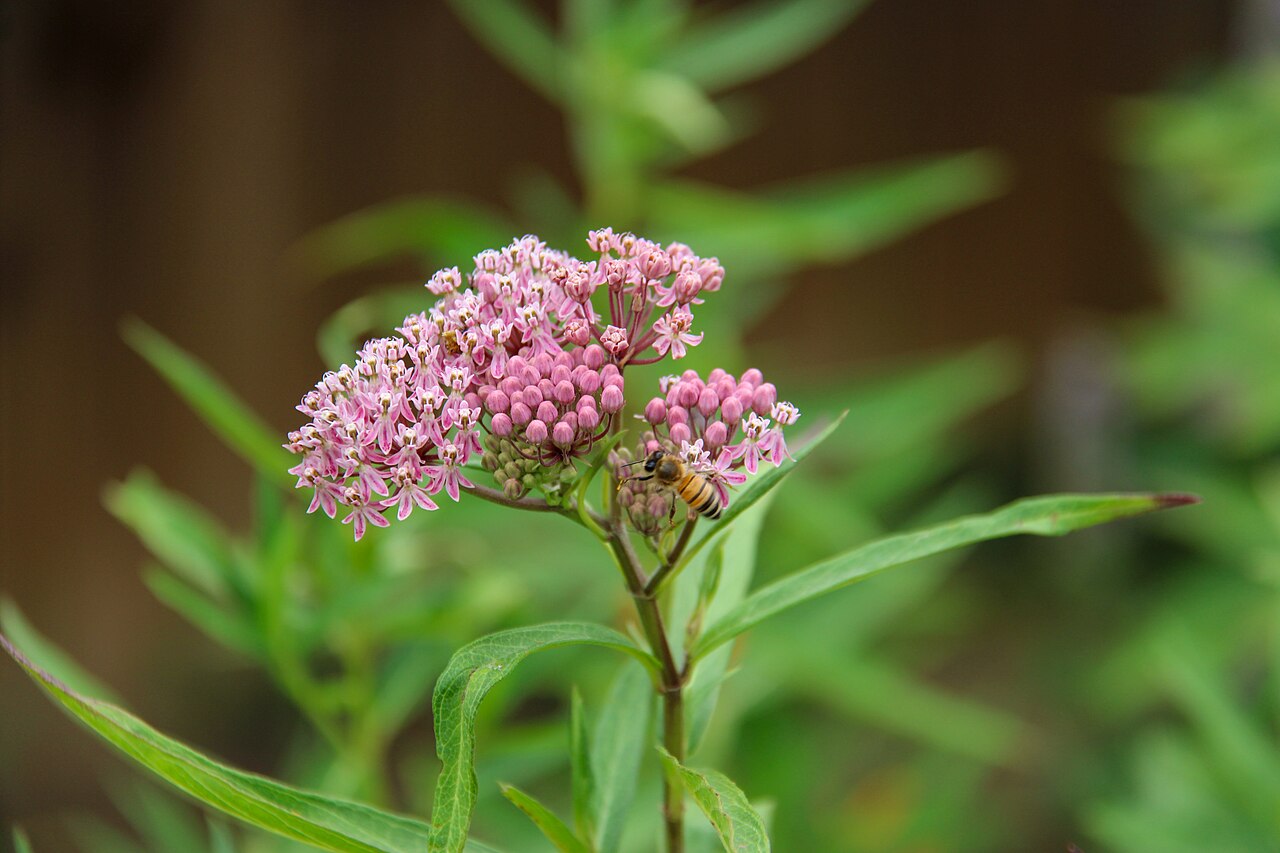
Swamp milkweed produces erect stems bearing lance-shaped leaves and terminal clusters of fragrant, star-shaped flowers that are usually pink to rose-colored. The bloom period typically runs from early summer into mid or late summer — see flowering details at bloom time references. Plants generally reach about 0.3–1.5 metres (1–5 feet) in height. Like other milkweeds it exudes a milky sap when cut and forms slender seed pods that release wind-dispersed seeds on silky hairs. It favors consistently moist soils and benefits from moist, well-drained conditions in cultivation.
Habitat and distribution
Asclepias incarnata is native to much of North America and is most commonly found in wetland environments. Typical natural habitats include wet meadows, prairies with seasonal moisture, swamps and marshes. It grows best in full sun to partial shade where soils remain damp during the growing season.
Ecology, uses and cultivation
Swamp milkweed is ecologically important as a nectar source for bees, butterflies and other pollinators and as a larval host for monarch butterflies. Like many milkweeds it contains bitter compounds (cardenolides) that deter herbivores; gardeners should handle the sap with care. It is commonly used in native plant gardens, rain gardens and restoration projects that aim to support pollinators and manage wet sites. Propagation is typically by seed or by dividing clumps in spring, and plants establish readily where soil moisture and sunlight match their natural settings.
Because of its habitat preferences and wildlife value, Asclepias incarnata is a frequent choice for ecological landscaping and educational plantings. For further cultivation guidance and regional advice consult local native plant guides or specialized resources such as milkweed guides and general horticultural references available through species databases.
Tags
Related articles
Author
AlegsaOnline.com Asclepias incarnata (swamp milkweed): description, habitat and uses Leandro Alegsa
URL: https://en.alegsaonline.com/art/6488