
Apocynum cannabinum (Indian hemp)
Apocynum cannabinum, commonly called Indian hemp or dogbane, is a North American perennial valued historically for its strong bast fiber and noted for its distinctive flowers, seedpods, ecological role and toxicity.
Overview
Apocynum cannabinum, commonly known as Indian hemp or dogbane, is a perennial herb in the dogbane family (Apocynaceae) native across much of North America. It is recognized for its clusters of small tubular flowers, paired opposite leaves, and slender upright stems that commonly reach 1–4 feet in height. The common name "Indian hemp" refers to the plant's fibrous inner bark, which resembles true hemp fiber though the species is not related to Cannabis.
Image gallery
7 Images



Identification and characteristics
Key identification features include:
- Leaves: opposite, simple, smooth-edged.
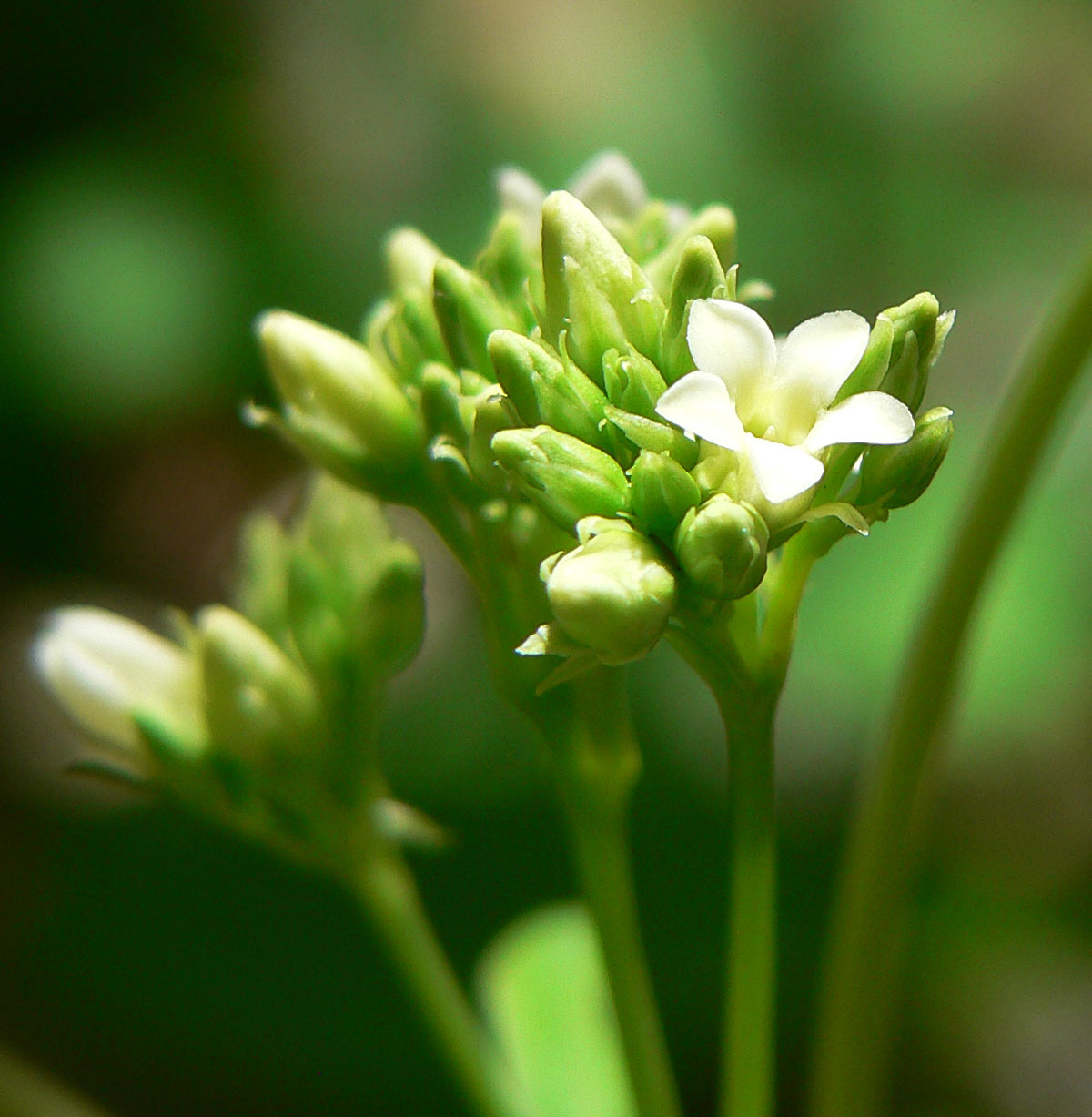
- Flowers: small, greenish-white to pinkish, in rounded or flat-topped clusters; bloom typically June through August.
- Fruit: paired slender follicles (pods) that split open at maturity to release many seeds attached to silky hairs for wind dispersal.
- Stems and roots: fibrous inner bark used for cordage; plants often form loose colonies via root systems.
Habitat and distribution
Apocynum cannabinum grows in a variety of moist to well-drained sites: lowlands, stream and pond edges, meadows, prairies, roadsides and disturbed soils. It tolerates sandy or gravelly substrates and is widespread across Canada, the United States and parts of Mexico. Its flowering season and vigor vary with local climate and soil.
Uses, ecology and toxicity
Historically, Indigenous peoples across North America processed the plant's inner bark to produce strong ropes, nets and cordage. Traditional medicinal uses are recorded, but preparations and applications varied by culture. Ecologically, the open clusters of nectar-bearing flowers attract bees and other pollinators; the wind-borne seeds aid in dispersal.
Despite useful fibers and ecological value, the species contains bioactive compounds and has a reputation for toxicity. It has been reported as toxic to livestock and can cause gastrointestinal upset or cardiac symptoms if ingested in quantity. For this reason, handling and use for herbal medicine require caution and expert guidance.
Cultivation and management
Apocynum cannabinum can be propagated from seed or by division and is sometimes included in native-plant or restoration plantings. It tolerates drought once established but favors sites with some moisture. Because it can spread by roots and is toxic to grazing animals, land managers weigh its ecological benefits against potential risks in pasture or rangeland.
History and notable distinctions
The name "dogbane" reflects longstanding observations of its poisonous qualities to dogs and livestock. "Indian hemp" and "hemp dogbane" highlight its use as a fiber source analogous to hemp, but the plant should not be confused with Cannabis—Apocynum cannabinum does not produce cannabinoids and has different botanical characteristics.
Further reading and resources
- Species profile and taxonomy
- Family Apocynaceae overview
- Distribution maps for North America
- Flowering calendar and phenology
- Riparian and wetland habitat guidance
- Pond and shoreline planting notes
- Soil preferences: sandy and gravelly sites
- Propagation and garden cultivation tips
- Toxicity, handling and livestock considerations
Tags
Related articles
Author
AlegsaOnline.com Apocynum cannabinum (Indian hemp) Leandro Alegsa
URL: https://en.alegsaonline.com/art/4895