
Asclepias curassavica — scarlet milkweed (Mexican butterfly weed)
A tropical milkweed native to Central and South America, known for red-orange flower clusters, popularity with butterflies, widespread naturalization, and implications for cultivation and monarch conservation.
Asclepias curassavica, commonly called scarlet milkweed, Mexican butterfly weed or bloodflower, is a tropical milkweed in the subfamily Asclepiadoideae. Originally native to parts of Central America and South America, it has become naturalized in many warm regions worldwide. Gardeners prize it for long-lasting, brightly colored blooms that attract a variety of pollinators.
Image gallery
10 Images


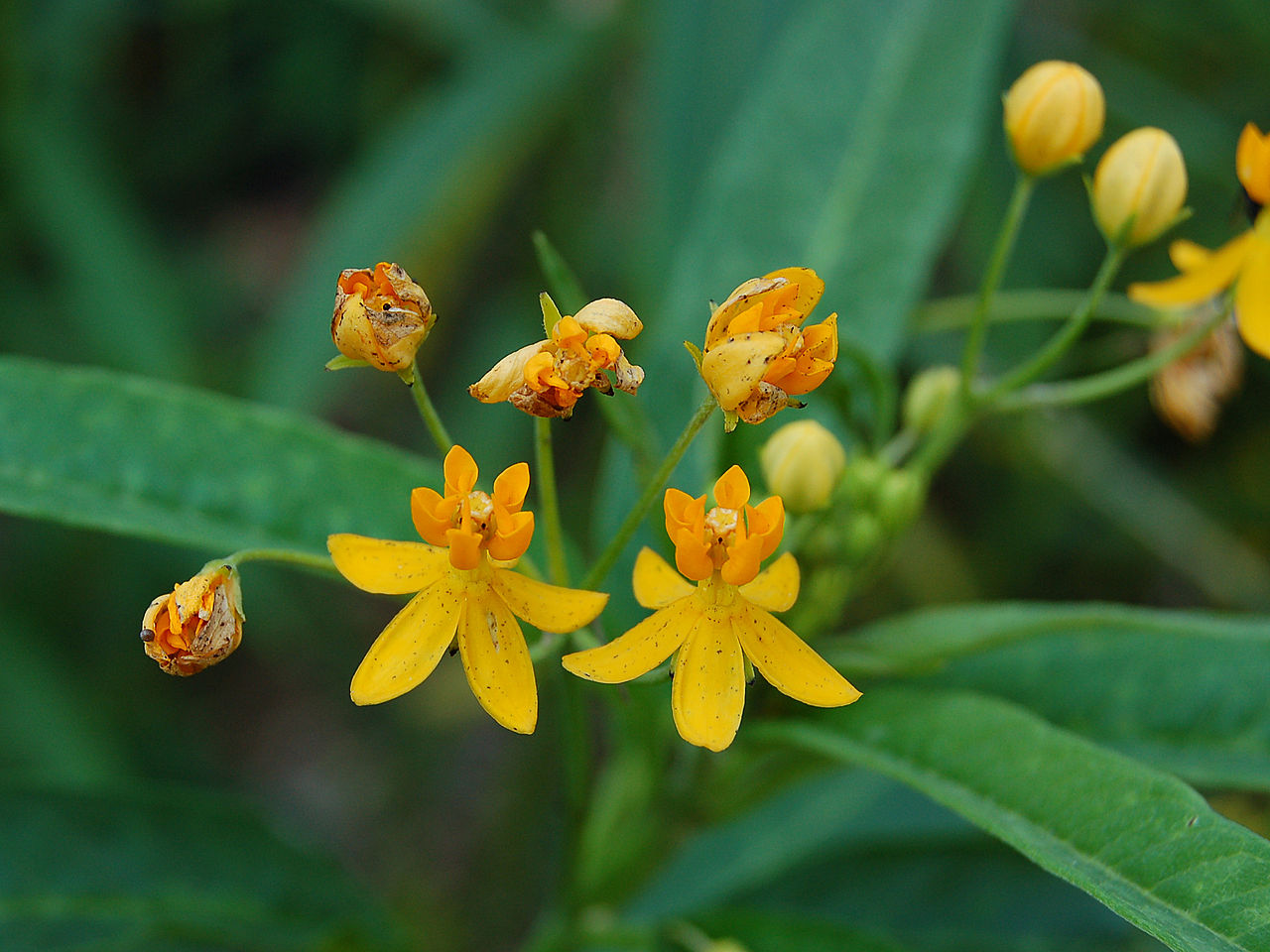


Description
This species typically produces upright stems with opposite, lance-shaped leaves and a milky sap when damaged. Flowers are borne in terminal clusters and are usually red to orange with yellow centers; their tubular shape and clustered display make them highly visible to butterflies and bees. After flowering, the plant forms elongated pods (follicles) that split to release seeds attached to silky hairs for wind dispersal.
Ecology and importance
A. curassavica is an important nectar source for many insects and is frequently visited by butterflies, including monarchs. Because it belongs to the broader milkweed group (milkweeds), it shares the characteristic chemical defenses that make many species unpalatable to predators. In some regions its year-round availability has prompted discussion among ecologists about effects on migratory butterfly behavior and disease dynamics.
Cultivation and distribution
Valued for easy culture, this milkweed thrives in sunny, well-drained sites and tolerates a range of soil types. It is commonly grown from seed or cuttings and will self-seed in favorable climates, leading to naturalization beyond its native range. Gardeners often consult plant profiles and regional guidance when introducing it; see a general plant profile here and a species record here.
Toxicity, uses and management
Like many Asclepias species, A. curassavica contains cardiac glycosides in its sap that can be toxic to livestock and pets if consumed in quantity; sap may also irritate skin. It has limited traditional uses in some cultures, but any medicinal application requires caution because of its toxic compounds. Where it is non-native, managers sometimes recommend controlling volunteers or cutting plants back at certain times to reduce year-round breeding sites for butterflies and to limit spread.
Notable distinctions
Although often compared with temperate milkweeds used in conservation plantings, A. curassavica is more tropical in habit and may behave differently in gardens and wildlands. Those restoring native milkweed populations or supporting migratory species should balance its ornamental benefits against ecological considerations and consult local guidelines (milkweed resources, taxonomic references).
Tags
Related articles
Author
AlegsaOnline.com Asclepias curassavica — scarlet milkweed (Mexican butterfly weed) Leandro Alegsa
URL: https://en.alegsaonline.com/art/6481
Sources
- eol.org : "Synonyms of Tropical Milkweed (Asclepias curassavica)"