
State of México (Estado de México)
Overview of the State of México: location, borders, capital, population context, geography, history, economy and notable sites such as Teotihuacan and Toluca.

Overview
The State of México (Spanish: Estado de México) is one of the 32 federal entities of the United Mexican States. Located in the central part of the country, it surrounds but does not include the capital, and it forms a large portion of the densely populated basin around the capital area. The state's seat is the city of Toluca, while its largest urban municipality by population is Ecatepec de Morelos on the edge of Mexico City. The state is historically and economically tied to the nation as a whole (Mexico).
Image gallery
10 Images



Geography and borders
Physically diverse, the state contains high mountain ranges, volcanic peaks and valleys; prominent features include the Nevado de Toluca and the foothills of Popocatépetl on its southeastern edge. Its area is roughly on the order of twenty-two thousand square kilometres and it is one of the most densely inhabited Mexican states. It shares boundaries with several other states:
Administrative structure and population
The state is divided into more than one hundred municipalities and its government follows the federal model used across Mexico. It is among the country's most populous states; for example, early-2000s estimates placed its population at around 14 million inhabitants, and the number has continued to grow due to urban expansion and the metropolitan influence of the national capital.
History and development
The territory has a long human history, with important pre-Hispanic settlements and later integration into the Aztec domain. After the Spanish conquest, the area became an important agricultural and mining region during colonial times and underwent administrative changes after independence. Industrialization and the expansion of transportation links in the 20th century transformed many former towns into suburban and industrial municipalities connected to the capital region.
Economy, culture and uses
Economic activity in the state is varied: manufacturing, services, commerce and agriculture all play roles. Because parts of the state are contiguous with the Mexico City metropolitan area, much of its economy is linked to commuting, logistics and industrial parks. The state also preserves traditional crafts, regional cuisine and festivals that reflect its mixed indigenous and colonial heritage.
Notable places and distinctions

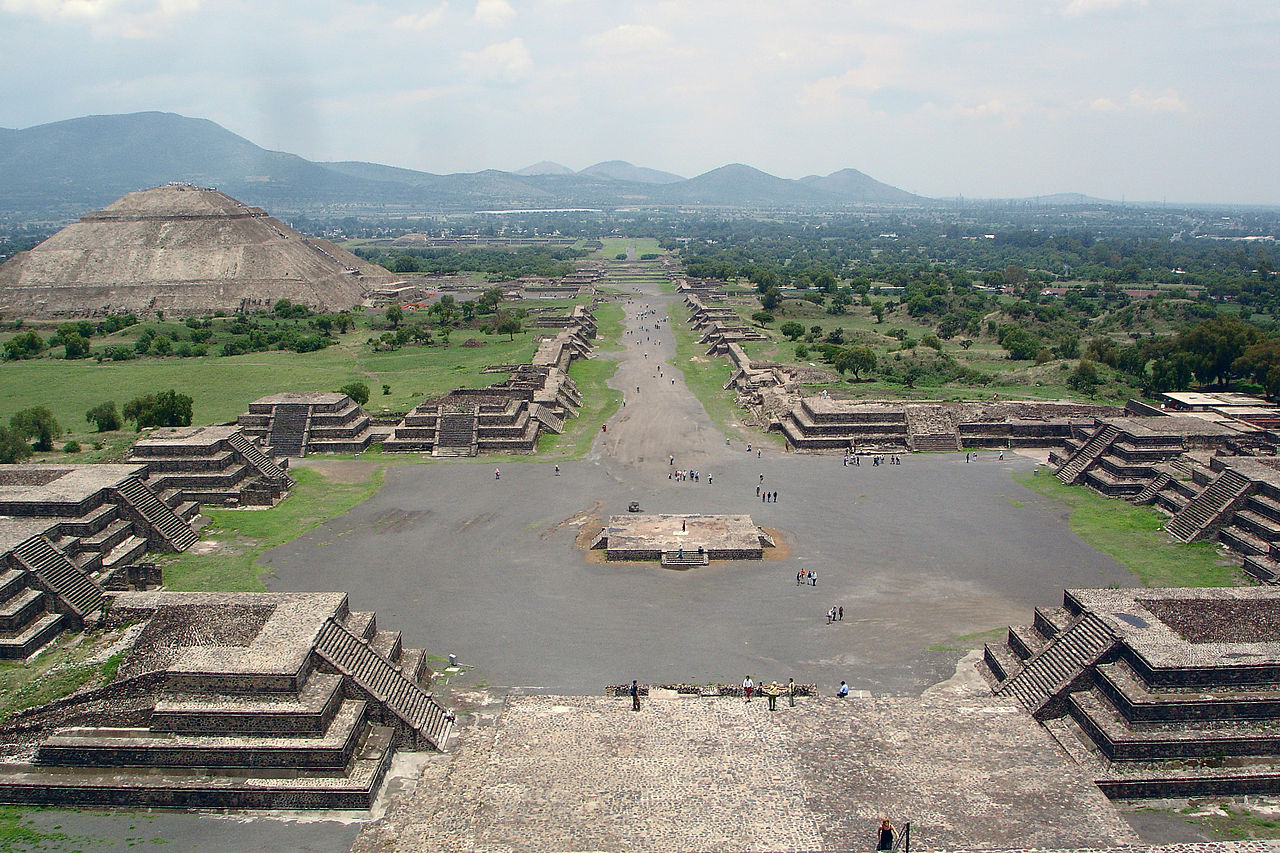
Among the state's well-known sites is the archaeological complex of Teotihuacan, famous for the Pyramid of the Sun and Pyramid of the Moon, which draws many visitors. Toluca offers cultural institutions and access to highland scenery, while a number of smaller towns preserve colonial churches and local traditions. A common point of confusion for outsiders is the name: "State of México" refers to this federated state, distinct from the country as a whole and from Mexico City. For further reading and official resources, consult regional portals and reference links about the nation's states and municipalities (national overview, state capital information).
Related articles
Author
AlegsaOnline.com State of México (Estado de México) Leandro Alegsa
URL: https://en.alegsaonline.com/art/64343