
Mesozoic Marine Revolution: escalation of seafloor predation and faunal change
A major Mesozoic increase in marine predation that transformed benthic communities, promoting new predators, defensive shells, burrowing lifestyles and the shift from brachiopod to bivalve dominance.
Overview
The phrase "Mesozoic marine revolution" describes a broad intensification of animal predation on the sea floor during the Mesozoic period, a trend first framed by the paleontologist Geerat Vermeij. It refers to the rise in effectiveness and diversity of sea-floor predators and the resulting reorganization of benthic communities compared with the Palaeozoic fauna. The episode unfolded over many millions of years in the Triassic, Jurassic and Cretaceous parts of the Mesozoic era, and it left a clear signature in fossil shells and community structure.
Image gallery
6 Images

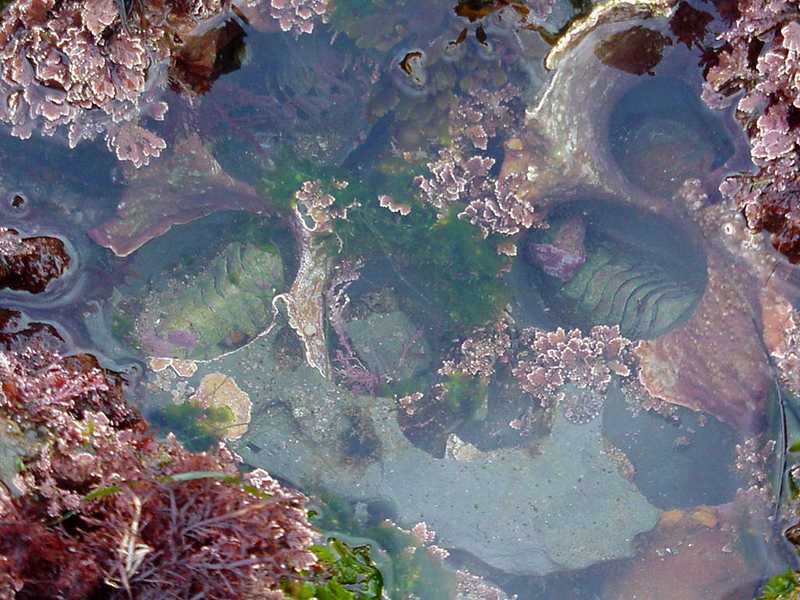


Predators and attack strategies
Several groups evolved or became more important as consumers of shelled invertebrates such as brachiopods and bivalves. Predators developed distinct ways to overcome hard defenses:
- Crushing: durophagous crabs and fishes applied mechanical force to break shells.
- Drilling and boring: many gastropods used a radula and chemical secretions to bore holes and extract soft tissues.
- Prizing and levering: starfish and some crustaceans levered shells open using tube feet or claws.
- Boring organisms: certain sponges and other encrusters chemically or mechanically excavated shell interiors.
Examples of active groups include echinoderms (notably starfish), gastropod predators that may deliver paralysing secretions and rasp with a radula, and brachyuran-style crabs.
Defences and ecological responses
Prey species evolved a range of countermeasures that are well documented in the fossil record. These include thicker and more ornamented shells, spines and ribs, tighter shell closure, the adoption of infaunal habits (burrowing into sediment), cementing to substrates, and behavioral shifts such as increased mobility. Many gastropod attackers used chemical agents — sometimes described as paralysing or anaesthetic secretions — applied while reaching in with a proboscis. Boring habits by sessile animals such as sponges also became more widespread.
Timing, evidence and notable vertebrates
The pattern is reconstructed from changes in fossil abundance, shell damage (drill holes, repair scars, crushed valves), and the appearance of specialized crushing teeth or jaws in predators. Some marine reptiles and fishes independently evolved durophagous adaptations: certain placodonts (placodonts) and later marine reptiles, including selected ichthyosaurs and mosasaurs (mosasaurs), show blunt, flattened teeth suited to crushing shell-bearing prey — a parallel route to the same ecological effect as invertebrate predators. The general increase in shell-breaking and drilling traces provides strong evidence for escalating predation pressure.
Consequences and significance
The Mesozoic marine revolution reshaped benthic ecosystems: in many environments brachiopods declined relative to bivalves, infaunal suspension feeding expanded, and predator–prey interactions became more complex and spatially heterogeneous. These shifts influenced the evolution of modern marine communities and the functional roles organisms fill on the seafloor. For further reading about the concept and its broader implications see sections on ecological escalation and faunal turnover in paleontological literature (vertebrate and invertebrate perspectives).
Examples and further reading
- Drilling gastropods (muricids and related groups) and their traces illustrate targeted predation on bivalves and other shelled prey.
- Crushing predators include decapod crustaceans and many teleost fishes; the mechanical marks they leave are diagnostic in fossils.
- Specialized fossils such as placodonts, ichthyosaurs and mosasaurs document the vertebrate contribution to shell-crushing guilds.
These themes connect to broader topics in paleobiology, including escalation theory, coevolution, and the origin of modern marine ecosystems. For introductions and advanced treatments see resources linked here: predators, Palaeozoic context, and comparative studies of faunal change.
Questions and answers
Q: What is the Mesozoic marine revolution?
A: The Mesozoic marine revolution was a significant change in seafloor life during the Mesozoic era characterized by the evolution of sea-floor predators that ate shellfish.
Q: Who coined the term Mesozoic marine revolution?
A: Vermeij, a paleontologist, came up with the term Mesozoic marine revolution after studying changes in seafloor invertebrates for years.
Q: Which groups of animals evolved into sea-floor predators during the Mesozoic era?
A: Starfish, gastropods, and crabs evolved into sea-floor predators during the Mesozoic era.
Q: What were the primary types of shellfish eaten by these predators?
A: The sea-floor predators fed on brachiopods and bivalves, which were abundant during the Mesozoic era.
Q: How do crabs break open shells to eat the shellfish inside?
A: Crabs break shells by using force.
Q: What methods do various types of gastropods use to consume shellfish?
A: Various types of gastropods have adapted methods to get into shells, including boring through shells, making holes in the shell and putting in a paralyzing or relaxing substance, and working on small cracks in the edge of the shell.
Q: Were there any vertebrate predators of shellfish during the Mesozoic era?
A: Yes, some vertebrate predators of shellfish lived during the Mesozoic era, including placodonts, ichthyosaurs, and mosasaurs that had flat shell-crushing teeth.
Related articles
Author
AlegsaOnline.com Mesozoic Marine Revolution: escalation of seafloor predation and faunal change Leandro Alegsa
URL: https://en.alegsaonline.com/art/64097
Sources
- jstor.org : "The Mesozoic marine revolution; evidence from snails, predators and grazers"
- doi.org : 10.1666/07026.1
- doi.org : 10.1130/g33750.1
- doi.org : 10.1043/0883-1351(1998)013<0352:TATMMR>2.0.CO;2
- doi.org : 10.1016/0022-0981(75)90006-4
- doi.org : 10.1016/0022-0981(87)90071-2
- doi.org : 10.1016/0022-0981(79)90096-0