
Mercury (Roman god of commerce, messages and travellers)
Roman deity Mercury (Mercurius) presided over trade, communication, travel, boundaries and trickery. Son of Jupiter and Maia, he corresponds to Greek Hermes and is associated with the caduceus and the planet Mercury.
Overview
Mercury (Latin: Mercurius) is a principal deity of ancient Roman religion, associated with commerce, messages and travel. He appears throughout Roman myth and public cult as a versatile figure who mediates between people, places and realms. Sources on Roman religion place him among the leading gods of the state and in popular practice he was especially important to merchants, travellers and those working at the margins of lawful exchange (Roman religion).
Image gallery
10 Images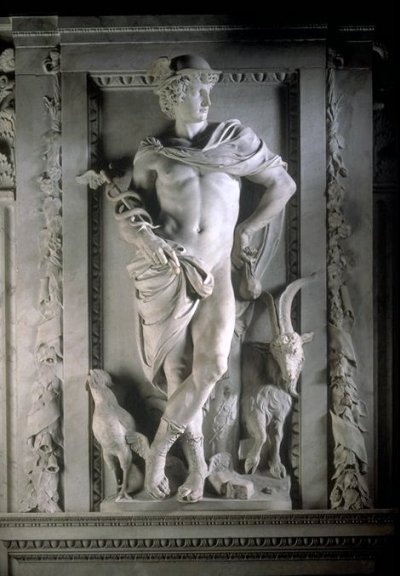


Attributes and iconography
Mercury is commonly depicted with attributes that emphasize speed, communication and mediation. Typical elements include a winged helmet and winged sandals, a traveler's cloak, and the staff known as the caduceus. Classical images underline both his usefulness to commerce and his more ambiguous role as patron of trickery and theft.
- Roles: god of trade, merchants, financial gain, messages, travellers, boundaries and trickery.
- Symbols: winged helmet and sandals, the caduceus, purse or purse-bearing figure in commercial contexts.
- Roman equivalent of the Greek deity Hermes, sharing many myths and functions.
Origins and family
In Roman mythological genealogy Mercury is conventionally described as the son of Jupiter (Jupiter) and the nymph Maia (Maia). He was counted among the Dii Consentes, the principal group of Roman deities who correspond roughly to a divine council (Dii Consentes). Over time Roman writers and artists freely adapted Greek stories about Hermes to depict Mercury, blending Italic tradition with Hellenistic influence.
Worship, cult and civic roles
Mercury received both official and private devotion. Merchants and itinerant workers invoked him for safe journeys and profitable trading; towns with commercial importance often featured shrines. The festival Mercuralia, attested in Roman calendars, was one occasion connected with his cult. As a god of boundaries and messages he could be both protector and trickster, reflecting the complex social role of trade in Roman life.
Legacy and cultural influence
Mercury's name and image survive across many fields. The planet closest to the Sun was named after him (Mercury), and the metal element mercury carries the same name in modern languages. The caduceus that he bears is a long-standing emblem associated with negotiation and commerce, and — through historical confusion — sometimes appears in modern medical iconography. His figure also endures in art, literature and language: Romance-language weekday names and idioms reflect his cultural footprint.
For further reading on classical representations and specific myths see entries and resources linked here: Latin name and forms, overview of Roman cults, Jupiter, Maia, Dii Consentes, Hermes, the caduceus, planetary naming.
Related articles
Author
AlegsaOnline.com Mercury (Roman god of commerce, messages and travellers) Leandro Alegsa
URL: https://en.alegsaonline.com/art/63919