
Michael (archangel)
Archangel Michael is a principal angel in Judaism, Christianity, and Islam, known as a defender, healer, and leader of heavenly hosts; overview of his name, scriptural references, devotional history, and cultural role.
Overview
Michael is one of the best-known archangels in the three Abrahamic faiths. He is commonly portrayed as a chief heavenly warrior, protector of the faithful, and a figure associated with healing and judgment. Various religious traditions refer to him with different titles and emphases: many Western churches use the honorific "Saint Michael," while Eastern churches often refer to him by titles that emphasize his rank among the angels.
Image gallery
10 Images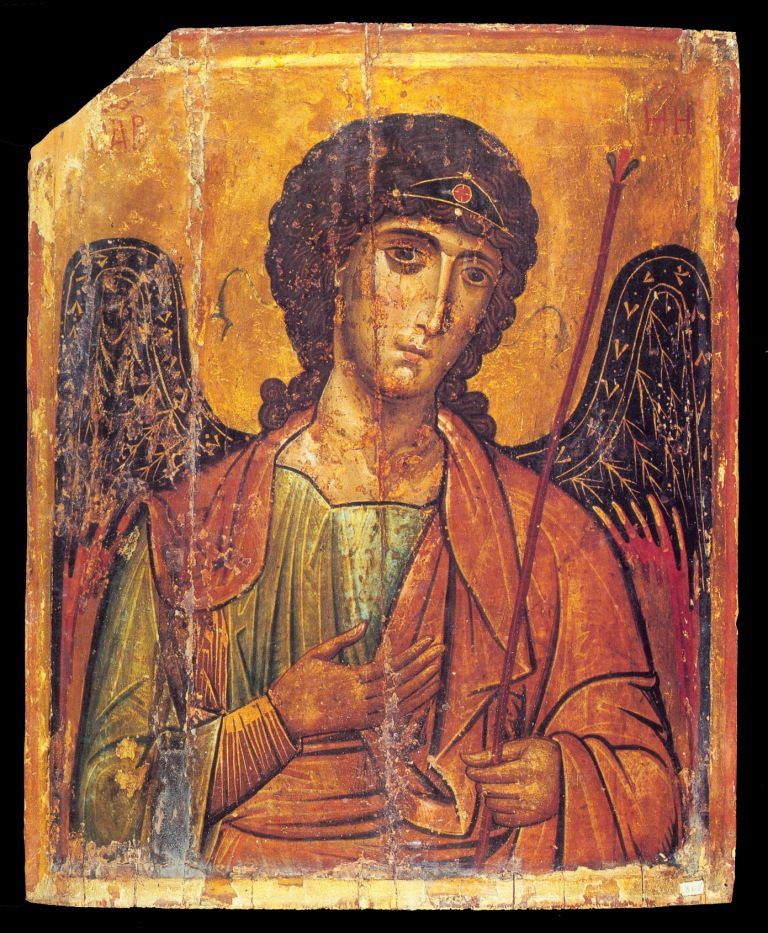



Name and identity
The name Michael comes from the Hebrew phrase meaning "Who is like God?" and functions as a rhetorical question that affirms God's uniqueness. In Judaism his character developed within scriptural and post‑scriptural literature as a patron and defender of Israel. In Christian texts he is named explicitly and assigned martial and eschatological roles. In Islam he appears as an angel called Mika'il, traditionally associated with provision and mercy.
Scriptural references and traditions
Michael is mentioned several times in the Hebrew Bible and its intertestamental and interpretive literature. The Book of Daniel refers to him as a "great prince" who stands on behalf of Israel. In the Christian New Testament the Epistles and apocalyptic writings give him a military and judicial function: the Book of Revelation describes a celestial battle in which Michael and his angels oppose the dragon, often identified with Satan, and the Epistle of Jude calls him "the archangel" in a disputation over the body of Moses. Islamic scripture and tradition preserve him as Mikāʼīl (often transliterated Michael), an angel entrusted with sustaining creation, provision, and mercy.
Roles, attributes, and common depictions
- Protector and warrior: Michael is frequently depicted as the leader of God's armies and the adversary of demonic forces.
- Healer and intercessor: Early Christian devotion sometimes emphasized his role in healing and deliverance.
- Guide of souls: In later medieval piety he became associated with escorting the righteous at death and with aspects of judgment.
- Patronage: Over time communities have invoked Michael as a patron for soldiers, mariners, and various civic institutions.
History of devotion
Devotional traces to Michael appear early in Christian history. By the fourth century there were sanctuaries dedicated to him, and by the sixth century formal devotions were widespread across both Eastern and Western churches. Initially many of these devotions emphasized his curative and protective power; later medieval theology and art elaborated his role as commander of the angelic host and victor over evil. Eastern churches sometimes use specific military titles such as the Taxiarch; Western churches developed feast days and liturgical celebrations in his honor.
Distinctive features in different traditions
Although Michael is a shared figure, traditions differ in emphasis and practice. In Judaism he retained the character of a heavenly advocate without developing the extensive cultic veneration seen in Christianity. In many Christian communions—Roman Catholic, Eastern Orthodox, Anglican, and some Lutheran bodies—he is honored liturgically as Archangel Michael or "Saint Michael the Archangel". In Islam his role aligns more closely with provision and support rather than the combative imagery often found in Christian art. Scholarly and devotional treatments vary, and popular culture has further shaped modern perceptions of Michael as a symbol of spiritual combat and moral resolve.
Legacy and cultural impact
Michael's image appears widely in art, architecture, literature, and liturgy. Paintings and icons commonly show him with a spear or sword standing over a defeated dragon or demon. Churches and chapels bearing his name proliferated throughout the medieval Christian world, and modern institutions sometimes adopt him as a patron for protective or military roles. Discussions about Michael continue in theological, historical, and cultural scholarship as representatives interpret his functions and symbolism differently across faith communities.
For further study, readers may consult introductions to angelology and primary texts such as the Book of Daniel, the Book of Revelation, and commentary traditions found in Jewish, Christian, and Islamic literature. Additional liturgical and iconographic resources are available in studies of early sanctuaries and medieval devotion to healing and protection. See also references to Michael as a leader or commander in broader angelic hierarchies and church teaching about his role as leader of the heavenly hosts and in the Eastern Christian rites.
Related topics include the nature of angels in monotheistic faiths, the development of saint veneration in Christianity, and the ways scriptural images are adapted into liturgy, art, and popular devotion. Scholarly overviews and denominational statements provide context for how Michael continues to function as a theological and cultural figure.
Christian teachings | Orthodox titles | Daniel | New Testament | Satan | Revelation | Jude | Sanctuaries | Healing devotions | Leader | Eastern Churches
Questions and answers
Q: Who is Michael?
A: Michael is an archangel in Jewish, Christian, and Islamic teachings. Roman Catholics, the Eastern Orthodox, Anglicans, and Lutherans call him "Saint Michael the Archangel" or simply "Saint Michael". Orthodox Christians call him the "Taxiarch Archangel Michael" or simply "Archangel Michael".
Q: What does his name mean?
A: In Hebrew, his name means "who is like God?".
Q: How did Jews view him?
A: Jews saw Michael as their supporter. They were normally not allowed to appeal to angels as a link between God and his people but they made an exception for Michael. He became important in Jewish liturgy.
Q: What does the New Testament say about him?
A: The New Testament states that he leads God's armies against Satan's forces in the Book of Revelation and defeats Satan during the war in heaven. The Epistle of Jude also mentions him by calling him “the archangel Michael”.
Q: When did devotions to Archangel Michael start among Christians?
A: Devotions to Archangel Michael began appearing among Christians in the 4th century. At first he was seen as a healing angel but later on he was viewed as a protector and leader of God's army against evil forces. By the 6th century these devotions had become common both among Eastern and Western Churches.
Q: How have teachings on Saint Michaels changed over time?
A: Over time teachings on Saint Michaels have evolved among Christians with different interpretations being given to his role within Christianity such as being seen as a healer or protector of believers from evil forces.
Related articles
Author
AlegsaOnline.com Michael (archangel) Leandro Alegsa
URL: https://en.alegsaonline.com/art/64428
Sources
- news.va : "Benedict XVI joins Pope Francis in consecrating Vatican to St Michael Archangel"
- biblegateway.com : "Bible gateway, Daniel 12:1"
- jcpdes.com : "St. Michael, Patron Saint of Police Officers"
- catholic.org : "St. Michael, the Archangel - Saints & Angels - Catholic Online"