
Melodic death metal
A subgenre of death metal that blends aggressive riffs and harsh vocals with melodic guitar harmonies and occasional clean singing. Originated in Scandinavia, often associated with the Gothenburg sound.
Melodic death metal is a subgenre of extreme metal that combines the intensity and aggression of death metal with an emphasis on melody, often delivered through harmonized lead guitars, memorable riffs, and more varied vocal approaches. While it retains many core elements of death metal—down-tuned guitars, fast drumming, and harsh vocals—it distinguishes itself by foregrounding tunefulness and structure that can be traced to traditional heavy metal and melodic rock.
Image gallery
3 Images

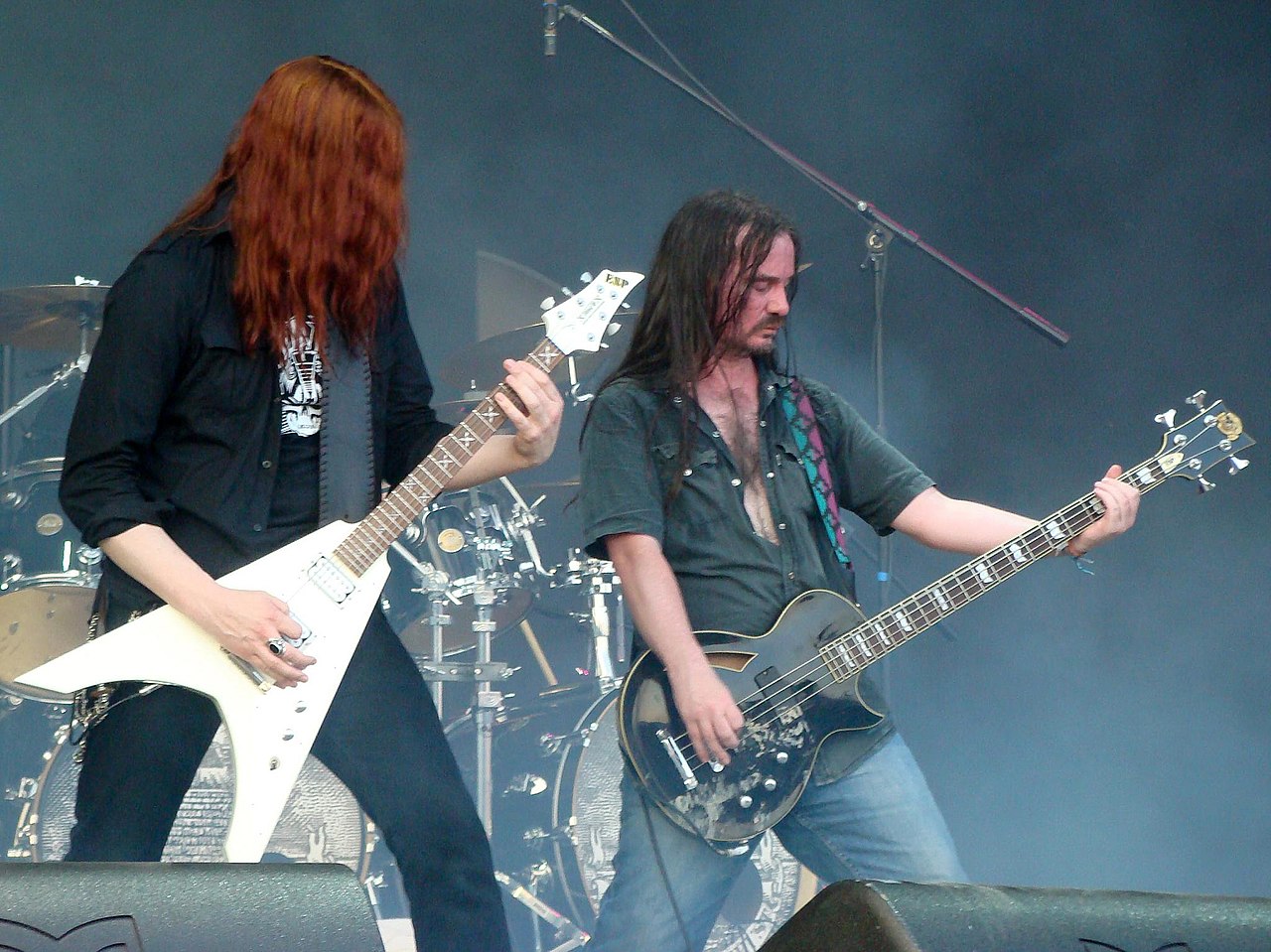
Musical characteristics
Key traits of melodic death metal include a mixture of growled and occasionally clean singing, prominent twin-guitar harmonies, clear melodic hooks, and song arrangements that balance brutality with accessible melodies. Bands may add keyboards or acoustic interludes to broaden dynamics. Production is often cleaner than old-school death metal, allowing melodic lines to stand out without sacrificing heaviness.
- Guitars: harmonized leads, melodic riffs, palm-muted chugging and solos.
- Vocals: predominantly harsh (growls or screams) with intermittent clean or shouted passages.
- Rhythm: brisk tempos, frequent tempo changes, and emphasis on groove as well as speed.
- Arrangement: verse–chorus clarity more common than in some extreme metal subgenres.
Origins and development
The style emerged in the late 1980s and early 1990s in Northern Europe, particularly in Sweden. A regional strain that mixed the ferocity of death metal with melodic techniques from classic metal created what listeners often call the "Gothenburg sound." Pioneering groups drew on influences such as traditional heavy metal and used dual-guitar harmonies to sculpt a more melodic take on extreme metal. From that regional scene the approach spread internationally and diversified into a variety of stylistic directions.
Importance and influence
Melodic death metal broadened the audience for extreme metal by offering greater melodic accessibility while retaining aggressive elements. Its emphasis on songwriting and melody influenced later genres, including metalcore and melodic metalcore, and informed the evolution of numerous bands that incorporated more clean singing and mainstream production. The genre also fostered a range of lyrical themes beyond gore and shock: many bands explore introspection, philosophy, history, and personal struggles alongside more traditional metal topics.
Distinctions and common themes
Compared with traditional death metal, melodic death metal tends to favor clearer guitar tone, melodic motifs, and structural hooks. Lyrical content often shifts from explicit violence to broader subjects such as existential questions, mythology, religion, and social commentary. That said, the subgenre remains diverse: some acts emphasize brutality and extreme tempos, while others move toward accessible songwriting and radio-friendly production.
Notable bands and further reading
Well-known bands associated with melodic death metal include In Flames, Dark Tranquillity, and At the Gates, among others that helped define and expand the style. The following links point to topics and resources commonly associated with the genre for readers who want to explore related styles and history:
- Death metal overview
- Music genre guides
- Heavy metal background
- Melody in metal
- Themes in extreme metal
- War and metal
- Violent themes in lyrics
- Gore and imagery
- Philosophical themes
- Religion in metal
- Gothenburg music scene
- Scandinavian metal
- Swedish metal history
- Norwegian metal context
- Influence of classic metal
- In Flames information
- Dark Tranquillity information
Related articles
Author
AlegsaOnline.com Melodic death metal Leandro Alegsa
URL: https://en.alegsaonline.com/art/63682