
Mehdi Bazargan — Iranian scholar and first post‑revolution prime minister
Mehdi Bazargan (1907–1995) was an Iranian engineer, academic and politician who led the interim government after the 1979 revolution and later opposed the embassy hostage taking and the Iran–Iraq War.
Overview
Mehdi Bazargan (مهدی بازرگان; born 1907 in Bazargan) was an Iranian engineer, university professor and political figure who played a prominent role in Iran's transition after the 1979 upheaval in Iran. He became head of the interim civilian government established in the immediate aftermath of the Iranian Revolution and is known for his advocacy of constitutional rule, civil liberties and non‑violent reform.
Image gallery
3 Images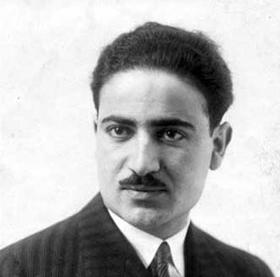


Early life and career
Bazargan trained as an engineer and later taught at Tehran's universities. He combined technical expertise with religious and political interests, helping to organize groups that sought democratic reforms and limits on royal power. Over the years he opposed the rule of the Shah and endured several arrests and periods of imprisonment for his political activities.
Political leadership and resignation
After the 1979 revolution he accepted the post of head of the provisional government, aiming to establish administrative order and a rule‑of‑law framework during a turbulent transition. His government emphasized restoring services and building institutions, but it faced growing pressure from more radical revolutionary forces. When militant students seized the United States Embassy in Tehran in November 1979, an act he publicly criticized, Bazargan and many of his supporters lost political authority and he stepped down later that month.
Views, positions and later life
Bazargan opposed the embassy hostage taking (U.S. Embassy crisis) and later expressed reservations about the prolonged Iran–Iraq conflict, arguing for restraint and negotiated solutions. He remained an outspoken advocate for legalism and moderate, democratic interpretations of Islam. In later decades he continued to be involved in reformist circles and to criticize policies he saw as contrary to popular rights and national interest.
Death and legacy
Bazargan died of a heart attack on 20 January 1995 while traveling from Tehran to Zürich. He is remembered as a complex figure: a religiously‑minded modernist who sought to reconcile Islamic values with democratic institutions, and as a transitional leader whose moderate program was overtaken by more radical forces in the revolution's aftermath.
Notable facts
- Academic background: trained engineer and university professor.
- Political role: head of the provisional government after the 1979 revolution.
- Stances: opposed the embassy seizure and later criticized the continuation of the Iran–Iraq War.
- Legacy: regarded by many as a symbol of moderate, constitutional politics in post‑revolutionary Iran.
For further reading about Bazargan's life, writings and political movement, consult historical surveys of the 1979 revolution, studies of Iranian political parties and biographies that address the immediate post‑revolutionary period and the tensions between moderate and radical currents.
Related articles
Author
AlegsaOnline.com Mehdi Bazargan — Iranian scholar and first post‑revolution prime minister Leandro Alegsa
URL: https://en.alegsaonline.com/art/63541