
Mediterranean region: geography, climate, ecology and human history
Region surrounding the Mediterranean Sea across southern Europe, northern Africa and western Asia, defined by a distinct climate, characteristic vegetation, long human habitation and major cultural exchange.
Overview
The Mediterranean region refers to the lands that border the Mediterranean Sea. It spans parts of three continents — mainly southern Europe, northern Africa and western Asia — and includes coastal plains, islands and nearby inland areas. Though compact compared with many continental regions, it has high environmental, historical and cultural diversity.
Image gallery
2 Images
Geography and subregions
The region is not a single political unit but a geographic and climatic zone that touches dozens of modern states. Major subregions include the Iberian and Italian peninsulas, the Balkans, the southern French and Anatolian coasts, the Levant, and the North African littoral. Islands such as Corsica, Sicily, Crete and Cyprus are integral parts of the area's landscape.
Climate and vegetation
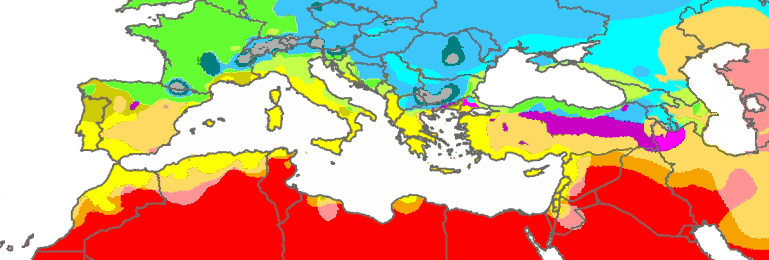
Much of the zone experiences a Mediterranean climate: warm to hot, dry summers and cool, wetter winters. This seasonal pattern shapes soils, water availability and human activities. Vegetation is typically drought-adapted: short trees, evergreen shrubs and hardy grasses known collectively as maquis, garrigue or chaparral depending on local language. These plant communities endure the regular summer droughts described in botanical and ecological studies (see adaptations).
Human history and cultural importance
The Mediterranean basin is a cradle of ancient civilizations and a historical crossroads. Over millennia it saw the rise of Classical Greece and Rome, Phoenician and Carthaginian maritime trade, the Byzantine and Ottoman domains, and centuries of cultural exchange across sea routes. Agriculture, maritime commerce and urban networks developed in response to the sea’s accessibility and the seasonal climate.
Uses, economy and modern relevance
Today the region remains important for tourism, fishing, shipping and agriculture (olives, grapes, citrus and other dryland crops). Coastal cities are major ports and cultural centers. Tourism flourishes because of the climate, scenery and historic sites, while contemporary challenges include water scarcity, urban growth, coastal development and balancing conservation with economic use.
Distinctions and conservation
Biogeographically the Mediterranean is recognized as a biodiversity hotspot with many endemic species, but it is also among the most affected regions by habitat loss and human pressure. Conservation efforts focus on sustainable water use, protecting coastal and island habitats, and managing wildfires and invasive species. Readers can find general regional overviews and entry points for further study via resources linked to the sea and the continents: Mediterranean Sea, Europe, Africa, Asia, climate summaries (Mediterranean climate) and vegetation adaptations (drought-tolerant plants).
Related articles
Author
AlegsaOnline.com Mediterranean region: geography, climate, ecology and human history Leandro Alegsa
URL: https://en.alegsaonline.com/art/63445