
Mechanical advantage: concept, measures, and practical examples
Mechanical advantage (MA) quantifies how a machine multiplies or trades force and distance. Covers definitions, ideal vs actual MA, history, common systems, uses and important distinctions.
Mechanical advantage (often abbreviated MA) is a dimensionless measure of how much a device multiplies an applied force or, equivalently, how it trades force for movement. In basic terms MA is the ratio of the load (the resistance overcome) to the effort (the force applied). For many simple devices this can be written as MA = output force / input force. A machine with MA greater than 1 reduces the input force needed to lift a load; MA less than 1 increases output speed or distance instead.
Image gallery
3 Images

Definition and ideal relationships
A standard engineering definition states MA = (resistance or load force) / (effort or input force). For an ideal, lossless mechanism (no friction or deformation), the same advantage can be expressed as the ratio of distances: MA = (distance moved by effort) / (distance moved by load). This expresses conservation of work: input force × input distance = output force × output distance. Because both numerator and denominator are forces in the primary form, MA has no units.
Common simple machines and examples
Simple machines are classic ways to obtain mechanical advantage. Typical examples include:
- Lever: MA depends on the ratio of lever arm lengths on either side of the fulcrum.
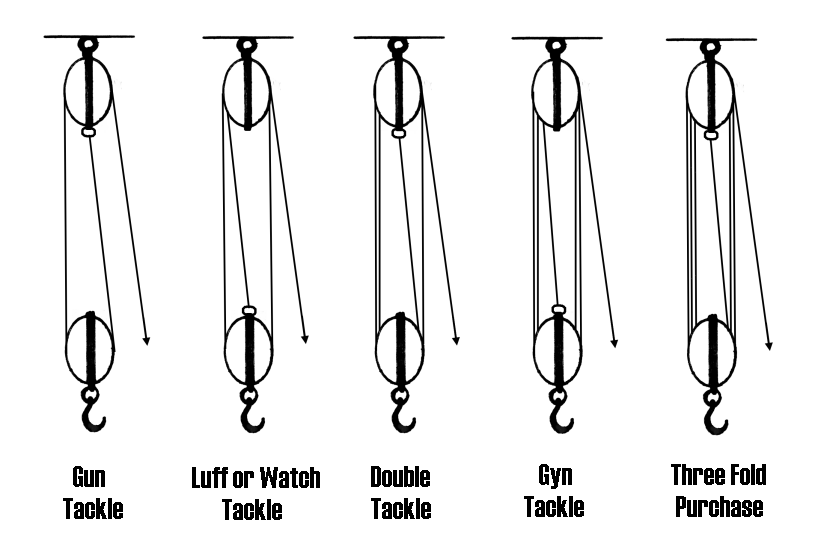
- Pulley systems: multiple pulleys change the load-sharing and multiply force.
- Inclined plane: reduces required force by increasing the distance moved.
- Wheel and axle, gears, and hydraulic presses: each converts input characteristics to different output force and displacement patterns.
These devices are often introduced by showing how less input force must be applied to raise a heavy load, at the cost of moving the input through a greater distance.
History and development
The concept behind mechanical advantage is ancient. Observations of levers and pulleys date back to classical antiquity; Archimedes is credited with formalizing the lever principle. Over centuries the study of simple machines informed mechanics and engineering, leading to quantitative treatments of force, work and efficiency during the scientific revolution. Modern textbooks frame MA within the more general ideas of energy, power and machine efficiency.
Practical considerations and distinctions
Real devices never achieve the ideal MA because of losses such as friction, bending, or leakage (in hydraulics). Engineers therefore distinguish between ideal mechanical advantage (IMA), calculated from geometry alone, and actual mechanical advantage (AMA), found by measuring forces experimentally. Efficiency can be defined as AMA / IMA (often expressed as a percentage).
Why MA matters and how it is used
Mechanical advantage is a basic design consideration in tools, machinery and structures. Knowing the MA helps select gearing, pulley arrangements or lever lengths to meet force or speed requirements. In practical terms MA informs safety margins, actuator sizing, and ergonomic design: tools with high MA reduce operator force but require longer input motion. In dynamic systems the related concept of velocity ratio links changes in speed to force trade-offs; both ideas are foundational to mechanical design and analysis.
See also: discussion of simple machines and force machine theory, and the nature of force in classical mechanics.
Related articles
Author
AlegsaOnline.com Mechanical advantage: concept, measures, and practical examples Leandro Alegsa
URL: https://en.alegsaonline.com/art/63347