
Microarchitecture: design and organization of processor hardware
Microarchitecture describes how a processor's circuits and logic implement an instruction set. This article explains components, design choices, history, and practical trade-offs in modern CPU and DSP designs.
Overview
Microarchitecture is the detailed description of the circuits and logic that implement a processor's behavior. In computer engineering it is commonly shortened to µarch or uarch. The term refers to the structure and interconnection of elements such as the datapath, control logic, caches and interfaces that realize the externally visible functions defined by an instruction set.
Image gallery
1 Image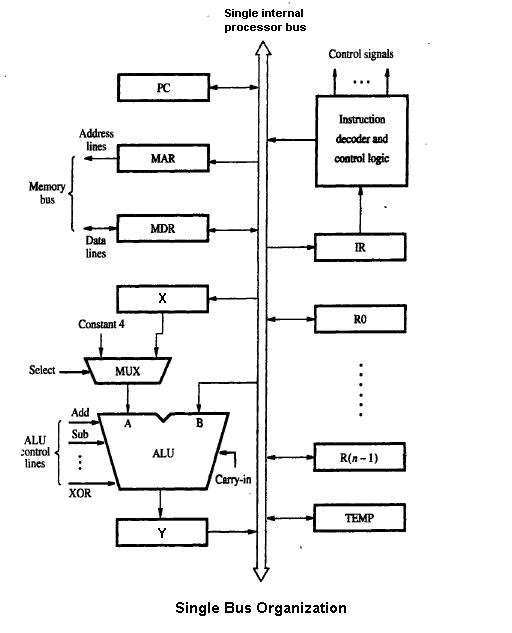
Core elements and organization
A microarchitecture specifies how a computer or a processing device like a digital signal processor arranges its internal resources. Typical components include:
- Execution units: arithmetic and logic units, floating point units, vector units.
- Register files and operand buffers that hold intermediate values.
- Control logic and sequencers that drive instruction flow and timing.
- Memory hierarchy: caches, translation lookaside buffers, and memory interfaces.
- Interconnects and buses that carry data and control signals between blocks.
These elements are realized as electrical circuitry and described in hardware design languages before physical implementation.
Design approaches and techniques
Designers choose strategies such as pipelining, superscalar issue, out-of-order execution, branch prediction, and simultaneous multithreading to improve throughput and latency. Some processors use microcode to implement complex instructions; others map instructions directly to combinational logic. Trade-offs among performance, power, cost, and silicon area guide architectural decisions.
History and relationship to ISA
The study of microarchitecture grew as computer designers separated the visible instruction set from the internal organization. The instruction set architecture (ISA) defines the programmer-visible contract, while microarchitecture determines how that contract is fulfilled. Together they form the broader field of computer architecture. The industry often uses the term "microarchitecture" where academia may say "computer organization."
Applications, importance, and notable issues
Microarchitectural choices affect software performance, energy efficiency, and cost in devices ranging from servers to embedded systems and central processing units. Designers must also consider implementation details of hardware that can create side effects, including security implications of speculative and parallel execution. Understanding microarchitecture helps engineers optimize compilers, operating systems, and system designs.
Further reading
Introductory and advanced texts, processor manuals, and implementation reports explain how specific microarchitectures work. For practical exploration, compare implementations of general-purpose processors, embedded cores, and specialized accelerators to see how the same ISA can be realized in different ways. For more on processors and design methodology, consult resources on digital design and computer engineering practice.
Computer concepts • µarch glossary • DSP design • Circuit design • CPU basics • Hardware trade-offs • Architecture overview
Questions and answers
Q: What is microarchitecture?
A: Microarchitecture is a description of the electrical circuitry of a computer, central processing unit, or digital signal processor that is sufficient for completely describing the operation of the hardware.
Q: How do scholars refer to this concept?
A: Scholars use the term "computer organization" when referring to microarchitecture.
Q: How do people in the computer industry refer to this concept?
A: People in the computer industry more often say "microarchitecture" when referring to this concept.
Q: What two fields make up computer architecture?
A: Microarchitecture and instruction set architecture (ISA) together constitute the field of computer architecture.
Q: What does ISA stand for?
A: ISA stands for Instruction Set Architecture.
Q: What does µarch stand for? A: µArch stands for Microarchitecture.
Related articles
Author
AlegsaOnline.com Microarchitecture: design and organization of processor hardware Leandro Alegsa
URL: https://en.alegsaonline.com/art/64586
Sources
- computer.org : IEEE Computer Society
- extremetech.com : PC Processor Microarchitecture