
Mayflower Compact
A 1620 agreement by passengers of the Mayflower establishing a temporary, self‑governing political body for the Plymouth settlement; often cited as an early American example of majority rule.
Overview
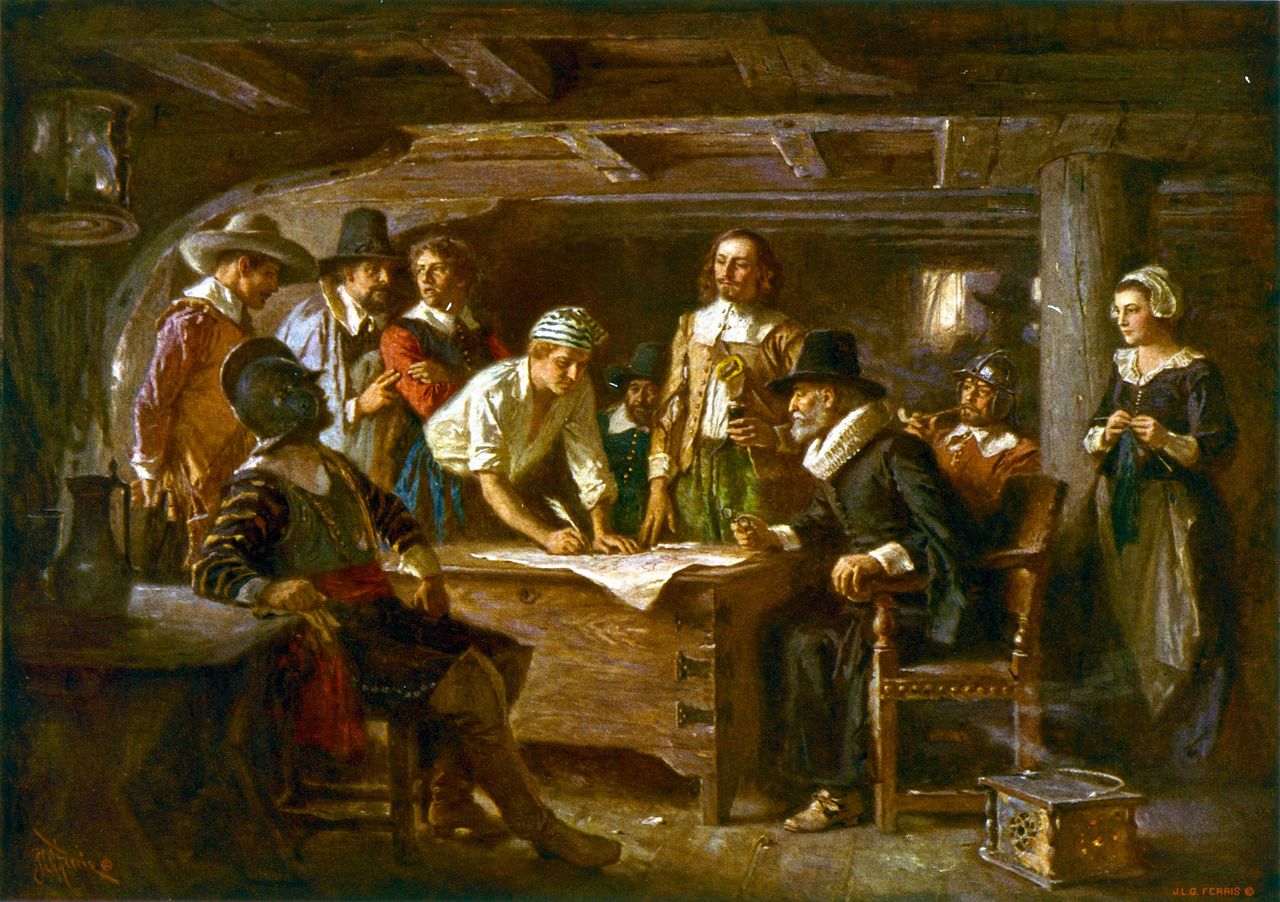
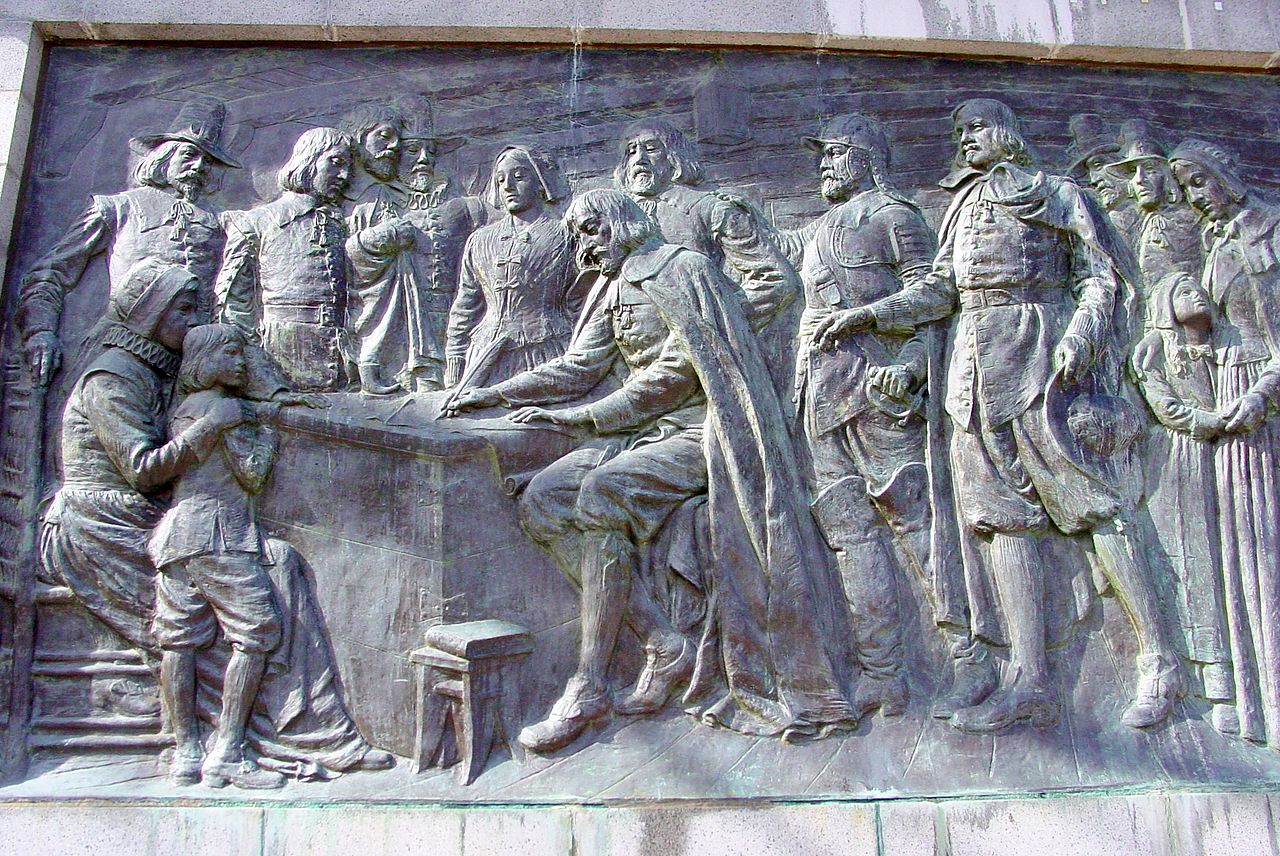
The Mayflower Compact was a brief written agreement signed aboard the ship or shortly after landing in November 1620 to create a basic form of self-government for the new settlement. It is associated with the founding of the Plymouth Colony and was adopted by a group of passengers often called the Pilgrims. The event took place when the ship Mayflower reached the New England coast and the settlers decided to form a civil body politic to maintain order.
Image gallery
5 Images


Key features and text
The Compact is short and framed as a covenant: signers agreed to unite into "a civil body politic" and to enact, observe and obey laws and officers chosen for the general good. It emphasizes collective decision‑making and obedience to those laws. Contemporary accounts record that 41 adult male passengers signed the document on 11 November 1620 (Old Style calendar).
Historical context
Drafted during a transatlantic voyage and signed where they first made landfall, the Compact reflected practical needs more than abstract theory. Facing a harsh winter and no established legal authority where they actually landed, the signers sought an agreed procedure for governance. The signatories followed social norms of the era—signing rights were limited to men, in keeping with prevailing customs of the time. Contemporary chroniclers noted the hardships the colonists endured the first winter, when many of the original settlers died.
Importance and legacy
Although brief and specific to the Plymouth settlement, the Mayflower Compact has been influential in American historical memory as an early example of consensual government and majority rule. It is sometimes described as a practical predecessor of later written constitutions and a local form of the social compact idea. Its story appears in many histories of colonial America and in accounts of the later development of political institutions in what became the United States of America.
Notable facts and distinctions
- The Compact was not a modern constitution; it provided a temporary framework and relied on subsequent laws and agreements.
- Authorship is usually attributed to community leaders and was later summarized by chroniclers such as William Bradford.
- Scholars note both its religious language—reflecting the signers' motives to practice their faith, a point sometimes linked to religious freedom—and its pragmatic civic purpose.
- Its exact wording survives through later transcriptions rather than a single original document, and its meaning has been examined in many historical studies (Plymouth Colony and related sources).
For further reading on the ship, the voyage, and the people involved, consult primary‑source transcriptions and scholarly summaries that place the Compact in the broader story of early English colonization and self‑government in North America. See also contemporaneous records of the Mayflower voyage and later colonial chronicles referenced by historians (Pilgrims, customs, religious motives).
Related articles
Author
AlegsaOnline.com Mayflower Compact Leandro Alegsa
URL: https://en.alegsaonline.com/art/63114