
McCulloch v. Maryland (1819): federal authority and state taxation
Landmark 1819 Supreme Court case affirming Congress's implied powers under the Necessary and Proper Clause and limiting state power to tax federal institutions.
McCulloch v. Maryland (1819) is a foundational decision of the Supreme Court of the United States that clarified the balance between federal and state power. The Court considered whether Congress had authority to create a national bank and whether a state could impede or burden federal operations by imposing taxes or other controls.
Image gallery
2 Images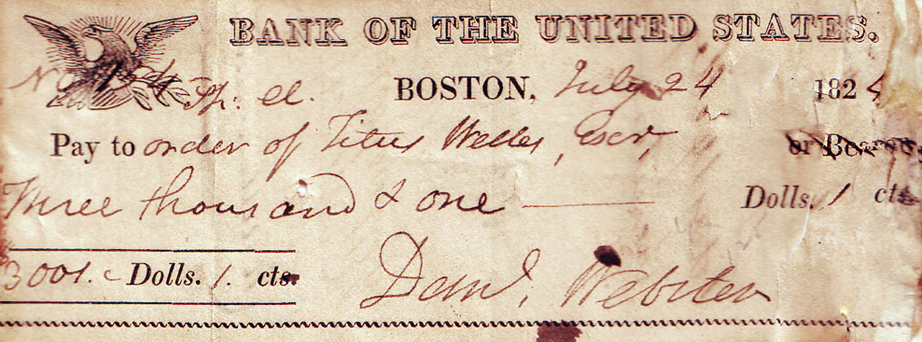

Background
After the War of 1812, Congress chartered the Second Bank of the United States in 1816. Several states objected to the federal bank’s presence and sought to assert local regulatory power. In Maryland, the state legislature imposed a tax on all banknotes issued by banks not chartered by the state. The only institution affected was the federal bank’s Baltimore branch. A bank cashier, James McCulloch, refused to pay the tax and the dispute eventually reached the Court.
Legal questions and ruling
The case posed two primary questions: did Congress have the constitutional authority to create the bank, and could Maryland tax a federal instrument? Chief Justice John Marshall, writing for a unanimous Court, held that Congress did have the power to establish the bank under the Necessary and Proper Clause (Article I, Section 8). Marshall also ruled that Maryland could not tax the federal bank because of the Supremacy Clause—state action may not interfere with legitimate federal functions.
Reasoning
Marshall advanced a broad view of federal authority by recognizing implied powers: while the Constitution does not explicitly list creating a bank, Congress may employ means that are appropriate and plainly adapted to constitutional ends. He famously warned that "the power to tax involves the power to destroy," explaining that allowing states to tax federal instruments would subordinate federal law to state control. The opinion balanced textual interpretation with practical governance concerns.
Consequences and significance
The decision strengthened the national government by endorsing an expansive reading of congressional powers and confirming federal supremacy when state laws conflict with national objectives. McCulloch v. Maryland became a bedrock precedent for later cases addressing implied powers and federal-state relations, shaping debates over banking, commerce, infrastructure, and federal regulation.
Key points
- Landmark decision establishing implied federal powers.
- State of Maryland attempted to assert taxing authority over a federal institution.
- Outcome: Congress can use means necessary and proper to carry out constitutional powers; states cannot obstruct federal functions by taxation or regulation (tax prohibition).
- Long-term: influential precedent for federal supremacy and constitutional interpretation.
McCulloch v. Maryland remains widely taught and cited as the classic articulation of the relationship between national authority and state sovereignty in the American constitutional system.
Questions and answers
Q: What was the McCulloch v. Maryland case about?
A: The case was about Maryland deciding to tax all banknotes by banks not chartered by the state of Maryland.
Q: What was the only bank in Maryland at the time that did not have a state charter?
A: The only bank in Maryland at the time that did not have a state charter was the Second Bank of the United States.
Q: When was the Second Bank of the United States established?
A: The Second Bank of the United States was established in 1816.
Q: What was the decision made by the Supreme Court of the United States regarding the case?
A: The Supreme Court of the United States made a landmark decision in the case, which was in favor of the Second Bank of the United States.
Q: What did Maryland decide to do to the banks that were not chartered by the state of Maryland?
A: Maryland decided to tax all banknotes by banks not chartered by the state of Maryland.
Q: When did the McCulloch v. Maryland case take place?
A: The McCulloch v. Maryland case took place in 1819.
Q: What was the Second Bank of the United States?
A: The Second Bank of the United States was a branch of the federal bank established in 1816.
Related articles
Author
AlegsaOnline.com McCulloch v. Maryland (1819): federal authority and state taxation Leandro Alegsa
URL: https://en.alegsaonline.com/art/63220
Sources
- pbs.org : "McCulloch v. Maryland (1819)"