
Miranda warning
A Miranda warning informs people in U.S. custodial interrogation of core constitutional rights, including the right to remain silent and to an attorney, and explains how those rights protect statements.
Overview
The Miranda warning, often called the Miranda rights, is a set of statements police in the United States give to a person who is in custody and about to be questioned. Its purpose is to inform the person of certain protections guaranteed by the Fifth and Sixth Amendments to the U.S. Constitution so that any waiver of those protections is made knowingly and voluntarily. The requirement arose from the U.S. Supreme Court decision in Miranda v. Arizona, and it has since shaped how interrogations are conducted and how evidence is admitted in court. For general context about the form and purpose of the warning see rights information and basic legal overviews in the United States criminal process.
Image gallery
4 Images

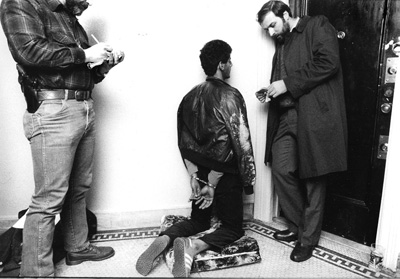

Typical content and form
There is no single, constitutionally mandated script, but most common versions contain four basic elements: the right to remain silent; that anything said may be used in court; the right to consult with an attorney and to have one present during questioning; and the right to have an attorney appointed if the suspect cannot afford one. Police departments often add phrasing about the ability to stop answering questions at any time. Plain-language examples and model texts are widely available for training and public information about being questioned and for guidance to law enforcement police resources.
When warnings are required
Miranda warnings must be given when a person is both in custody and subject to interrogation. "Custody" means a formal arrest or a situation where a reasonable person would not feel free to leave. "Interrogation" refers to direct questioning or its functional equivalent by officers. If those conditions are absent, warnings are not required before a police request or routine questioning. The requirement also applies upon arrest in most routine situations; see summaries of arrest procedures for more context on arrest.
Legal consequences and limitations
If officers fail to provide a Miranda warning when required, statements elicited during the custodial interrogation are generally inadmissible in the prosecutor's case-in-chief at trial. However, there are important limits and exceptions: spontaneous volunteer statements may still be used, a suspect who validly and voluntarily waives Miranda can speak without those warnings, and courts have recognized public-safety exceptions and other narrow doctrines that permit admission in certain circumstances. Additionally, improperly obtained statements can sometimes be used to impeach contradictory testimony given later at trial.
History and development
The Miranda decision in 1966 established the warning as a practical means to protect Fifth Amendment rights against compelled self-incrimination and to ensure that the right to counsel under the Sixth Amendment is meaningful during pretrial interrogation. Over time, subsequent rulings and statutory changes have refined how warnings are applied, what constitutes a valid waiver, and the scope of exceptions. For historical background and major rulings see discussions on the landmark decision Miranda v. Arizona and resources that summarize related constitutional protections Fifth Amendment and Sixth Amendment topics.
Practical importance and examples
Miranda warnings serve several functions: they protect individual liberty, ensure that confessions are voluntary and reliable, and promote fair trials by limiting coerced testimony. In practice, law-enforcement agencies train officers to give clear warnings and to document waivers. Citizens are often advised to invoke their rights by stating they wish to remain silent or want an attorney. For public guidance and legal help, consult general legal aid materials and official guidance pages legal references and local resources police information.
- Key point: Miranda protects against compelled self-incrimination during custodial interrogation.
- Exception note: Some narrow exceptions exist, such as urgent public-safety situations.
- Practical tip: If you are unsure, request an attorney and decline to answer questions until you consult one.
For deeper reading, training materials, and jurisdiction-specific guidance see resources on citizens' rights and law-enforcement procedure rights information, national context, and additional explanatory pages on arrest, questioning, or legal interpretation Amendment overview. Example summaries and public guidance can also be found through official legal aid and court information pages Fifth Amendment and reference sources.
Questions and answers
Q: What is a Miranda warning?
A: A Miranda warning is a list of rights that people in the United States have when they are being questioned by the police or arrested.
Q: Why are these rights called Miranda rights?
A: These rights are called Miranda rights because they were established as a result of a United States Supreme Court decision in a case called Miranda v. Arizona.
Q: What is the purpose of a Miranda warning?
A: The purpose of a Miranda warning is to make sure that suspects' rights under the Fifth and Sixth Amendments to the Constitution are protected.
Q: What is the goal of making suspects aware of their Miranda rights?
A: The goal of making suspects aware of their Miranda rights is to ensure that they know about their rights, and know that they can use them.
Q: When do the police have to give a person a Miranda warning?
A: The police have to give a person a Miranda warning before they start questioning them.
Q: What Supreme Court decision established the requirement for a Miranda warning?
A: The requirement for a Miranda warning was established as a result of a United States Supreme Court decision in a case called Miranda v. Arizona.
Q: What Amendments to the Constitution do Miranda rights protect?
A: Miranda rights protect suspects' rights under the Fifth and Sixth Amendments to the Constitution.
Tags
Related articles
Author
AlegsaOnline.com Miranda warning Leandro Alegsa
URL: https://en.alegsaonline.com/art/65364
Sources
- supreme.justia.com : 436
- uscourts.gov : "Facts and Case Summary – Miranda v. Arizona"
- jstor.org : "An Analysis of Miranda Warnings and Waivers: Comprehension and Coverage."
- dx.doi.org : 10.1007/s10979-006-9054-8
- ncbi.nlm.nih.gov : PMID 17597389
- expertlaw.com : "What Are Your Miranda Rights"
- wps.pearsoncustom.com : Criminal Procedure: From First Contact to Appeal
- supreme.justia.com : 582
- supreme.justia.com : 621
- supreme.justia.com : 291
- supreme.justia.com : 478
- supreme.justia.com : 2394
- apa.org : "Right to Remain Silent Not Understood by Many Suspects"
- dx.doi.org : 10.1111/lasr.12000
- jstor.org : "Exonerations in the United States: 1989 through 2003."