
Max Euwe: Dutch World Chess Champion, Mathematician, and FIDE President
Machgielis 'Max' Euwe (1901–1981) was a Dutch chess grandmaster, mathematician, author and FIDE president; world champion 1935–1937 and a leading promoter of chess education.
Overview
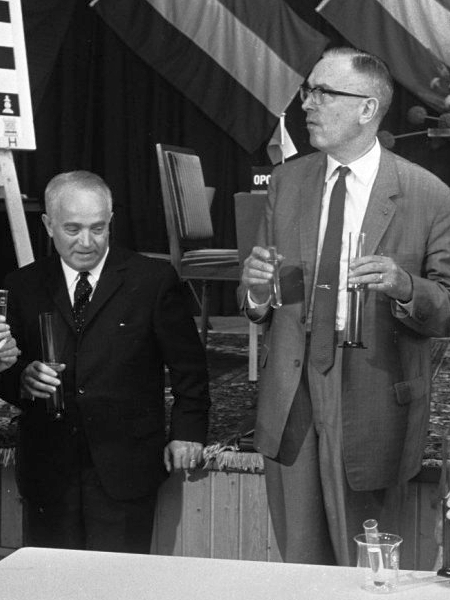
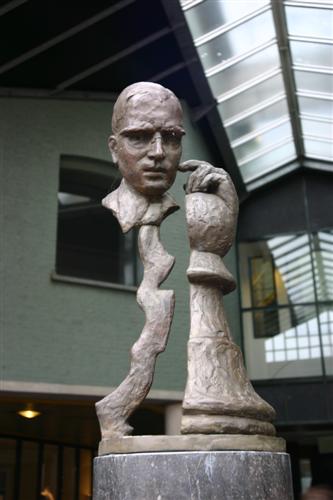
Machgielis "Max" Euwe (20 May 1901 – 26 November 1981) was a Dutch chess grandmaster who held the world title from 1935 to 1937. Born in Amsterdam and later dying there, Euwe combined a professional life in mathematics with international chess competition. He is remembered both for defeating Alexander Alekhine to become world champion and for later leadership of the international chess community as President of FIDE.
Image gallery
8 Images


Early life and academic career
Euwe grew up in the Netherlands and was identified early as one of the country’s leading Dutch minds in science and sport. He earned a doctorate in pure mathematics in 1926 and worked for many years as a teacher and lecturer, eventually becoming a professor in 1964. His dual career meant he was not a full-time professional chess player in the way some rivals were, yet he maintained top international form through disciplined study and teaching skills that he later applied to chess instruction.
Competitive chess and world title
Euwe became one of the world’s strongest players in the interwar period. Against the odds he won the world championship in 1935 by defeating Alekhine in a match noted for its rigorous preparation and clear, logical play. Alekhine regained the title in a 1937 rematch. After the disruption of World War II, Euwe remained a leading figure in Western European chess and competed in Candidates events and the 1948 championship tournament that selected Alekhine’s successor. He continued to play at a high level into the 1950s and faced many of the era’s top masters, including Paul Keres, and other leading contemporaries.
Style, writing and teaching
Euwe’s style emphasized clarity, sound strategic principles, and accurate calculation. He authored about twenty chess books aimed at club players and instructors, seeking to make advanced ideas accessible. One of his best-known pedagogical projects was a correspondence subscription course, widely known as Euwe’s Archives, which offered systematic instruction in openings and practical play and was published in several languages. His background as a mathematician and teacher shaped his approach to writing and coaching.
Administration and promotion of chess
Beyond the board, Euwe became an influential administrator. As FIDE president from 1970 to 1978 he worked to broaden international participation and to professionalize aspects of the game. He advocated for greater access to chess education and helped expand the organization’s reach into new countries, strengthening structures for international competition and junior development.
Legacy and notable facts
- World Chess Champion (1935–1937), defeating Alekhine in 1935 and losing the title in 1937.
- Blended careers as a mathematician and chess master; held a PhD and later a professorship in mathematics.
- Prolific author and educator whose works remain reference points for club players.
- Served as FIDE president and promoted global development of the game.
For further biographical and historical context see primary resources and general biographies: birthplace and personal details are associated with birth records and Amsterdam archives, his life and death are recorded in local sources (death notice), and assessments of his chess career appear in many overviews of chess history. His competitive standing in mid-20th-century Europe is often described in surveys of play in western Europe and in reports of major tournaments. Euwe’s correspondence and published courses remain cited introductions to opening play and instruction (world championship summaries, mathematical background).
Max Euwe’s contribution to chess spans competitive success, education, literature and institutional leadership—making him a pivotal figure in 20th-century chess history.
Related articles
Author
AlegsaOnline.com Max Euwe: Dutch World Chess Champion, Mathematician, and FIDE President Leandro Alegsa
URL: https://en.alegsaonline.com/art/63007