
Maurya Empire (c. 322–185 BCE)
An ancient Indian imperial state founded by Chandragupta Maurya; notable for centralised administration, Ashoka's rule and edicts, the spread of Buddhism, and lasting influence on South Asian governance.
The Maurya Empire was the first large-scale imperial state to unite much of the Indian subcontinent. Founded around 322 BCE by Chandragupta Maurya, it established its capital at Pataliputra (near modern Patna) and, at its height, extended across the Indo-Gangetic plain and into parts of central and western India. The dynasty remained a major power until its fragmentation and fall in the late 2nd century BCE.
Image gallery
10 Images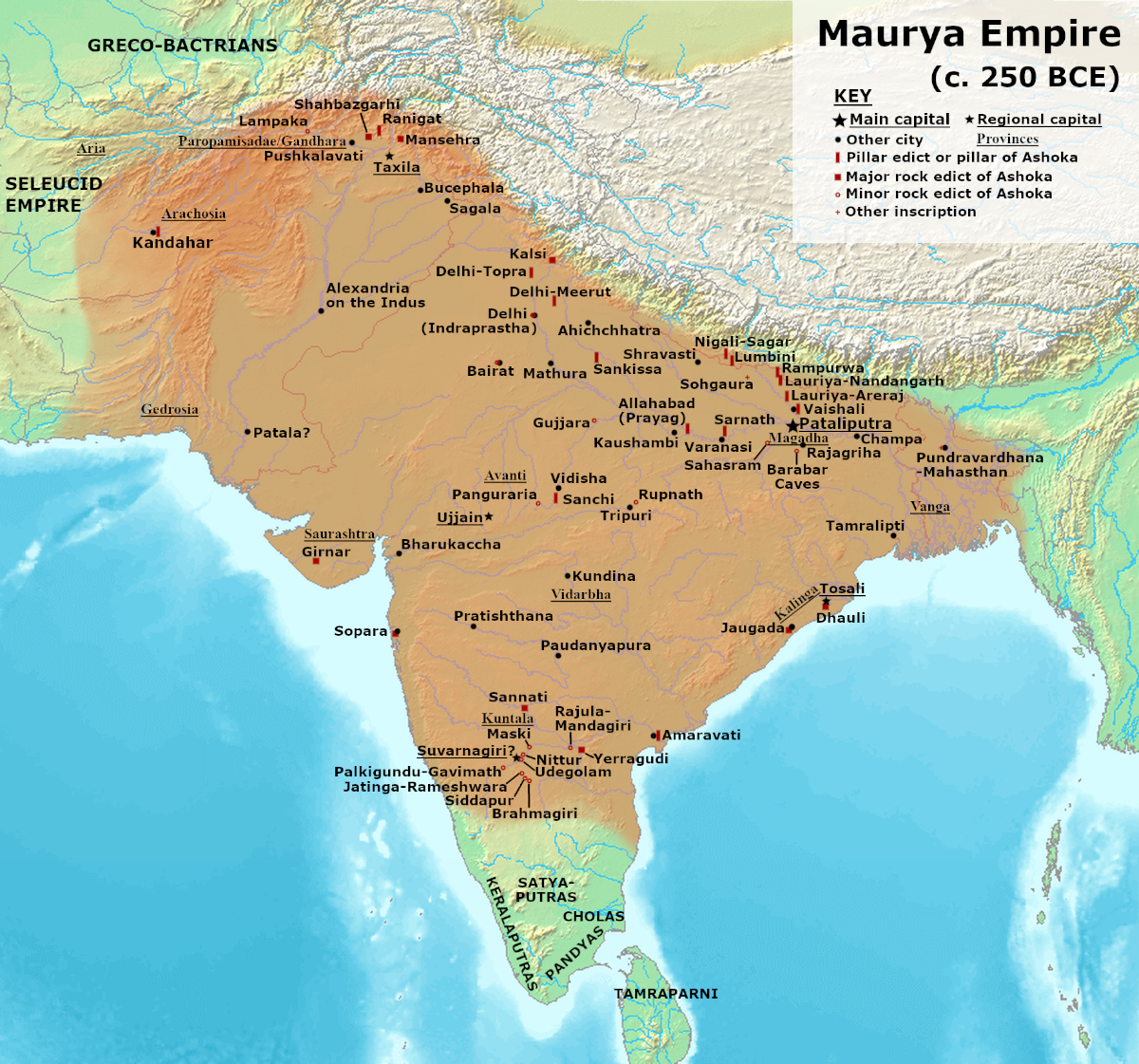



Origins and expansion
The empire grew rapidly under Chandragupta with guidance from his adviser Chanakya (also known as Kautilya), whose political ideas survive in the Arthashastra, a treatise on statecraft traditionally attributed to him. Early expansion included diplomatic and military dealings with Hellenistic successors of Alexander, and later rulers such as Bindusara consolidated control of the subcontinent. The reign of Ashoka (3rd century BCE) marked a turning point following the Kalinga conflict and a shift in imperial priorities.
Administration and economy
The Mauryas developed a centralised bureaucracy with appointed provincial governors, officials responsible for revenue and law, and systems for taxation and resource management. Agriculture formed the empire's economic base, supplemented by internal and overseas trade. Evidence indicates organised road networks, caravan routes and contacts with Hellenistic kingdoms that facilitated commerce and cultural exchange.
Culture, religion and public works
Ashoka is best known for adopting and promoting Buddhism after the Kalinga war, commissioning rock and pillar edicts that preached moral conduct (dharma) and nonviolence. The dynasty left material traces in sculptures, stupas and polished stone pillars — the Lion Capital of Ashoka later became a national emblem of India. Mauryan patronage affected religious life, art, and urban planning.
Key features
- Strong central government with provincial administration
- Military and intelligence apparatus to maintain order
- Promulgation of moral and administrative edicts under Ashoka
- Active internal and external trade networks
The empire began to decline after Ashoka's death as regional powers reasserted themselves; by about 185 BCE the last Mauryan monarch was overthrown and succeeded by the Shunga dynasty. Despite its relatively brief span, the Maurya Empire left a durable legacy in political organisation, statecraft literature, and the spread of Buddhist ideas across Asia.
Related articles
Author
AlegsaOnline.com Maurya Empire (c. 322–185 BCE) Leandro Alegsa
URL: https://en.alegsaonline.com/art/62986
Sources
- metmuseum.org : metmuseum.org/toah/hd/maur/hd_maur.htm
- cs.colostate.edu : "KING ASHOKA: His Edicts and His Times"