
Arthur Holmes: Pioneer of Radiometric Dating and Mantle Convection
Arthur Holmes (1890–1965), English geologist who developed uranium–lead dating and proposed mantle convection as a driver of continental drift, shaping modern geochronology and plate tectonics.
Arthur Holmes (1890–1965) was an English geologist whose research transformed how scientists measure Earth’s age and understand its internal dynamics. Trained in London, Holmes became one of the first to apply radioactive decay as a reliable clock for rock formation, and he argued that slow thermal currents in the planet’s interior could move continents. His work bridged observational geology and quantitative physics and remains fundamental to modern Earth science.
Image gallery
2 Images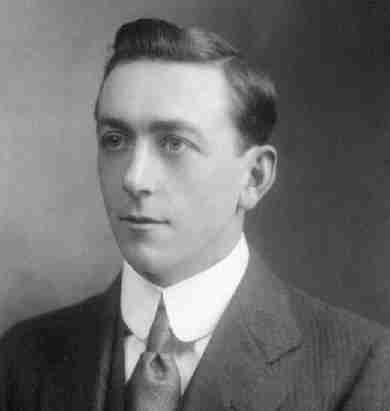
Major contributions
Holmes made two interlinked advances: the systematic use of radioactive isotopes to date minerals and the proposal that convective motion within the mantle could drive continental drift. By measuring the proportions of parent and daughter isotopes in mineral samples, he established techniques that converted laboratory measurements into reliable geological ages. These radiometric methods offered an objective timescale for geological events and overturned earlier, much shorter estimates of Earth’s history.
Methods and early results
While still an undergraduate in London, Holmes applied the uranium–lead decay system to date a sample of Devonian rock from Norway, obtaining an age of roughly 370 million years. That work, published soon after his graduation, was among the earliest reasonably accurate examples of laboratory-based radiometric dating. Over subsequent decades, Holmes refined both the laboratory procedures and the conceptual basis for converting isotopic ratios into geological time, helping to found modern geochronology.
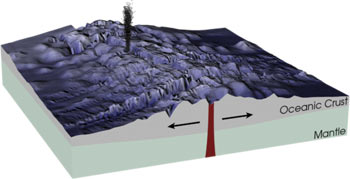
Beyond laboratory technique, Holmes engaged the big-picture question of how continents move. Building on observations by Alfred Wegener and others, Holmes proposed that heat-driven convection within the solid but slowly flowing mantle could exert forces on the crust, providing a plausible physical mechanism for continental displacement and for later ideas of plate tectonics. His advocacy made the concept scientifically respectable at a time when many geologists viewed continental drift with skepticism.
Impact on estimates of Earth’s age
Holmes spent much of his career tackling the problem of the age of the Earth. As radiometric methods were refined and more samples analysed, he and contemporaries moved Earth’s accepted age into the billions of years. By mid-twentieth century Holmes was promoting an age around 4.5 billion years—a value consistent with modern estimates and essential for understanding long-term geological and biological processes.
Legacy and notable facts
- Holmes is widely regarded as a founding figure in quantitative geochronology, helping to turn geology into an increasingly measurement-driven science.
- His early use of the uranium–lead system set a standard for subsequent radiometric techniques.
- By proposing mantle convection as the engine of continental motion he anticipated central elements of later plate tectonics theory.
Holmes combined laboratory skill, physical intuition, and clear exposition to change how geologists reconstruct Earth’s past. His work is taught in textbooks and remains a core part of the methods that establish the timing of geological events and the forces that reshape continents.
Questions and answers
Q: Who was Arthur Holmes?
A: Arthur Holmes was an English geologist.
Q: What were the two important contributions made by Arthur Holmes?
A: The two important contributions made by Arthur Holmes were the use of radioactive isotopes for dating minerals, and the suggestion that convection currents in the mantle play an important role in continental drift.
Q: How did Arthur Holmes' contribution help Alfred Wegener's theory of continental drift?
A: By showing that thermal convection currents were strong enough to move large land masses, Arthur Holmes' contribution supported the theory of continental drift or theory of Plate tectonics put forth by Alfred Wegener.
Q: Who also supported Arthur Holmes' view on the movement of large land masses?
A: Harry H. Hess also supported Arthur Holmes' view on the movement of large land masses.
Q: What is geochronology and who was a pioneer of it?
A: Geochronology is the science of determining the age of rocks, fossils, and sediments. Arthur Holmes was a pioneer of geochronology.
Q: What was the result of the first accurate uranium-lead radiometric dating performed by Arthur Holmes?
A: The first accurate uranium-lead radiometric dating performed by Arthur Holmes gave a date of 370 mya to a Devonian rock from Norway.
Q: What was Arthur Holmes' work related to the age of the Earth?
A: Arthur Holmes worked on the problem of the age of the Earth all his life and reached an approximately correct estimate by the 1940s of 4,500±100 mya.
Related articles
Author
AlegsaOnline.com Arthur Holmes: Pioneer of Radiometric Dating and Mantle Convection Leandro Alegsa
URL: https://en.alegsaonline.com/art/6286