
Maximum and Minimum: Definitions, Types, and Mathematical Significance
Overview of maximum and minimum (extrema), their formal definitions, global vs local distinctions, calculus criteria, historical context, examples and common applications.
Overview. In mathematics the terms maximum and minimum (plural: maxima and minima) identify the largest and smallest values in a collection or the largest and smallest outputs of a function. Together they are called extrema (singular: extremum). A set or function may possess global (absolute) extrema, which dominate all other values, and local (relative) extrema, which are extreme only within a neighborhood. These concepts appear across algebra, analysis, optimization and applied fields.
Image gallery
3 Images
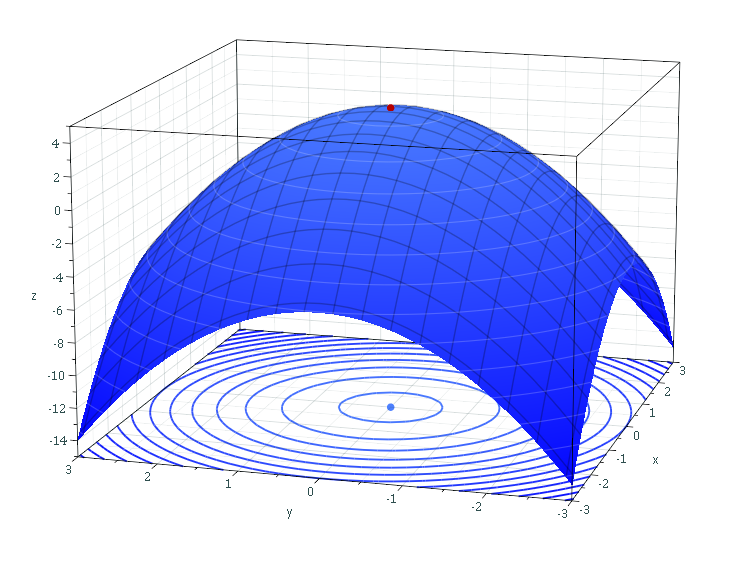

Definitions and basic properties
For a set A ordered by size, the maximum of A, written max(A), is an element of A that is greater than or equal to every other element of A; the minimum, min(A), is an element less than or equal to every other element of A. If such elements do not exist in A, one may still speak of the supremum (least upper bound) or infimum (greatest lower bound), which need not belong to A. For functions f defined on a domain D, a point x0 in D is a global maximum point if f(x0) ≥ f(x) for all x in D; similarly for global minimum. Local maxima and minima satisfy the same inequalities only for x in a small neighborhood of the point.
Calculus criteria and Fermat's theorem
In differential calculus, extrema of differentiable functions are closely tied to critical points. Fermat's theorem states that if f has a local extremum at x0 and f is differentiable at x0, then f'(x0) = 0. This yields a practical procedure: find critical points where the derivative vanishes or is undefined, then test each for being a local max, min or neither using second-derivative tests or sign-change analysis. Note that endpoints of a closed interval may be extrema even when the derivative is nonzero there.
For functions of several variables, gradient vectors and Hessian matrices generalize these ideas: extrema occur at points where the gradient is zero, and the Hessian helps determine whether the point is a minimum, maximum, or a saddle point. Optimization algorithms exploit these criteria in numerical computation and engineering design.
Historical and conceptual context
The search for maxima and minima has deep historical roots in geometry, astronomy and mechanics, where early mathematicians and scientists optimized quantities such as areas, distances and energies. The formal study became integral to calculus and variational methods, culminating in rigorous treatments of extremes, bounds and optimizations in modern analysis. Contemporary branches such as convex analysis and numerical optimization extend these foundations to complex, constrained problems.
Uses, examples and importance
- Everyday: determining minimum cost or maximum capacity in planning problems.
- Science and engineering: optimizing shapes, minimizing energy, or maximizing yield under constraints.
- Economics: finding profit maxima or cost minima subject to market conditions.
- Computer science: algorithms for finding global maxima/minima or approximations in large data sets.
Distinctions and useful facts
Important distinctions include global vs local extrema, existence vs attainability (supremum/infimum), and interior vs boundary extrema. Not every bounded set has a maximum or minimum, but every nonempty closed and bounded subset of Euclidean space does (a consequence of the extreme value theorem). When consulting references on these topics see formal treatments and examples: sets and order, functions and calculus, and computational perspectives at optimization texts, practical examples at applied domains and algorithmic resources at computer science sources.
Understanding maxima and minima is foundational to both pure and applied mathematics. The language of extrema helps describe limits, constraints and optimal behavior in many settings, and the basic tests and distinctions remain central tools from elementary calculus through advanced optimization theory.
Related articles
Author
AlegsaOnline.com Maximum and Minimum: Definitions, Types, and Mathematical Significance Leandro Alegsa
URL: https://en.alegsaonline.com/art/63035